6 Contactless Health Screening Use Cases for Heavy Industry Sites
Explore 6 key use cases for contactless health screening in heavy industry, from pre-shift fitness-for-duty to real-time fatigue monitoring for EHS managers.
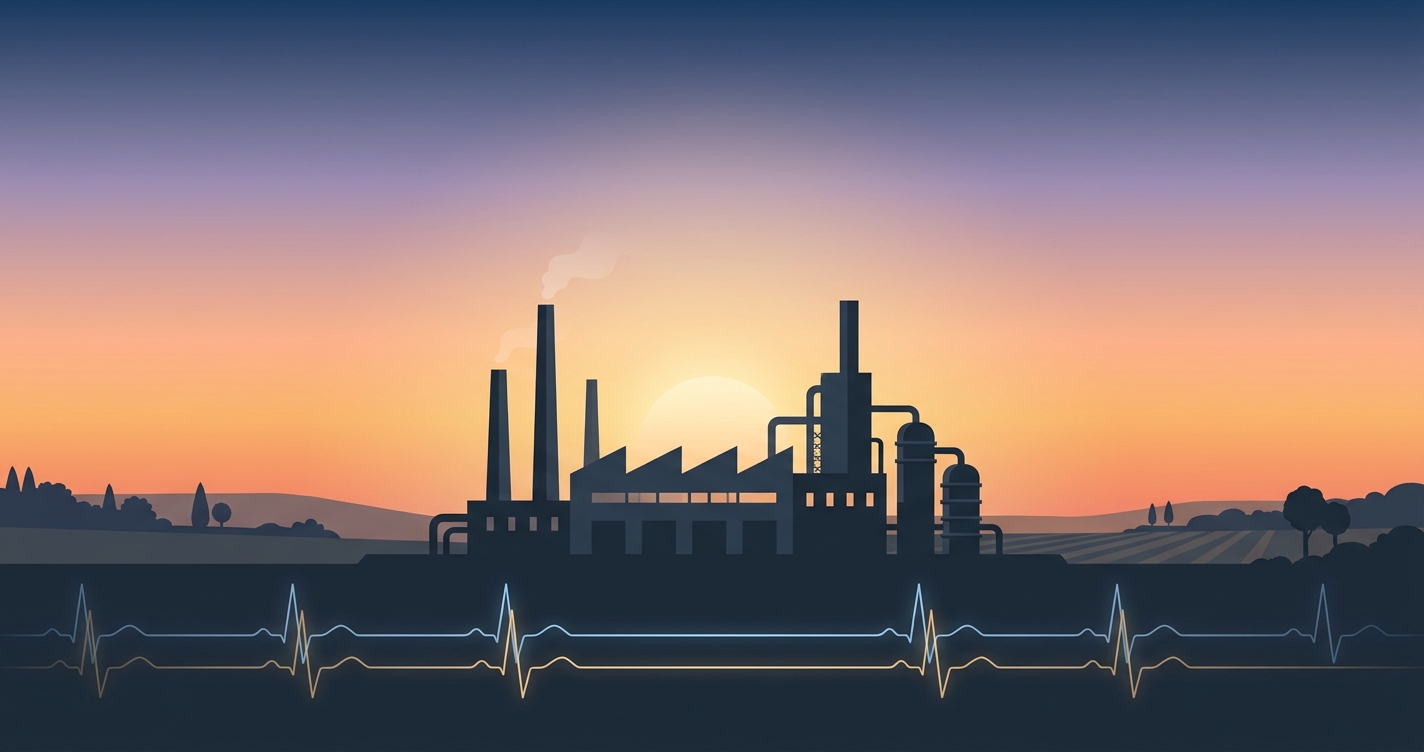
For decades, safety management in heavy industry has relied on lagging indicators-analyzing incidents after they occur to prevent future mistakes. While essential, this reactive approach is fundamentally limited. It measures failure, not risk. For Environmental, Health, and Safety (EHS) directors, the next frontier in risk mitigation is the adoption of leading indicators, using real-time physiological data to prevent incidents before they happen. Contactless health screening technology is central to this shift, offering a scalable way to monitor the fitness-for-duty of workers in demanding, safety-critical environments.
"The global occupational health market was valued at USD 4,796.38 million in 2023, with the manufacturing and industrial sector being a primary vertical." - Credence Research (2023)
The shift to proactive health insights
The core challenge for EHS leaders at heavy industry sites-from mining and construction to manufacturing and energy production-is managing risks that are often invisible. A worker's underlying health status, fatigue level, or response to environmental stressors can directly impact their alertness and physical capability. Traditional methods, such as self-reporting or periodic manual checks, are inconsistent and fail to capture dynamic changes in a worker's condition. The implementation of contactless health screening heavy industry sites are now deploying addresses this gap directly. These systems use a range of sensor technologies, including cameras and radar, to measure key vital signs like heart rate, respiratory rate, and temperature without requiring any physical contact or wearable devices. This provides a rapid, objective, and non-intrusive method to assess an individual's fitness for duty at the start of a shift and, in some cases, throughout the workday.
| Feature | Traditional Health Screening | Contactless Health Screening |
|---|---|---|
| Method | Manual questionnaires, periodic physicals, breathalyzers | AI-powered sensor scans (camera, radar) |
| Frequency | Infrequent (e.g., annual) or pre-shift manual check | High-frequency (e.g., every shift, real-time) |
| Data Points | Subjective answers, single-point-in-time vitals | Objective vitals: heart rate, respiratory rate, HR-variability, temp |
| Immediacy | Delayed results processing | Instant, real-time data and alerts |
| Scalability | Labor-intensive, creates bottlenecks | Automated, high-throughput, minimal friction |
| Focus | Compliance, substance abuse | Proactive risk detection (fatigue, illness, stress) |
6 key use cases for contactless health screening
Implementing this technology provides actionable data for a variety of safety and operational programs.
1. pre-shift fitness-for-duty assessment
The most immediate application is at the start of a shift. A quick, sub-60-second scan can flag workers who may be impaired due to fatigue, illness, or other physiological stressors. This is not about diagnosing a condition, but identifying when an individual's physiological state deviates from their personal baseline or established site thresholds. This allows for a private, secondary conversation to determine if the worker is safe to perform their duties, preventing a potentially fatigued operator from controlling heavy machinery.
2. real-time fatigue monitoring
Worker fatigue is a leading contributor to industrial accidents. Contactless systems can be installed in break rooms or common areas to conduct spot-checks during a shift. By analyzing trends in heart rate variability (HRV), a key indicator of autonomic nervous system function, these systems can detect the subtle signs of accumulating fatigue. This allows supervisors to intervene with mitigation strategies, such as assigning less critical tasks, encouraging a break, or re-assigning duties before a safety event occurs.
3. heat and cold stress mitigation
Industrial sites often expose workers to extreme temperatures. Contactless screening can include thermal imaging to monitor skin temperature as a proxy for potential heat or cold stress. By setting automated alerts when a worker's temperature exceeds predefined limits, EHS managers can implement cooling or warming protocols, ensure proper hydration, and prevent serious environmental injuries like heatstroke or hypothermia.
4. post-incident triage support
In the event of an incident, a rapid assessment of a worker's vital signs is critical for first responders. A contactless station can provide immediate, objective data on an individual's condition without the need for physical contact, which may be difficult or unsafe in a chaotic post-incident environment. This information helps prioritize medical attention and provides a baseline for arriving emergency medical services.
5. aggregate health and wellness trend analysis
By aggregating and anonymizing data from thousands of scans, EHS directors can uncover powerful insights into the health of their entire workforce. This population-level data can reveal trends related to shift schedules, seasonal illnesses, or site-specific stressors. For example, if data shows a consistent drop in HRV across a specific shift, it may indicate a systemic issue with workload or scheduling that needs to be addressed through policy changes. This makes contactless health screening heavy industry sites a strategic tool for program-level improvements.
6. infectious disease spread prevention
Though the COVID-19 pandemic accelerated the adoption of this technology, its value extends to managing any communicable illness. By identifying individuals with elevated temperatures or other signs of acute illness, sites can implement their health protocols to prevent the spread of influenza or other viruses that could compromise the operational readiness of a critical workforce.
Current research and evidence
The technology enabling contactless screening is advancing rapidly, driven by progress in artificial intelligence, sensor fusion, and signal processing. Research conducted by institutions and commercial entities alike focuses on refining the accuracy of these measurements. For example, studies are continuously improving the algorithms that extract subtle physiological signals from video feeds, accounting for variations in lighting, skin tone, and motion. A 2023 report from Credence Research highlighted the significant growth of the occupational health market, underscoring the industrial sector's investment in such proactive technologies. The integration of AI, in particular, is a major focus, enhancing the ability of these systems to distinguish meaningful physiological signals from environmental noise and providing more reliable data for safety-critical decisions.
The future of on-site health intelligence
The trajectory for contactless health screening is moving toward greater integration and predictive capability. The future will see these systems connected with other data sources, such as environmental sensors (air quality, noise levels) and scheduling software, to create a comprehensive, real-time picture of site risk. The ultimate goal is to move from detection to prediction, using longitudinal data and machine learning models to identify workers who are on a trajectory toward a state of high risk due to accumulating fatigue or stress. This evolution will transform the role of EHS from incident response to proactive risk intelligence, creating safer and more productive industrial environments.
Frequently asked questions
Q: How is worker privacy protected with these systems? A: Privacy is a primary design consideration. Data is typically processed on-device, and only pass/fail results or threshold-based alerts are sent to authorized personnel. Personal health information is not broadly accessible, and all data is handled in compliance with health privacy regulations. The goal is to manage risk, not to monitor individuals.
Q: Is this technology a replacement for medical professionals? A: No. Contactless screening is a risk-identification tool, not a diagnostic one. It is designed to flag potential issues and initiate a pre-defined safety protocol, which should include assessment by a qualified occupational health professional.
Q: How accurate are contactless vital signs measurements? A: While not a medical-grade device for diagnosis, the technology has demonstrated high levels of accuracy for the purposes of risk screening. Studies by organizations like the National Institute of Standards and Technology (NIST) have validated the core methods. Accuracy is sufficient to identify significant deviations from a baseline, which is the primary goal for fitness-for-duty screening.
As a leader in addressing complex industrial challenges, Circadify is actively developing solutions in the worker health and safety space. To learn more about building a proactive safety program for your organization, explore our approach to enterprise risk management by visiting circadify.com/solutions/fraud-detection.