Best Occupational Health Screening Technology for 2026
A 2026 buyer's comparison of occupational health screening technology on speed, contactless setup, and site fit for EHS directors managing safety-critical crews.
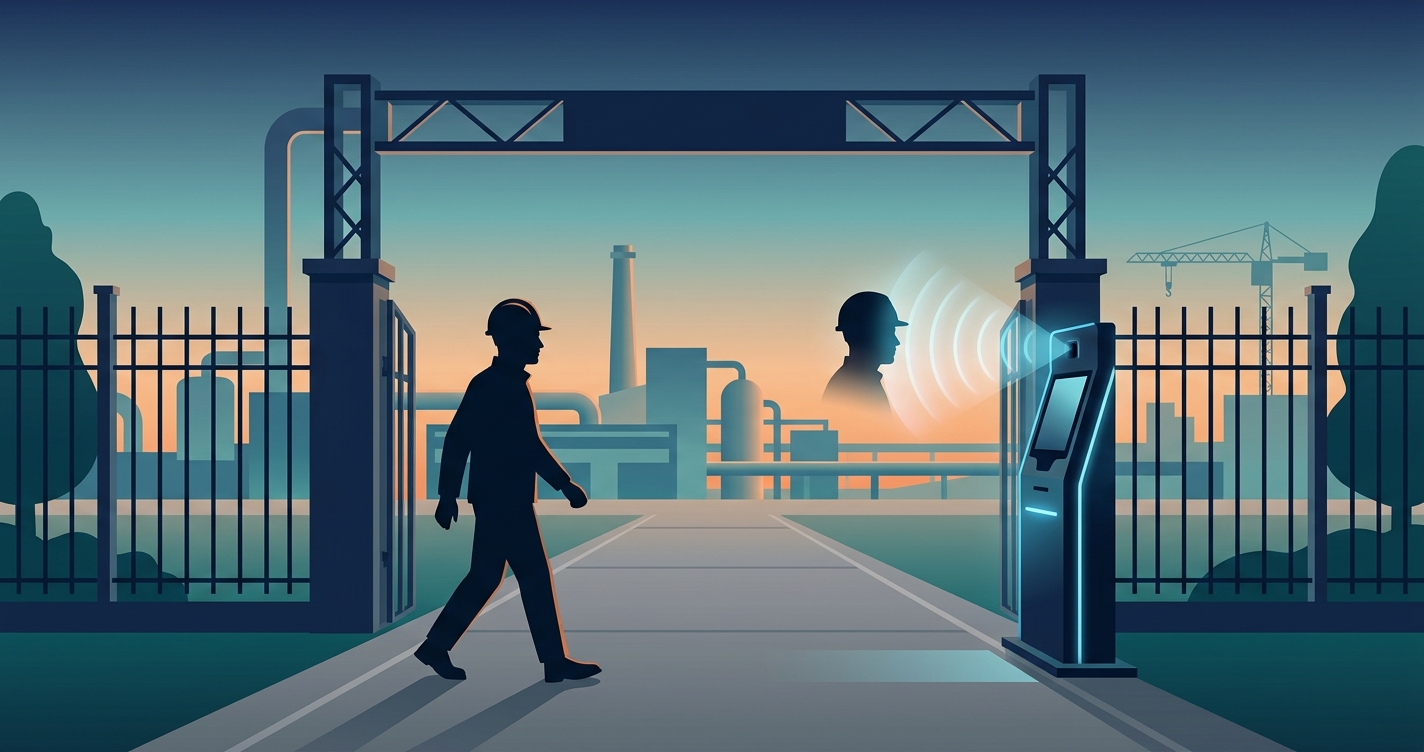
Procurement cycles for 2026 are forcing a hard question onto Environmental, Health, and Safety (EHS) desks: which occupational health screening technology actually fits a high-throughput industrial site, and which simply looks good in a vendor deck. The category has widened from periodic clinic exams and breath testing to AI-driven contactless vitals, wearable physiology, and integrated fitness for duty platforms. With the global occupational health market projected to sit between USD 5.82 billion and USD 5.84 billion in 2026, buyers now have real options and real opportunity cost when they choose wrong. This roundup compares the leading approaches on the three variables that decide adoption at the gate: speed, contactless setup, and site fit.
"The global occupational health market is estimated to be valued between USD 5.82 billion and USD 5.84 billion in 2026, with projected growth to USD 7.76 billion by 2031, driven by stringent regulations and a growing emphasis on employee well-being." - Mordor Intelligence, Occupational Health Market Forecast (2026)
How to evaluate occupational health screening technology in 2026
The core mistake EHS teams make is benchmarking occupational health screening technology on a single axis, usually clinical depth, when the operational reality is throughput. A screening method that takes four minutes per worker is unusable for a 600-person plant rotating through a single gate before a 6 AM shift. The right evaluation weighs four practical factors against each other.
- Speed per worker: how many people can move through screening per hour without creating a bottleneck at shift change.
- Contactless setup: whether the method requires physical contact, shared equipment, consumables, or a trained operator on site.
- Site fit: durability in dust, heat, cold, low light, and remote locations with limited connectivity.
- Data integration: whether results flow into a safety management system or sit in a separate silo.
Researchers reviewing fatigue and physiological monitoring have repeatedly flagged the gap between laboratory accuracy and field usability. A 2025 review of occupational fatigue detection methods in IEEE Xplore noted that physiological index methods can deliver real-time monitoring, but that achieving high accuracy while adapting to individual differences in a short window remains an open challenge. For buyers, that means no single technology is dominant on every axis, and the comparison below is about trade-offs, not a single winner.
Comparison of leading industrial health screening tools
The table below summarizes how the main categories of employee health screening systems perform against the variables that matter most for safety-critical operations.
| Technology category | Speed per worker | Contactless setup | Site fit | Best use case |
|---|---|---|---|---|
| Contactless rPPG facial scan | 30-60 seconds | Fully contactless, no consumables | Strong; works at kiosks and gates, needs adequate lighting | High-volume pre-shift fitness for duty screening |
| Wearable physiological sensors | Continuous, passive | On-body, requires fit and charging | Strong in motion, weaker on hygiene and battery logistics | Sustained shift-long fatigue monitoring |
| Breathalyzer / substance testing | 1-3 minutes | Contact mouthpiece, consumables | Moderate; substance-specific, not physiological | Regulated impairment compliance only |
| Periodic clinic exams | 15-45 minutes | Clinician contact required | Weak for daily throughput | Annual baselines and surveillance |
| Manual symptom questionnaires | 2-5 minutes | Contactless but subjective | High portability, low reliability | Low-budget or interim programs |
The pattern is consistent. Methods built for clinical depth, such as periodic exams, lose badly on throughput. Methods built for compliance, such as breath testing, capture only one narrow risk and miss cardiovascular and fatigue signals. Contactless facial scanning and wearables are the two categories engineered for daily, repeatable, scaled screening, which is why most 2026 evaluations narrow to those two.
Industry applications across safety-critical sites
Different sectors weight the three variables differently, and the strongest workplace health check technology for one site can be the wrong fit for another.
Mining and heavy construction
These sites combine remote locations, dust, vibration, and high-consequence equipment. The mining fatigue monitoring market alone is projected to reach roughly USD 2.8 billion by 2031, reflecting how seriously operators now treat the risk. Contactless gate screening fits the pre-shift moment, while in-cab and wearable systems address fatigue that develops over a long haul cycle. Many large operators run both in layers rather than choosing one.
Rail, transit, and logistics
Regulated fatigue rules and around-the-clock dispatch make speed the dominant variable. A contactless 30 to 60 second check at sign-on lets operators screen entire crews without adding minutes to an already tight schedule. The constraint here is documentation, so integration with the safety management system is not optional.
Manufacturing and utilities
Researchers at multiple institutions reported in 2024 and 2025 that wearable sensors combined with machine learning can predict worker fatigue and improve both safety and productivity in manufacturing settings. For plants with fixed gates and reliable lighting, contactless scanning offers lower per-worker friction; for roaming maintenance crews, wearables track exertion across the shift.
Current research and evidence
The evidence base behind these tools has matured quickly. A 2024 literature review in an NIH-indexed journal, "Smart Wearables for the Detection of Occupational Physical Fatigue," concluded that wearable physiological monitoring is increasingly viable for industrial fatigue detection, while cautioning that signal quality and individual calibration still vary in the field. That caveat matters for any buyer expecting plug-and-play accuracy.
A 2025 study published in MDPI, "Fatigue Monitoring Technologies in Construction: How Professionals Perceive, Trust, and Prefer Subjective, Objective, and Hybrid Approaches," found that construction professionals favored hybrid systems that pair objective physiological data with worker self-report. The takeaway for procurement is that trust and adoption, not just raw sensor performance, decide whether a program survives past pilot.
On the contactless side, remote photoplethysmography research continues to validate camera-based measurement of heart rate, respiratory rate, and stress indicators. A review of multi-modal contactless vital sign monitoring summarized in NIH-indexed literature describes steady gains in measuring multiple parameters from a single video stream, which is the technical foundation for fast gate screening. Independent reviewers consistently add the same qualifier: motion and lighting conditions affect signal quality, so site setup is part of accuracy, not separate from it. The broader contactless health monitors market is itself forecast at roughly USD 36.67 billion in 2026, a signal of how much capital is flowing into camera and radar based measurement.
The future of occupational health screening technology
Three shifts will define the next phase of fitness for duty platforms.
- Convergence of methods: expect gate-based contactless screening and shift-long wearable monitoring to be sold as layered programs rather than competing products, matching the hybrid preference researchers documented.
- Edge processing for remote sites: telehealth and virtual assessment are the fastest-growing service segment in occupational health, projected near a 10.2 percent compound annual growth rate through 2031, pushing vendors to process data locally where connectivity is poor.
- Predictive scoring over single readings: the value is moving from a pass or fail snapshot toward trend lines that flag a worker drifting toward risk across consecutive shifts.
For EHS directors, the practical implication is that the 2026 buying decision is less about picking a single device and more about choosing a platform that can ingest multiple signals, scale to gate throughput, and feed an existing safety management system. The technologies that win on speed and contactless setup without sacrificing site durability will become the default front door for industrial health programs.
Frequently asked questions
What is the fastest occupational health screening technology for high-volume sites?
Contactless facial scanning using remote photoplethysmography is currently the fastest method built for scale, typically completing a check in 30 to 60 seconds with no consumables or operator contact. That speed is what makes it viable for screening hundreds of workers at a single gate before shift change, where clinic exams and breath testing create bottlenecks.
How does contactless screening compare to wearables for fatigue monitoring?
Contactless screening captures a point-in-time reading at sign-on, which suits pre-shift fitness for duty decisions. Wearables capture continuous physiology across the shift, which suits sustained fatigue tracking. Research in 2024 and 2025 increasingly favors hybrid programs that use both, since each covers a gap the other leaves open.
Can occupational health screening technology integrate with our safety management system?
Modern fitness for duty platforms are designed to export screening results into existing safety management systems rather than living in a separate silo. Integration is one of the four core evaluation criteria, because in regulated sectors like rail, screening data must be documented and auditable to have operational value.
Is contactless health screening accurate enough for industrial use?
Peer-reviewed reviews report steady gains in camera-based measurement of heart rate, respiratory rate, and stress signals, while noting that lighting and worker motion affect signal quality. For that reason, site setup and controlled conditions at the screening point are part of achieving reliable results, and buyers should pilot under their own gate conditions.
Circadify is building in this space with pre-shift contactless vitals screening and fatigue detection designed for safety-critical workforces. EHS directors evaluating their 2026 options can request a demonstration and discuss a site fit assessment through a safety program inquiry.