Can a 30-second face scan catch a heart problem before my shift starts?
Explore how a 30-second contactless scan can detect heart rate abnormalities before a worker's shift, providing a critical layer of safety in occupational health.
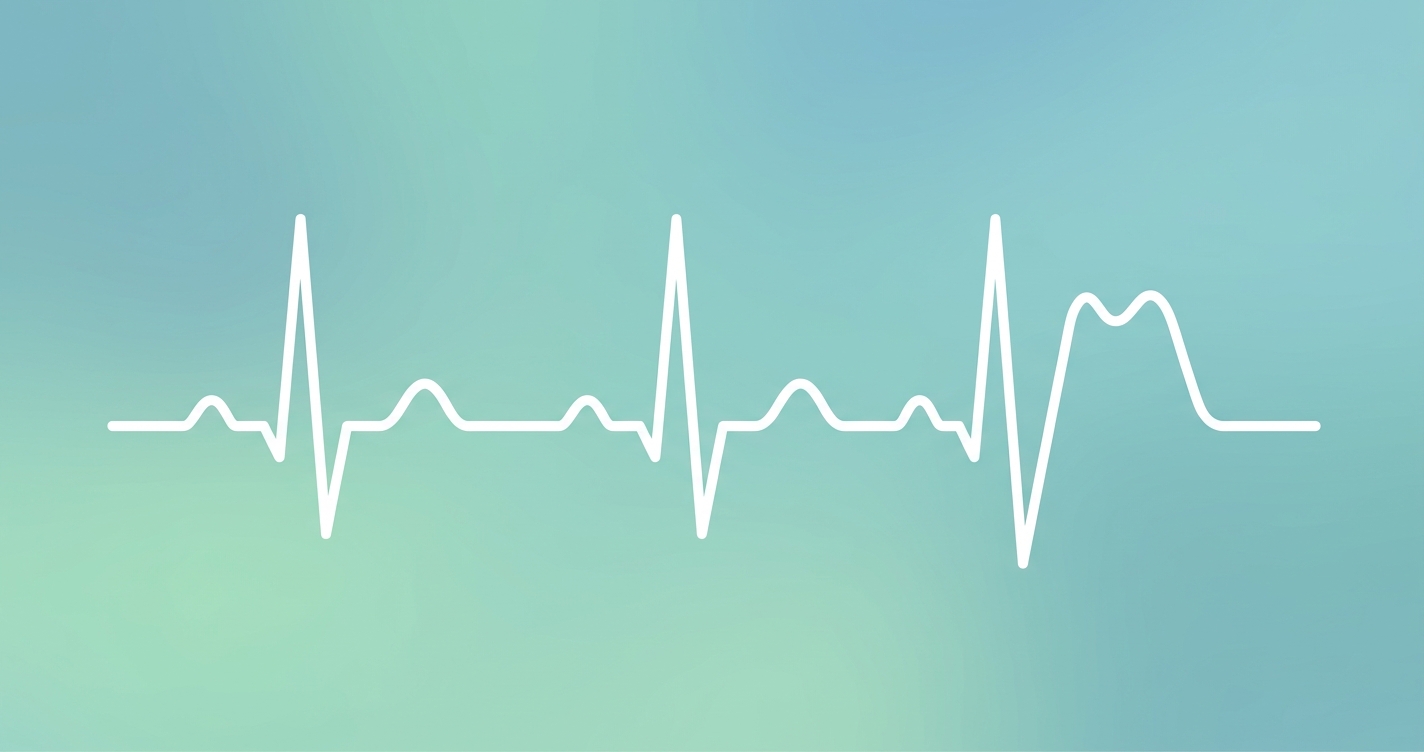
For any Environmental, Health, and Safety (EHS) director, the start of a new shift is a moment of managed risk. This is especially true in safety-critical industries where the physical and mental readiness of each worker is critical. While traditional safety protocols focus on equipment checks and site safety, a growing area of concern is the invisible risk of a sudden cardiac event. The idea that you can detect a heart issue before a shift starts has moved from a theoretical want to a technological reality, offering a new frontier in proactive safety management. A brief, non-invasive scan could be the difference between a near-miss and a catastrophic event.
"Each year in the United States, approximately 10,000 sudden cardiac arrests occur in the workplace. The American Heart Association has found that immediate CPR can double or triple a person's chance of survival, but proactive screening to identify risk beforehand is a critical missing link in many safety programs." - American Heart Association (AHA) Data, 2023
The rise of proactive cardiac screening in the workplace
For decades, the standard for monitoring employee health has been reactive or periodic. Annual physicals, pre-employment screenings, and self-reporting have been the primary tools. However, these methods have significant gaps, particularly for an aging workforce in physically demanding roles. A worker can be cleared at an annual exam but develop a heart rhythm issue months later that goes unnoticed. These subtle changes in cardiovascular health are often the leading indicators of a future problem, and they are completely invisible to standard safety audits. The challenge for EHS leaders is to find a way to bridge this data gap without introducing friction, high costs, or invasive procedures.
This is where the concept of pre-shift contactless screening emerges as a powerful new tool. Using only the camera on a standard smartphone or tablet, new technology based on remote photoplethysmography (rPPG) can measure key vital signs in under 30 seconds. This allows for a daily, objective data point on a worker's cardiovascular state. By establishing a baseline for each individual, the system can automatically flag subtle deviations in resting heart rate or heart rate variability (HRV). A consistent upward drift in resting heart rate, for example, could indicate developing stress, fatigue, or an underlying health issue long before the worker is even aware of it. This ability to detect a heart issue before a shift starts provides a non-intrusive way to prompt a follow-up, a rest period, or a conversation with an occupational health provider.
| Feature | Traditional Annual Physical | On-Site Medical Staff | Contactless Pre-Shift Scan |
|---|---|---|---|
| Frequency | Annual or bi-annual | Daily, but resource-intensive | Daily or per-shift |
| Data Granularity | Single point-in-time | Single point-in-time | Longitudinal; tracks trends |
| Worker Time | 1-2 hours, plus travel | 5-10 minutes per worker | 30-60 seconds |
| Cost | High per-worker cost | High operational cost (staffing) | Low SaaS-based cost |
| Immediacy | Delayed insight; results take days | Immediate, but requires manual review | Real-time flagging and alerts |
| Privacy | Results sent to worker/HR | Potential for perceived bias | Data is encrypted and private |
This approach shifts the safety paradigm from lagging indicators (incident reports) to leading indicators (physiological data). It empowers organizations to move beyond mere compliance and build a truly proactive health and safety culture.
Industry Applications
Transportation and logistics
For commercial drivers, pilots, and rail operators, a cardiac event is a high-consequence scenario. The Federal Motor Carrier Safety Administration (FMCSA) and Federal Aviation Administration (FAA) have stringent medical requirements, but these are still periodic checks.
- Baseline Monitoring: A daily 30-second scan can establish a baseline heart rate and HRV. Deviations can signal fatigue or stress, key contributors to incidents.
- Early Anomaly Detection: An algorithm can detect irregularities that might suggest atrial fibrillation (AFib), a condition that significantly increases stroke risk and can be asymptomatic.
- Post-Incident Analysis: In the event of a minor incident, historical vitals data can help determine if physiological factors were at play.
Construction and heavy industry
Workers in construction, mining, and manufacturing perform physically strenuous tasks, often in harsh environments. According to OSHA, cardiac events are a leading cause of non-injury-related fatalities on job sites.
- Heat Stress and Exertion: A rising resting heart rate over several days can be an early sign that a worker is not adequately recovering from physical exertion or heat exposure.
- Remote Site Safety: On remote sites without immediate access to medical personnel, a daily screening provides a crucial layer of oversight.
- Return-to-Work: After an illness, a contactless scan can provide objective data to help confirm an employee is fit to return to their demanding role.
Energy and utilities
Technicians in the energy sector, including oil & gas and renewables, often work in remote and isolated locations. Research from institutions like the National Institute for Occupational Safety and Health (NIOSH) has highlighted the cardiac risks associated with long hours and high stress in these roles. A pre-shift scan provides a vital safety check-in before a technician travels to a remote turbine or pipeline station, ensuring they are fit for the duty ahead.
Current research and evidence
The technology enabling this shift is remote photoplethysmography (rPPG). It works by using a camera to detect minute changes in light reflection from the skin, which correspond to the blood volume pulse. While it sounds like science fiction, the method has been scientifically validated in numerous studies.
A 2021 study published in the journal Scientific Reports by researchers at the University of South Australia demonstrated that consumer-grade cameras could extract heart rate with a high degree of accuracy when compared to an electrocardiogram (ECG). Further research, including a 2022 clinical validation published in a PubMed-indexed journal, found that rPPG software could monitor pulse rate in cardiovascular disease patients with a mean absolute error of just 1.061 beats per minute compared to ECG readings.
More advanced applications involve using machine learning algorithms to analyze the pulse waveform. A 2023 study showed that AI models trained on rPPG data could accurately differentiate between a normal sinus rhythm and atrial fibrillation, achieving a robust area under the curve (AUC) of 0.95 in real-world conditions. This indicates a high level of diagnostic accuracy. While rPPG is not a replacement for a clinical ECG, it serves as a highly effective, scalable screening tool to identify individuals who may need further medical evaluation.
The future of pre-shift cardiac monitoring
The trajectory for this technology is moving toward greater integration and predictive capability. The future isn't just about a single scan; it's about creating a holistic view of worker well-being. We can expect to see contactless screening platforms integrated directly into existing Safety Management Systems (SMS) and Enterprise Resource Planning (ERP) software. This will allow EHS directors to see physiological risk data alongside operational data, providing a more complete picture of site safety.
Furthermore, as longitudinal data sets grow, the predictive power of the algorithms will increase. By analyzing weeks and months of data, systems will be able to identify more complex patterns related to chronic fatigue, long-term health degradation, or acclimation to new environments. This evolution will transform pre-shift screening from a simple "go/no-go" signal into a sophisticated tool for workforce health management and risk mitigation.
Frequently asked questions
Q: Is a 30-second face scan a medical exam? A: No. This technology is a screening tool, not a medical diagnostic device. It measures and analyzes vital signs to identify deviations from a baseline. It does not provide a diagnosis but can indicate when a formal medical assessment by a healthcare professional may be advisable.
Q: How accurate is a contactless heart rate measurement? A: Modern rPPG algorithms have demonstrated high accuracy, often within a few beats per minute of traditional ECG or pulse oximeters in controlled settings. Validation studies, like those conducted by researchers at the University of South Australia (2021), have confirmed its reliability for screening purposes.
Q: What happens if an abnormal result is flagged? A: The system alerts designated personnel, such as a site supervisor or occupational health nurse, according to a pre-defined company protocol. The typical next step is a confidential conversation with the employee to understand contributing factors (e.g., lack of sleep, stress) and determine if a formal fitness-for-duty evaluation is needed.
Q: How is worker privacy protected? A: Privacy is a core design principle. The video feed is processed in real-time and immediately discarded; no images or videos are stored. The resulting vital sign data is encrypted and managed in a secure cloud environment, with access restricted to authorized personnel. This process is compliant with major privacy regulations like HIPAA and GDPR.
As safety programs evolve, the ability to get an early warning signal becomes a competitive advantage. Technologies that provide objective, daily insights into worker fitness are no longer a luxury but a core component of modern risk management. Circadify is at the forefront of this transformation, developing solutions to help organizations protect their most valuable asset: their people. To learn more about implementing a proactive safety program, explore our solutions at circadify.com/solutions/fraud-detection or see how a scan works at getcarescan.com.