Can a quick scan tell if I am too fatigued to work safely?
A quick scan can assess key physiological and behavioral markers of fatigue, providing a crucial data point for fitness-for-duty and worker fatigue monitoring programs.
For an EHS director in a safety-critical industry, the risk of worker fatigue is a constant, low-grade source of anxiety. The signs are often invisible until it is too late, manifesting as costly errors, injuries, or worse. According to the National Safety Council, 97% of workers have at least one major risk factor for fatigue, and it is a contributing factor in an estimated 13% of all workplace injuries. The annual cost to a typical company with 1,000 employees can exceed $1 million in lost productivity alone. This has pushed safety leaders to seek proactive solutions, leading to a central question: can technology, specifically a quick, pre-shift scan, reliably indicate if a worker is too fatigued to perform their duties safely? The evidence points to a new generation of worker fatigue monitoring tools that are moving this capability from theory to practical reality.
"A worker who has lost just two hours of sleep from a normal eight-hour sleep schedule may be as impaired as someone who has consumed up to three beers."
- National Safety Council, 2021
How scans detect fatigue: the technology of worker fatigue monitoring
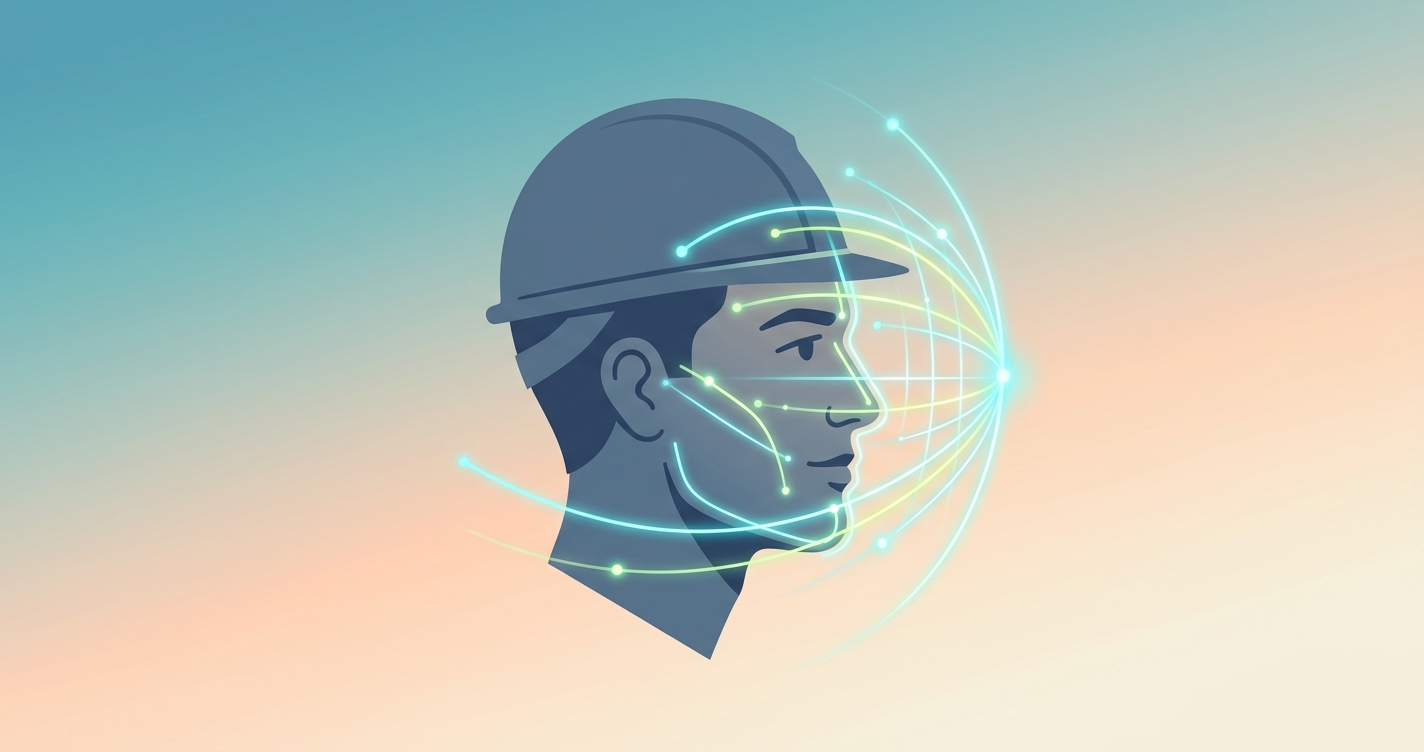
The concept of a "fatigue scan" is not a single technology but rather an integration of different methods designed to detect the subtle physiological and behavioral cues associated with being unfit for duty. These technologies fall into two primary categories: those that analyze visual/behavioral signs and those that measure underlying physiological changes.
Modern worker fatigue monitoring systems often use a combination of these inputs to create a more reliable and holistic assessment. The goal is not to diagnose a medical condition but to provide an objective, real-time data point that can flag at-risk individuals before a safety incident occurs.
A 2022 study by Zhu et al. published in the journal Sensors highlighted the effectiveness of computer vision in detecting yawning with high accuracy, a key behavioral indicator. Meanwhile, research into physiological signals continues to advance. A 2023 study by researchers from the University of Sfax, Tunisia, explored multi-modal systems that combine facial analysis with physiological data to improve the robustness of detection, underscoring the industry's move toward more comprehensive solutions.
| Technology Type | What It Measures | Implementation Method | Key Considerations |
|---|---|---|---|
| Computer Vision Analysis | Behavioral cues like eye closure duration (PERCLOS), blink frequency, head position, and yawning rate. | Camera-based systems (mounted in-cab or at a kiosk) that use algorithms to analyze facial landmarks. | Non-invasive and can be performed contactlessly. Performance can be affected by lighting, glasses, or face coverings. |
| Wearable Sensor Tech | Physiological data such as heart rate variability (HRV), skin temperature, electrodermal activity (EDA), and actigraphy (movement/sleep). | Wristbands, smart watches, or sensor-embedded clothing worn by the worker throughout their shift or at home. | Provides continuous data but relies on worker adoption and can raise privacy concerns. Requires device management and charging. |
| Contactless Vitals Scan | Core physiological indicators like resting heart rate, respiratory rate, and heart rate variability (HRV). | Kiosk or tablet-based systems using remote photoplethysmography (rPPG) to measure subtle changes in skin color from a short video scan. | Extremely fast (under 30 seconds), non-invasive, and requires no wearables. Provides a point-in-time snapshot of physiological state pre-shift. |
Industry Applications
The application of worker fatigue monitoring varies by the specific risk profile of the industry. The technology is most impactful where the consequences of human error are highest.
### Transportation and Logistics
For commercial drivers and heavy equipment operators, momentary lapses in attention can be catastrophic. In-cab computer vision systems are the most mature application, tracking eye movements and head nodding to provide real-time alerts. These systems are often integrated with telematics to give fleet managers visibility into driver fatigue levels.
### Manufacturing and Warehousing
In a fast-paced manufacturing environment, fatigue can lead to mistakes in quality control or serious incidents with machinery. Pre-shift screening with a contactless vitals scanner can serve as a first line of defense, identifying workers who may be at an elevated risk before they enter the production floor. This allows for early intervention, such as re-assignment to a less critical task for the day.
### Mining and Construction
These industries involve physically demanding labor, often in harsh conditions and on irregular schedules, all significant risk factors for fatigue. A Deloitte report from 2023 noted that 34% of construction and engineering firms were already using wearables for safety. Integrating this with pre-shift scans can provide a powerful combination of macro (sleep quality via wearable) and micro (current physiological state via scan) data for a comprehensive fitness-for-duty assessment.
Current research and evidence
The evidence supporting automated fatigue detection is growing rapidly. The key is moving from lagging indicators (incident reports) to leading indicators (physiological data). A 2023 study published in the International Journal of Industrial Ergonomics by Michael A. Post and colleagues at the University of Waterloo found that heart rate variability (HRV) is a reliable indicator of mental fatigue. Specifically, they noted that a decrease in certain HRV metrics correlates strongly with the cognitive fatigue that degrades performance in safety-sensitive tasks.
Furthermore, a 2023 World Health Organization report highlighted that 78% of employees report some level of work-related fatigue, making this a near-universal issue for safety managers to address. Technology offers a scalable way to manage this risk. Systems using machine learning algorithms to analyze facial expressions and eye states have demonstrated testing accuracy as high as 96.54% in identifying fatigue indicators in controlled settings, according to a 2022 study in the journal Electronics.
The future of worker fatigue monitoring
The trajectory of this technology is pointing towards integration and prediction. The future is not about a single device but a unified data ecosystem. Advanced platforms will fuse data from pre-shift scans, wearable devices, and even scheduling software to generate a dynamic fatigue risk score for each worker.
This predictive capability is the ultimate goal. By analyzing trends over time, EHS leaders will be able to move beyond simply detecting present fatigue to forecasting high-risk periods for individuals and crews. This allows for proactive scheduling adjustments, targeted wellness interventions, and a more sophisticated approach to Fatigue Risk Management Systems (FRMS), helping to prevent incidents before the conditions for them even arise.
Frequently asked questions
-
Is a quick fatigue scan accurate? A scan provides an objective data point on key indicators of fatigue, such as elevated resting heart rate or decreased heart rate variability. When integrated into a comprehensive safety program, it is a highly reliable tool for flagging potential risk, not a standalone diagnostic.
-
How is this different from a wearable device? Wearables are excellent for tracking long-term trends like sleep patterns over days or weeks. A pre-shift scan provides an immediate, point-in-time assessment of a worker's physiological state right before they begin their duties, answering the question, "Are you fit for duty right now?"
-
What happens if a scan indicates a worker is fatigued? This triggers a pre-defined company protocol. It typically does not mean the worker is sent home. It may involve a conversation with a supervisor, a re-assignment to a less safety-sensitive task for the day, or a recommendation for a rest break. The goal is mitigation, not punishment.
-
Are there privacy concerns with this technology? Leading platforms are designed to protect worker privacy. They do not store images or videos and only provide a risk score or a "pass/fail" status to the employer, not specific physiological data. This ensures the company gets the safety information it needs without infringing on personal health privacy.
As the pressure to improve workplace safety and operational efficiency grows, technology that provides objective insights into workforce readiness is becoming essential. Circadify is at the forefront of developing contactless solutions that address the critical need for worker fatigue monitoring. To learn more about implementing a proactive safety program based on pre-shift screening, explore our solutions for safety and risk management at circadify.com/solutions/fraud-detection.