Can contactless screening keep dangerous worksites safer?
A research-style analysis of industrial health screening contactless technology, its ROI for safety-critical industries, and current research trends.
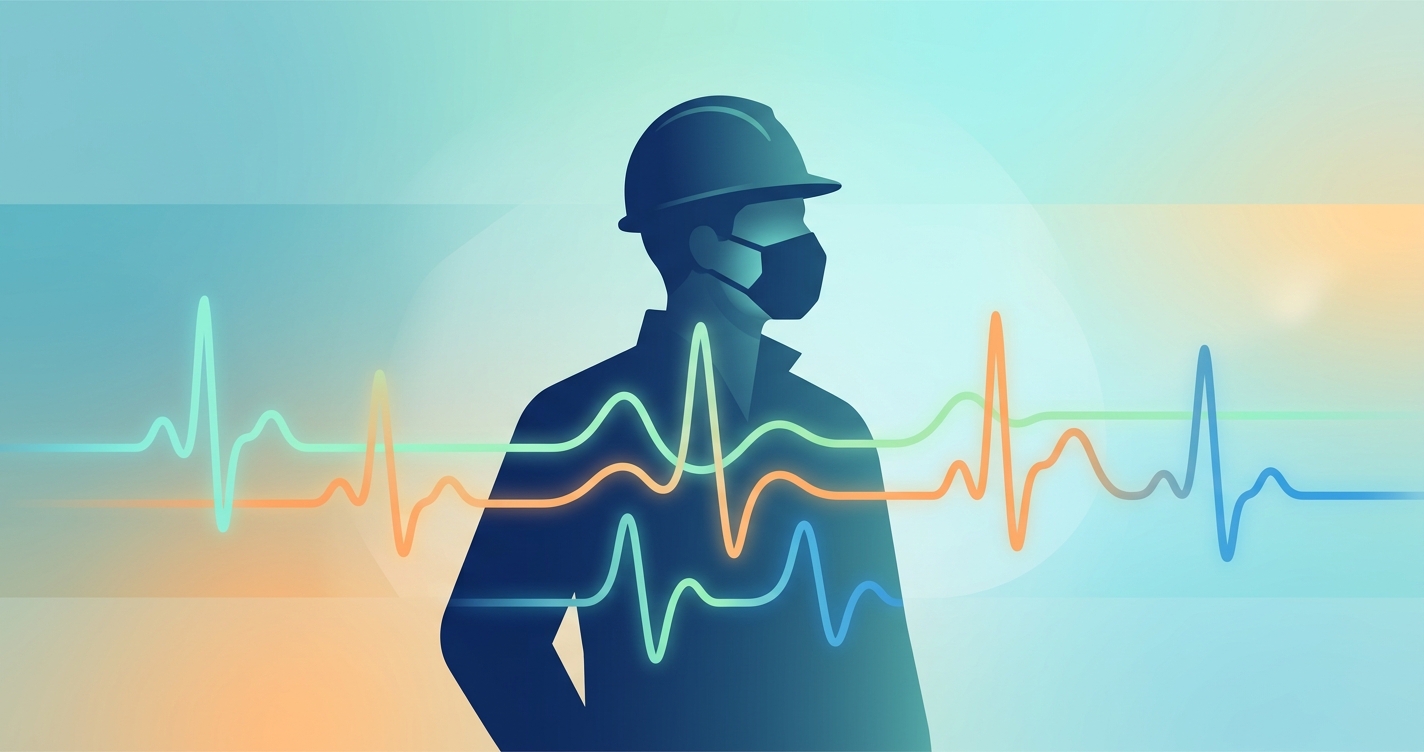
For decades, safety management in heavy industry, construction, and logistics has operated on a model of analyzing lagging indicators, investigating incidents after they occur. This reactive approach, while necessary, is fundamentally limited. It requires a failure to generate data. The frontier of worksite safety, however, is shifting toward predictive and proactive measures. The adoption of industrial health screening contactless technologies represents a pivotal change in this paradigm, moving the point of intervention from post-incident analysis to pre-shift risk assessment. By identifying physiological signs of impairment or distress before a worker even enters a hazardous environment, these systems offer a new layer of protection for both the individual and the organization.
"Private industry employers reported 2.8 million nonfatal workplace injuries and illnesses in 2023, which occurred at a rate of 2.7 cases per 100 full-time equivalent (FTE) workers." - U.S. Bureau of Labor Statistics, Survey of Occupational Injuries and Illnesses, November 8, 2023
The proactive shift: how industrial health screening contactless systems work
The core premise of contactless screening is to assess a worker's fitness for duty without interrupting their workflow or requiring them to use cumbersome wearable devices. These systems use a variety of advanced sensors, often including high-resolution cameras and radar technology, to measure key physiological indicators from a distance. As a worker walks past a screening station, the system can capture data points like heart rate, respiratory rate, heart rate variability (HRV), and even body temperature.
This data is then analyzed by algorithms to detect anomalies that could indicate fatigue, illness, heat stress, or other potential impairments. The process is rapid, typically taking only a few seconds. This allows for seamless integration into the start of a shift, for example, as workers pass through a site entrance. The primary goal is not clinical diagnosis but operational risk management: identifying individuals who may be at a higher risk of an incident on that particular day, enabling a safety manager to intervene with a conversation or re-assignment to a less safety-critical task.
Financial analysis from multiple sources indicates a significant return on investment for proactive safety programs. Figures from the National Safety Council and other industry reports often cite that for every $1 invested in a comprehensive safety program, companies can see a return of $4 to $6 through reduced incident costs, lower insurance premiums, and improved productivity.
| Feature | Traditional Screening (e.g., Questionnaires) | Wearable-Based Screening | Industrial Health Screening Contactless |
|---|---|---|---|
| Implementation | Manual, paper-based or simple digital forms. | Requires distributing, managing, and charging devices. | Fixed sensor installation at site access points. |
| Worker Friction | High; requires active participation and honest self-reporting. | Moderate; requires workers to remember and wear devices. | Very Low; passive scan during normal entry/exit. |
| Data Scope | Subjective self-reported symptoms. | Continuous physiological data (e.g., HR, steps). | Objective physiological data points at a specific time. |
| Hygiene | Low risk, but can involve shared pens or tablets. | Moderate risk; devices require regular cleaning. | High; no physical contact required with equipment. |
| Scalability | Difficult to scale for large workforces without bottlenecks. | Complex logistics for large teams (charging, data sync). | Highly scalable; high throughput at screening points. |
Industry Applications
The applications for contactless health screening span a wide range of safety-critical sectors, each with unique risk profiles that can be mitigated through this technology.
Mining and extraction
In the mining industry, workers face hazards from heavy machinery, confined spaces, and environmental conditions. Fatigue is a major contributor to incidents. A pre-shift contactless scan can identify signs of fatigue, such as a low heart rate variability, allowing supervisors to address the issue before the worker descends into a mine or operates heavy equipment.
Construction
Construction sites are dynamic environments where alertness is critical. The risk of falls, slips, and trips is high. A study of construction injury data often points to a lack of situational awareness, often fatigue-related, as a contributing factor. Implementing industrial health screening contactless systems at the entrance to a job site can help ensure that every worker is physically prepared for the demands of the day.
Manufacturing and logistics
In manufacturing plants and warehouses, repetitive tasks and long shifts can lead to fatigue and ergonomic stress. A worker operating a forklift or complex machinery while impaired poses a significant risk. Contactless screening can serve as a first line of defense, flagging potential issues before they can lead to an accident on the factory floor.
Transportation and rail
For industries governed by strict hours-of-service regulations, such as trucking and rail, managing fatigue is a primary safety mandate. Contactless systems can supplement regulatory compliance by providing an objective measure of a driver or operator's state of alertness at the start of their duty period, adding a crucial layer of safety beyond simple logbook entries.
Current research and evidence
The technology underpinning industrial health screening is evolving rapidly. A 2023 comprehensive survey published on ResearchGate reviewed the landscape of contactless vital sign monitoring, detailing the two primary methods: vision-based (photoplethysmography or rPPG) and radio-based (radar) approaches. The rPPG method analyzes subtle changes in light absorption on the skin, captured by a camera, to estimate blood flow and thus heart rate. Radar-based systems detect the small chest movements associated with breathing and heartbeats.
Researchers like those at the University of South Australia's Industrial AI Research Centre have been working on refining these algorithms to improve their accuracy in real-world industrial settings, where lighting conditions, dust, and worker movement can present challenges. A key area of research is the development of AI-driven systems that can fuse data from multiple sensors to create a more reliable and comprehensive assessment of a worker's condition.
The COVID-19 pandemic accelerated interest and investment in these technologies as organizations sought ways to screen for signs of illness without creating transmission risks. While the initial focus was on fever detection, the broader capabilities of the technology for overall fitness-for-duty assessment have become the primary driver of adoption today.
The future of industrial health screening
The market for contactless health monitoring is projected to expand significantly, with some industry reports projecting a global market size of over $100 billion by 2035. This growth is driven by the clear ROI of proactive safety and the increasing maturity of the technology. The future of industrial health screening contactless systems lies in their integration with broader safety management platforms.
- Integration with EHS Systems: Screening data can be used to inform and validate Fatigue Risk Management Systems (FRMS), providing objective inputs to safety scorecards.
- Personalized Thresholds: As systems collect more data, they can begin to establish personalized baselines for each worker, making anomaly detection more accurate and reducing false positives.
- Leading Indicator Analysis: Over time, aggregated and anonymized data can reveal site-wide trends, helping EHS directors identify systemic risks, such as a correlation between certain shifts and higher fatigue levels.
Frequently asked questions
Q: Is pre-shift health screening at work legal and private?
A: Yes, when implemented correctly. Workplace health screening programs must comply with regulations like the Americans with Disabilities Act (ADA) and standards for data privacy. The data collected is typically used for operational safety and is not a clinical diagnosis. It is handled securely and accessed only by authorized safety personnel.
Q: What does a fitness-for-duty check actually measure?
A: A contactless fitness-for-duty check measures key physiological indicators like heart rate, respiratory rate, and heart rate variability. The system is not looking for specific medical conditions, but rather for deviations from a normal baseline that might indicate a temporary impairment due to factors like fatigue, heat stress, or illness.
Q: Can this technology replace traditional safety protocols?
A: No. Contactless screening is a tool to be used as part of a comprehensive safety management system. It does not replace the need for proper training, personal protective equipment (PPE), safe work procedures, or a strong safety culture. It enhances existing protocols by adding a new layer of proactive risk assessment.
As industries continue to prioritize the safety and well-being of their workforce, the adoption of technologies that provide early, objective insights into worker fitness will become standard practice. Circadify is at the forefront of developing solutions in this space, helping organizations build more resilient and proactive safety programs. To learn more about how to structure a safety program inquiry for your organization, visit circadify.com/solutions/fraud-detection.