Can my boss tell I'm hungover before I clock in for a shift?
Explore whether pre-shift screening can detect hangovers by measuring physiological impairment, and what it means for workplace safety and fitness-for-duty programs.
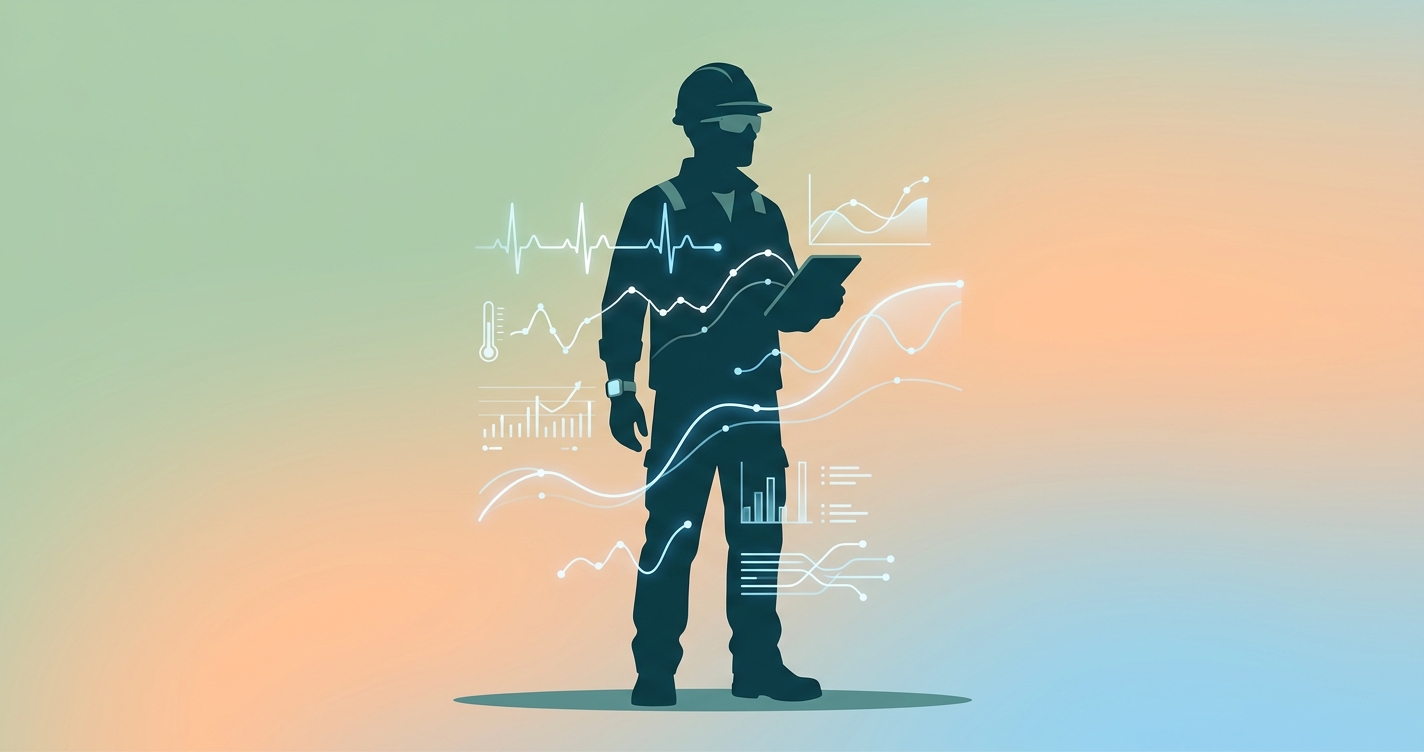
For any worker in a safety-critical job, there is a moment of private calculus before a shift: Am I 100% ready for the task ahead? This question becomes more urgent if the previous night involved alcohol. The anxiety is not just about performance, but about the new generation of pre-shift screening tools. From the other side, for an Environmental, Health, and Safety (EHS) director, the primary concern is not an employee's personal life, but managing the invisible risks that walk through the gate every morning. Hangovers represent a significant, often unaddressed, threat to workplace safety.
"According to the U.S. Department of Labor, drug and alcohol abuse is a contributing factor in an estimated 65% of all on-the-job accidents."
How screening technology can detect impairment before clocking in
The direct answer to the question is no, a pre-shift screening system cannot "tell you're hungover." These platforms are not designed to detect the presence of alcohol or diagnose a specific condition. However, the more precise and important answer is that they can detect impairment before clocking in by measuring its physiological symptoms. A hangover is not just a headache; it is a state of significant physiological distress, and modern contactless screening technology is highly effective at identifying the body's response to that distress.
When a worker consumes alcohol, their body initiates a complex process to metabolize it, leading to dehydration, an inflammatory response, and disruption of normal sleep patterns. Even after blood alcohol content returns to zero, the physiological fallout persists for up to 24 hours. This "next-day" effect is what creates a safety risk. A hungover worker experiences degraded cognitive function, poor concentration, and slower reaction times.
A contactless vitals scan, which uses a standard camera to analyze light reflected from the skin (a technique called remote photoplethysmography or rPPG), measures the objective signs of this distress. Key indicators include:
- Elevated Resting Heart Rate: The heart works harder to pump blood when dehydrated.
- Reduced Heart Rate Variability (HRV): HRV is a measure of the variation in time between each heartbeat, controlled by the autonomic nervous system. Good health and fitness are generally associated with higher HRV. A hangover, as a physiological stressor, significantly lowers HRV.
- Increased Respiratory Rate: The body may exhibit a faster breathing rate in response to the metabolic stress of a hangover.
- Elevated Body Temperature: Research has shown that a hangover can cause a slight but measurable increase in core body temperature.
The screening system does not interpret these signs as "a hangover." It interprets them as a deviation from the individual's established personal baseline, indicating that the worker is not in a normal physiological state and may be at an elevated risk of an incident.
| Method | What It Measures | Primary Use Case | Limitations |
|---|---|---|---|
| Contactless Vitals Scan | Physiological baseline deviation (HR, HRV, Temp) | Proactive risk detection before a shift | Does not detect substances; indicates general impairment |
| Breathalyzer Test | Blood Alcohol Content (BAC) | Evidence of current intoxication | Does not detect "next-day" hangover impairment |
| Urine/Saliva Test | Presence of drug or alcohol metabolites | Post-incident or for-cause testing | Invasive, time-consuming, and does not measure real-time impairment |
| Self-Reporting | Subjective feeling of wellness | Promotes personal accountability | Unreliable, subject to bias, and cannot be verified |
Industry applications of impairment screening
The goal of pre-shift screening is not to punish workers, but to create a safer environment for everyone. By identifying at-risk individuals before they begin a hazardous task, companies can intervene supportively.
### Transportation and Logistics
For truck drivers, rail operators, and pilots, the cognitive impairment from a hangover is a direct threat to public safety. A quick, non-invasive scan can provide an objective data point to confirm a driver is fit for duty before they take control of a vehicle.
### Construction and Mining
In environments where workers operate heavy machinery or perform tasks at height, a lapse in concentration can be catastrophic. Using pre-shift screening helps safety managers ensure that every worker is alert and physiologically ready for the demanding physical and mental work of the day.
### Manufacturing
On a complex assembly line, a worker's reduced coordination or slowed reaction time can lead to quality control issues, equipment damage, or severe injury. Screening helps maintain both productivity and safety by flagging potential impairment before it impacts the production floor.
Current research and evidence
The link between alcohol hangovers and measurable physiological changes is well-documented. A 2012 study led by Min-Kyu Kim and published in the Korean Journal of Medical Science specifically investigated the effect of alcohol hangovers on heart rate variability. The researchers found that HRV was significantly lower in hungover subjects compared to their baseline, indicating a notable disruption in autonomic nervous system function. This is precisely the kind of data point that modern rPPG-based screening systems are designed to capture.
Further research by van der Lely et al. (2012) found that body temperature was significantly higher in individuals experiencing a hangover. While the increase may be small, sensitive thermal cameras integrated into screening systems can flag this as another indicator of physiological strain. Together, these findings provide a scientific basis for using contactless vitals measurement to detect impairment before clocking in, regardless of the cause.
The future of fitness-for-duty
The industry is moving away from a purely reactive and punitive model of safety management ("if you have an accident, you'll be tested") toward a proactive, preventative, and data-driven approach. The question is evolving from "Did this person cause an accident?" to "Is this person at an elevated risk of an incident today?"
This shift benefits both the organization and the individual. For companies, it reduces the rate of incidents, lowers insurance premiums, and minimizes operational disruptions. For workers, it provides a non-judgmental safety net. A "flag" from a screening device does not automatically imply disciplinary action. Instead, it often leads to a conversation with a supervisor, a temporary reassignment to a less safety-sensitive task, or a recommendation to take a rest period. This protects the worker and their colleagues from a potential accident.
Frequently asked questions
What does a pre-shift scan actually measure? A contactless pre-shift scan measures key vital signs like heart rate, heart rate variability (HRV), respiratory rate, and sometimes skin temperature. It compares these readings to your personal, established baseline to see if your body is under unusual physiological stress.
Is this a breathalyzer? Can it detect alcohol? No, it is not a breathalyzer and does not detect the presence of alcohol or any other substance. Its purpose is to measure your physiological state to determine if you are fit for duty, not to test for intoxication. A person with a 0.00% BAC can still be significantly impaired by a hangover, and that is the risk these systems are designed to identify.
What happens if my results are outside the normal range? This varies by company policy. In most cases, it is not a punitive measure. It typically prompts a confidential conversation with a supervisor or an occupational health nurse to determine the cause. The outcome could be a brief rest period, re-assignment to a less critical task for the day, or being sent home if the impairment is significant. The goal is prevention, not punishment.
Can I "fail" a scan just from being stressed or having a bad night's sleep? Yes, because both high stress and significant fatigue can cause physiological changes similar to a hangover, such as elevated heart rate and reduced HRV. From a safety perspective, this is a feature, not a bug. If a worker is dangerously fatigued or acutely stressed, they are impaired and pose a safety risk. The system identifies this risk, allowing the organization to mitigate it.
Ultimately, the move toward contactless screening is about understanding that human physiology provides early warning signs of risk. While these systems cannot know the specific reason a worker's vitals are off, they offer a crucial, objective tool for ensuring that everyone on a worksite is ready to perform their duties safely. Circadify is at the forefront of developing these advanced fraud-detection and fitness-for-duty solutions. To learn more about building a proactive safety program, visit circadify.com/solutions/fraud-detection.