Contactless Screening vs Breathalyzer Testing for Fitness-for-Duty Programs
A comparison of contactless screening and breathalyzer testing for fitness-for-duty programs in occupational health and safety.
The mandate for Environmental, Health, and Safety (EHS) directors has shifted from reactive incident analysis to proactive risk mitigation. In safety-critical industries like transportation, manufacturing, and logistics, ensuring every worker is fit for duty is a primary operational concern. For decades, breathalyzer testing has been the standard for alcohol screening, a critical component of many fitness-for-duty programs. However, the rise of contactless screening technologies presents a new paradigm, offering a more holistic view of worker well-being that goes beyond simple alcohol detection. This report provides a detailed comparison of contactless screening vs breathalyzer fitness duty programs, analyzing their operational, and safety implications for industrial environments.
"In 2023, there were 12,429 fatalities in motor vehicle traffic crashes involving at least one alcohol-impaired driver, constituting 30% of all traffic fatalities." - National Highway Traffic Safety Administration (NHTSA), 2023
Deep dive: contactless screening vs. breathalyzer testing
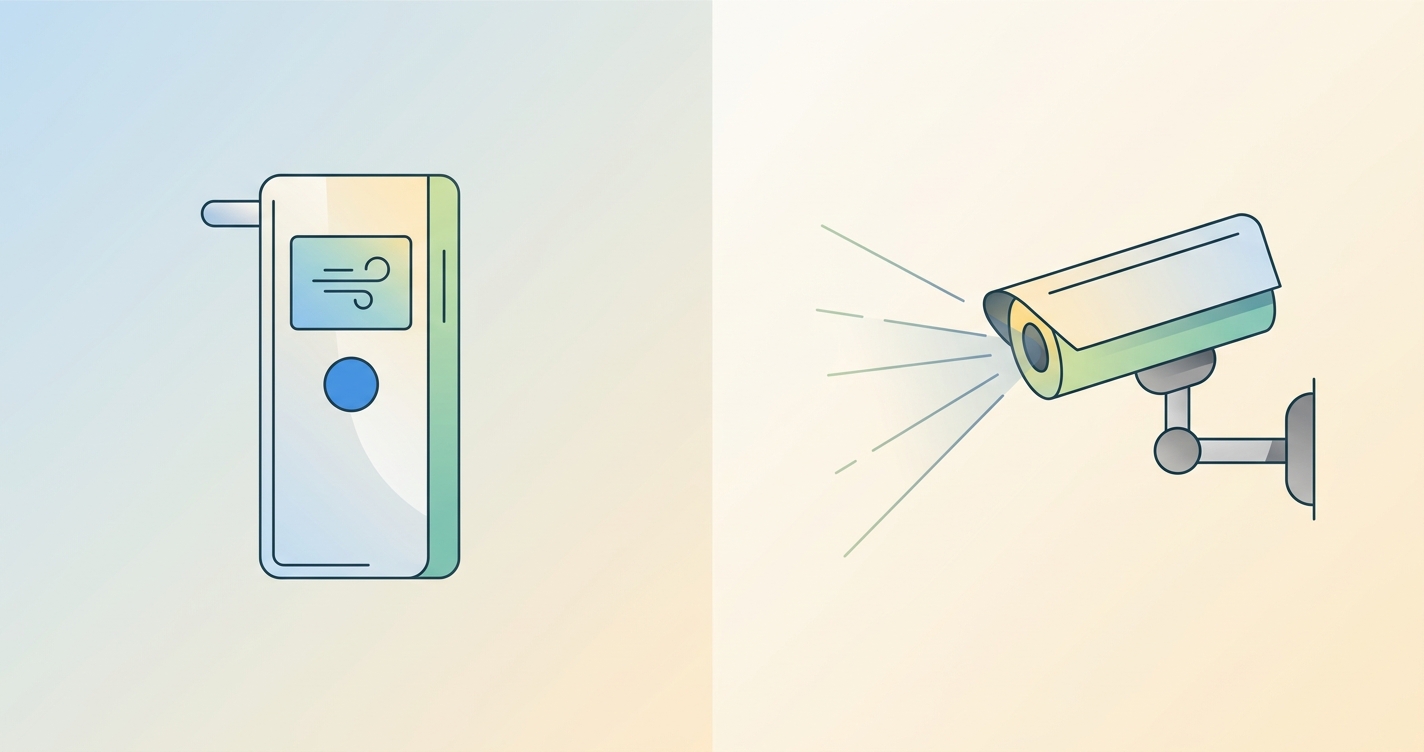
The core difference between these two approaches lies in their scope and methodology. Breathalyzer testing is a highly specific, invasive procedure designed to measure Blood Alcohol Content (BAC). It answers a single question: is this person under the influence of alcohol? This method is well-established, legally accepted for evidential purposes, and supported by a mature market of device manufacturers.
Contactless screening, in contrast, takes a broader, non-invasive approach. Using technologies like computer vision and infrared thermography, these systems measure a range of physiological indicators such as heart rate, respiratory rate, and skin temperature from a distance. The goal is not to detect a specific substance but to assess a worker's overall physiological state. This makes it a powerful tool for detecting not just potential alcohol impairment but also fatigue, illness, and high levels of stress, all of which can compromise workplace safety. The debate over contactless screening vs breathalyzer fitness duty programs is not just about technology; it's about the philosophy of what it means to be "fit for duty."
| Feature | Contactless Screening | Breathalyzer Testing |
|---|---|---|
| Methodology | Non-invasive, camera-based | Invasive, requires breath sample |
| Metrics | Heart rate, respiratory rate, skin temperature, etc. | Blood Alcohol Content (BAC) |
| Scope | Holistic (fatigue, illness, stress, potential impairment) | Specific (alcohol impairment) |
| Throughput | High (seconds per scan) | Low (minutes per test) |
| Data | Real-time physiological data | BAC measurement |
| Worker Perception | Generally positive, less intrusive | Can be perceived as intrusive |
Industry Applications
The choice between contactless screening and breathalyzer testing often depends on the specific operational context and regulatory requirements of the industry.
Regulated industries: transportation and logistics
In sectors governed by regulations like the U.S. Department of Transportation's (DOT) Omnibus Transportation Employee Testing Act of 1991, breathalyzer testing is mandatory for safety-sensitive positions. This act requires alcohol and drug testing for workers in aviation, trucking, railroad, and mass transit. For these organizations, breathalyzers are not optional. However, many are now supplementing these required tests with pre-shift contactless screening.
- Pre-Shift Screening: A quick, contactless scan at the start of a shift can identify workers who may be fatigued or otherwise unwell, even if they are not under the influence of alcohol. This allows for early intervention before a potential safety incident occurs.
- For-Cause Testing: If a contactless screen indicates a potential issue, it can serve as a trigger for a formal, for-cause breathalyzer test, providing a targeted and efficient way to use more invasive screening methods.
Non-regulated industries: manufacturing and construction
In industries without a federal mandate for alcohol testing, EHS directors have more flexibility. Here, the focus is often on a more comprehensive approach to worker safety.
- Fatigue Risk Management: In manufacturing and construction, fatigue is a major contributor to accidents. Contactless screening provides a practical way to monitor for signs of fatigue, allowing for interventions like reassignment to less critical tasks or mandatory rest breaks.
- Health and Wellness: By tracking vital signs over time, these systems can also provide workers with valuable feedback on their own health, encouraging proactive management of stress and wellness. This can lead to a healthier, more productive workforce and a stronger safety culture.
Current research and evidence
The effectiveness of breathalyzer testing for detecting alcohol is well-documented and legally established. The technology has been refined over decades and is considered the gold standard for BAC measurement.
Research into contactless screening is more recent but growing rapidly. Studies have demonstrated the ability of computer vision and other sensor technologies to accurately measure vital signs. For example, research by Hassan et al. (2021) published in the Journal of Ambient Intelligence and Humanized Computing demonstrated the feasibility of using smartphone cameras to measure heart rate and respiratory rate with a high degree of accuracy. While these technologies do not directly measure impairment, they provide a reliable indication of physiological stress, which is often correlated with fatigue, illness, or substance use.
The economic argument is also compelling. The National Highway Traffic Safety Administration (NHTSA) estimated the economic cost of alcohol-impaired-driving crashes in 2019 at $58 billion. These costs include workplace-related expenses, productivity losses, and medical costs. By providing an additional layer of screening, contactless systems can help mitigate these risks and their associated financial impact.
The future of fitness-for-duty screening
The trend in occupational health is moving towards more proactive, data-driven approaches to safety. As technology continues to evolve, we can expect to see several key developments in the contactless screening vs breathalyzer fitness duty landscape:
- Sensor Fusion: Future systems will likely combine data from multiple sensors (e.g., cameras, thermal imagers, and even ambient environmental sensors) to create an even more comprehensive picture of worker fitness.
- AI and Machine Learning: Advanced algorithms will be able to identify subtle patterns in physiological data that may be indicative of developing health issues or latent fatigue, allowing for even earlier interventions.
- Integration with EHS Platforms: Screening data will be integrated directly into existing EHS management systems, providing a seamless workflow for incident reporting, risk analysis, and compliance tracking.
Frequently asked questions
Q: Can contactless screening replace breathalyzer testing?
A: In federally regulated industries, no. Breathalyzer testing is mandatory for compliance. In other industries, contactless screening can be a primary method for fitness-for-duty checks, with breathalyzer testing used for confirmation if an issue is detected.
Q: How do workers feel about contactless screening?
A: Worker acceptance is generally high. The process is fast, non-invasive, and perceived as less accusatory than a traditional breathalyzer test. It is often viewed as a tool for health and wellness, not just for catching policy violations.
Q: Is the data from contactless screening secure?
A: Reputable vendors in this space use robust data encryption and comply with privacy regulations like GDPR and CCPA. Data is typically anonymized and aggregated to protect individual worker privacy while still providing valuable insights for safety management.
The landscape of workplace safety is continuously evolving, and technology is playing an increasingly important role in protecting workers in safety-critical environments. While traditional methods like breathalyzer testing remain a crucial part of many fitness-for-duty programs, contactless screening offers a powerful, proactive tool for identifying a much broader range of risks. As organizations like Circadify continue to advance the capabilities of these systems, they are helping to create safer, healthier, and more productive workplaces. To learn more about implementing a proactive safety program, visit circadify.com/solutions/fraud-detection.