Contactless vs. On-Site Health Screening: Which Is Best?
Compare the pros and cons of contactless health screening versus traditional on-site occupational health clinics for speed, cost, and industrial scalability.
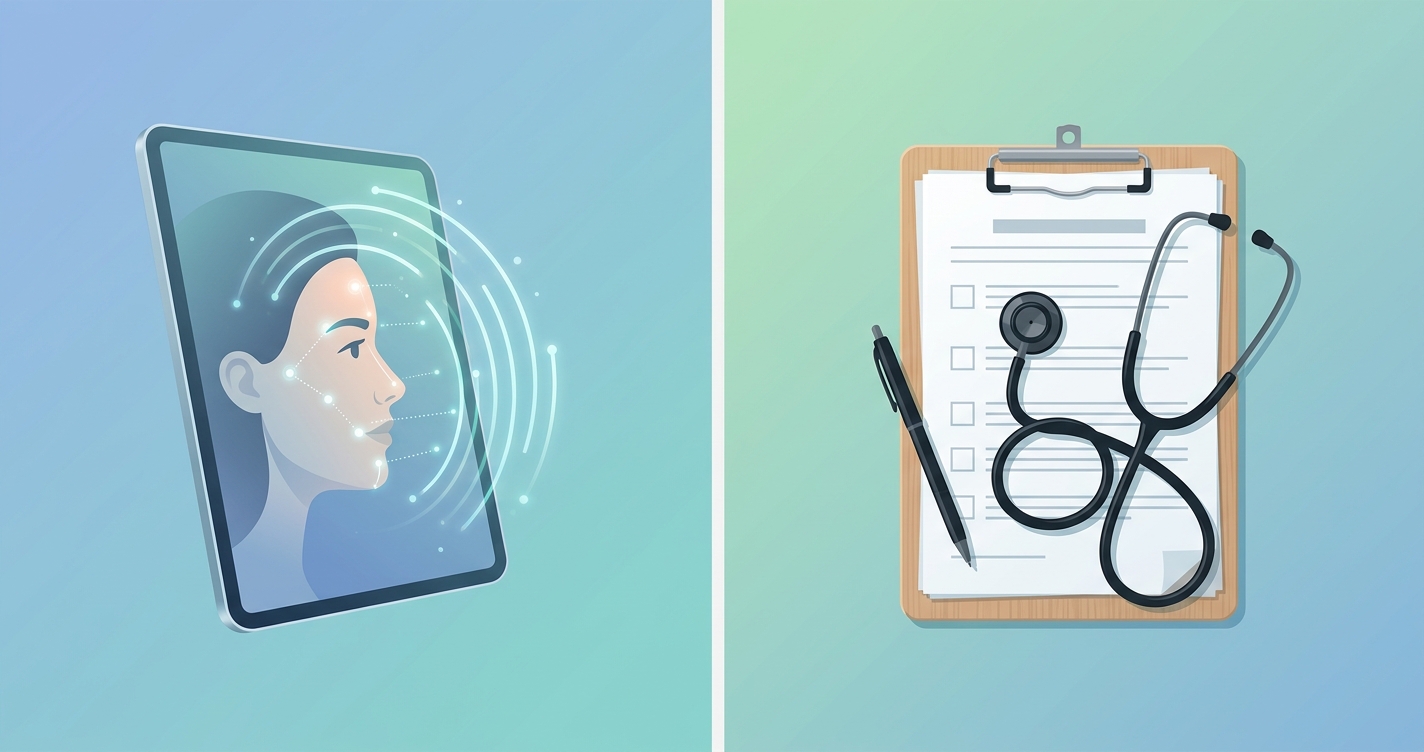
For Environmental, Health, and Safety (EHS) directors, managing shift readiness is a complex logistical challenge. The traditional approach relies on subjective observation or periodic clinical assessments to determine if a worker is physically prepared for safety-critical tasks. As industrial operations scale and workforce demographics shift, the limitations of these legacy models become obvious. Procurement cycles now force a direct evaluation of screening methodologies. Specifically, the choice between contactless vs on-site health screening determines how quickly and accurately an organization can evaluate its workforce before they step onto a plant floor, operate heavy machinery, or begin a high-risk task. This decision impacts not just the safety record, but the operational efficiency and financial health of the entire facility.
"The extraction of plethysmographic signals from video records of the human face opens up entirely new possibilities for non-contact, continuous physiological monitoring in non-clinical environments."
- W. Verkruysse, S. Svaasand, and J.S. Nelson, University of California, Irvine (2008)
The core debate: contactless vs on-site health screening
When evaluating contactless vs on-site health screening, occupational health providers must balance speed, accuracy, and operational overhead. Traditional on-site screening involves a physical clinic, staffed by nurses or technicians, where workers go for periodic evaluations. This method offers a high standard of clinical interaction but is heavily bottlenecked by personnel availability.
In contrast, digital health screening utilizing remote photoplethysmography (rPPG) represents a fundamental shift in occupational health logistics. By analyzing subtle color changes in the human face caused by blood flow beneath the skin, standard camera lenses can extract pulse signals. This removes the need for physical touch, consumables like blood pressure cuffs or pulse oximetry probes, and dedicated clinical staff for routine pre-shift checks. For industrial safety managers, the debate centers on finding the right tool for the right scenario: acute medical intervention versus massive, scalable daily prevention.
The hidden costs of the status quo
An in-person health check conducted by an occupational health nurse is highly thorough. However, when applied to a daily fitness-for-duty context, it becomes an operational bottleneck. If a facility employs 300 workers on a morning shift, funneling even a fraction of those individuals through a traditional screening kiosk or nurse station creates a traffic jam at the gate. The cost is not simply the nurse's salary; it is the compounding expense of lost labor minutes. Ten minutes spent waiting in line multiplied by hundreds of workers equals thousands of lost operational hours per quarter.
Furthermore, traditional hardware kiosks require intense physical maintenance. Touchscreens, arm cuffs, and finger probes are subject to rigorous wear and tear in industrial settings. They require constant sanitation to prevent the transmission of illness, adding a layer of janitorial responsibility to the occupational health team.
Evaluating speed, cost, and scalability
To understand the practical implications for an industrial worksite, an industrial health screening comparison is necessary to map out the logistical realities of each method.
| Feature | Traditional On-Site Clinic | Traditional Hardware Kiosk | Contactless Device Screening (rPPG) |
|---|---|---|---|
| Speed per Screen | 5 to 15 minutes | 3 to 5 minutes | 30 to 90 seconds |
| Cost per Screen | High (clinical labor rates) | Medium (hardware maintenance) | Low (software and standard cameras) |
| Scalability | Low (constrained by staff) | Medium (constrained by floor space) | High (deployable on existing devices) |
| Infection Risk | Moderate (waiting rooms) | High (shared touchpoints) | Zero (no physical contact) |
| Consumables | Yes (cuffs, sanitizers) | Yes (cuffs, sanitizers, probes) | None |
Weighing the trade-offs
Every system has inherent strengths and weaknesses. Safety directors must align these attributes with their specific site requirements.
Traditional On-Site Clinics:
- Pro: Offers immediate, professional medical consultation for workers who display signs of illness or extreme fatigue.
- Pro: Capable of conducting a wide range of biological tests, including blood work, physical exams, and advanced diagnostics.
- Con: Highly expensive to staff, particularly for continuous operations requiring night shift coverage.
- Con: Creates bottlenecks during shift changes, forcing workers to wait in line and delaying operational starts.
Contactless Health Screening:
- Pro: Processes workers rapidly, usually in under 90 seconds, making it ideal for massive shift changes and gate entry points.
- Pro: Eliminates the need for expensive, proprietary hardware by utilizing standard camera technology on tablets or enterprise mobile devices.
- Pro: Removes the hygiene concerns associated with shared blood pressure cuffs, touchscreens, and finger probes.
- Con: Requires adequate ambient lighting environments to accurately capture facial blood flow data.
- Con: Primarily focused on vitals and fatigue indicators, meaning it cannot replace comprehensive clinical diagnostics for complex or acute injuries.
Industry applications for remote worker screening
The practical application of these technologies varies significantly depending on the operational environment. EHS directors must match the screening modality to the specific risks of the site.
Mining and heavy construction
In remote mining sites or large-scale construction projects, deploying a full medical staff is often logistically impossible or cost-prohibitive. The physical footprint of a surface mine can span thousands of acres, meaning that a central clinic is practically inaccessible for workers starting their shifts at distant pits. In-person health checks in these environments are typically reserved for post-incident analysis or scheduled annual physicals rather than daily pre-shift prevention.
Contactless screening kiosks placed at security gates, transport depots, or localized muster points allow for rapid, daily evaluation of a worker's cardiovascular state right where they begin their tasks. If a worker exhibits an abnormally high resting heart rate or irregular respiratory patterns indicative of heat stress or severe sleep deprivation, supervisors can intervene before that individual gets behind the wheel of a 400-ton haul truck. This localized approach decentralizes occupational health, pushing safety checks out to the extreme edges of the operation.
Manufacturing and processing plants
Manufacturing facilities often deal with high-volume, tightly scheduled shift changes. When hundreds of workers need to clock in simultaneously, a traditional hardware kiosk requiring a worker to sit and insert their arm into a cuff creates unacceptable delays. A contactless approach allows a worker to step up to a wall-mounted tablet, complete a quick optical scan, and proceed directly to the floor. This frictionless digital health screening ensures safety compliance without sacrificing production targets.
Logistics and commercial transport
For remote worker screening, particularly in trucking and logistics, traditional on-site clinics are entirely useless. Drivers are distributed across thousands of miles. Contactless screening via enterprise-issued smartphones provides a method for EHS teams to verify the readiness of their drivers regardless of geographic location. This decentralized model represents a massive step forward in managing fatigue on the road.
Current research and evidence
The foundation of modern contactless monitoring relies on decades of optical physics and cardiovascular research. The initial 2008 study by W. Verkruysse, S. Svaasand, and J.S. Nelson at the University of California demonstrated that consumer-grade cameras contained sensors capable of detecting the minute, invisible fluctuations in light reflection caused by the cardiac cycle. This proved that standard imaging hardware could function as a non-invasive biometric sensor.
Since that initial discovery, the focus has shifted toward practical application and robustness in less controlled environments. More recently, research by D. Filipa Ferreira and teams at Bielefeld University has focused on the application of rPPG specifically for occupational safety and health. Their studies evaluate the robustness of contactless systems in real-world environments, testing variables like variable lighting, minor head movements, and different skin tones. This body of research confirms that when environmental controls are established, rPPG can reliably extract physiological data comparable to traditional contact sensors.
Furthermore, a scoping review of employer health claims data noted that while on-site clinics save companies significant capital by reducing long-term medical claims, the massive upfront operational costs restrict adoption strictly to enterprise-level organizations. Digital technologies democratize access to daily health data, allowing mid-sized industrial operators to achieve similar preventive safety benefits without the burden of building and staffing a physical clinic.
Psychological and privacy considerations
Beyond the pure mechanics of speed and cost, EHS directors must consider the psychological impact of health screening on the workforce. Traditional in-person health checks can feel invasive and clinical. Being hooked up to machines, having blood pressure cuffs tightened, or being questioned by clinical staff daily can create an adversarial relationship between the workforce and the safety team. Workers often view these checks with suspicion, fearing that minor health fluctuations might be used punitively.
Contactless technology offers a highly dignified alternative. Workers simply look at a screen for a brief period. There is no physical contact, no complex instructions, and minimal disruption to their daily routine. When implemented with strict data privacy protocols where video feeds are processed locally on the device edge and never recorded or stored, worker acceptance rates are typically much higher than with wearable biometric sensors or invasive hardware checks. By stripping away the clinical intimidation factor, safety managers can build a culture of proactive health awareness rather than reactive compliance.
The future of occupational health logistics
The future of workforce safety relies on blending speed with actionable data. Occupational health providers will increasingly adopt hybrid models. Routine, daily fitness-for-duty evaluations will be handled entirely by contactless, software-driven solutions. These systems will act as a high-speed filter, identifying only the high-risk physiological anomalies and routing those specific individuals to human medical staff for secondary evaluation.
This triage model solves the fundamental scalability problem of the on-site clinic. By removing the burden of manual, routine vitals checks from nurses, those highly trained professionals can focus on injury management, ergonomics, and complex care. As environmental factors like extreme heat become more common on industrial worksites, the ability to screen an entire crew for physiological strain in minutes will transition from an operational luxury to a strict compliance requirement.
Frequently asked questions
What is the main difference between traditional and contactless screening?
Traditional screening requires physical equipment, such as blood pressure cuffs or pulse oximeters, and often a trained technician to operate them. Contactless screening uses advanced camera technology and software to analyze facial blood flow, measuring vital signs without any physical touch or hardware attachments.
Is contactless screening cost-effective for mid-sized companies?
Yes. Because contactless systems operate on standard camera hardware like tablets, commercial kiosks, or smartphones, they eliminate the massive capital expenditure required to build on-site clinics or purchase specialized medical devices, making them highly scalable for operations of any size.
How does lighting affect contactless health checks?
Camera-based screening relies on detecting subtle color changes in the skin. Environments with severe shadows, flickering lights, or total darkness will degrade the optical signal. Consistent, well-lit indoor environments produce the most reliable physiological data.
Can contactless screening replace on-site nurses entirely?
No. Contactless screening acts as a rapid, first-line filter for fatigue and vital sign anomalies. It identifies workers who need further evaluation, allowing on-site nurses to focus on complex diagnostics, injury treatment, and acute medical care rather than routine pre-shift measurements.
For EHS directors building robust safety protocols, selecting the right screening framework is a crucial step in modern risk management. The shift toward objective, rapid screening models allows safety managers to identify risk before it results in an incident. Circadify is directly addressing this space by developing advanced screening tools tailored for high-stakes operational environments. To learn more about implementing secure and efficient health monitoring logistics for your workforce, explore our solutions for safety program integrity at circadify.com/solutions/fraud-detection.