Could a quick check at the gate have stopped a coworker's collapse on site?
A collapse on a work site is a shocking event. This post explores how pre-shift screening can prevent worker collapse by catching early warning signs of fatigue, illness, or distress.
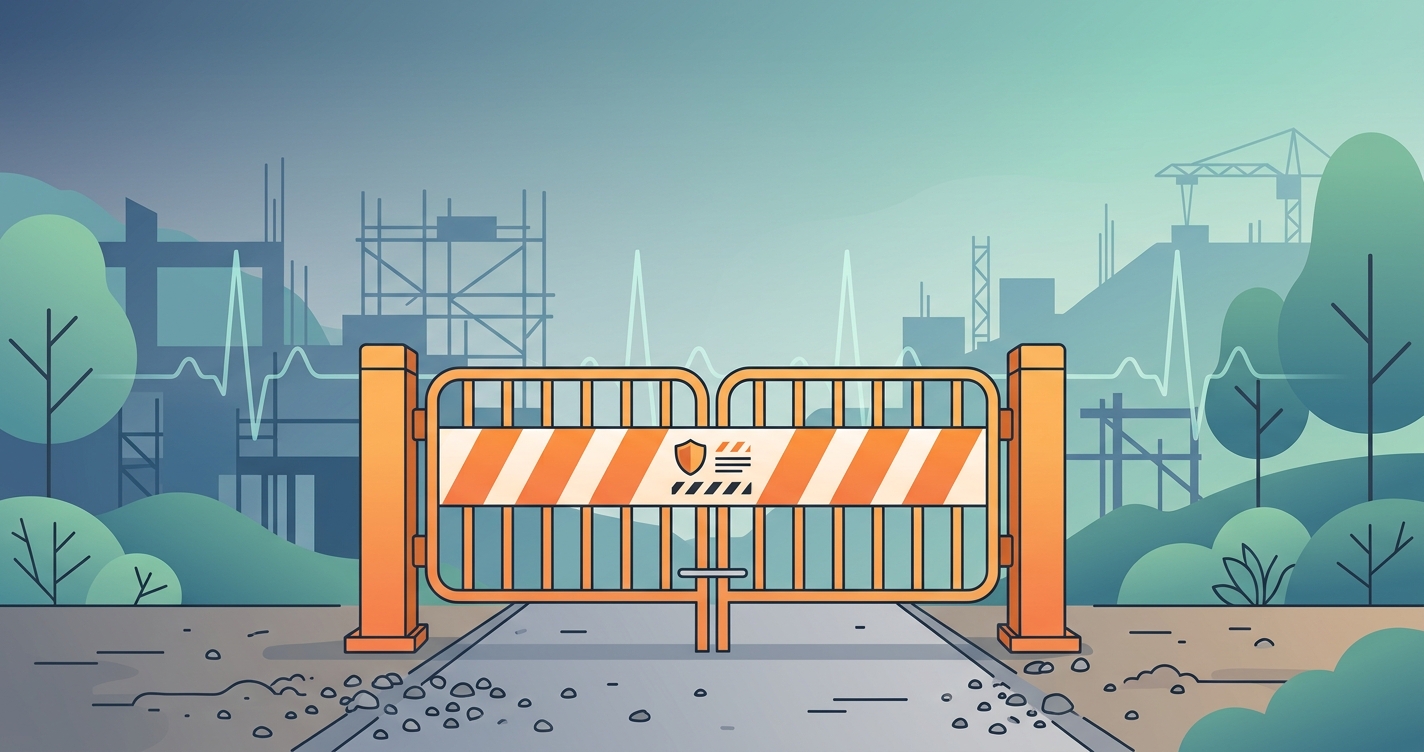
The moment a coworker collapses on site is a traumatic event that sends a shockwave through the entire crew. Beyond the immediate concern for the individual's health, it raises urgent questions for every safety manager and EHS director: Could we have seen this coming? Was there a warning sign we missed? In many cases, the precursors to a sudden collapse are not dramatic or obvious; they are subtle physiological shifts that can only be detected with objective measurement. The adoption of gate-entry health screening is a direct response to this challenge, creating an opportunity to catch dangerous health indicators before a worker is exposed to the risks of a safety-critical environment. The core idea is to prevent worker collapse with pre-shift screening by identifying risk factors like acute fatigue, heat stress, dehydration, or an underlying cardiovascular event before the individual clocks in.
"A 2021 study published in the journal Medicina found that workers who experience syncope (fainting) are 1.4 times more likely to have a subsequent workplace incident. This highlights the critical need for proactive health monitoring in occupational settings."
The physiology of a workplace collapse
A sudden collapse on a worksite is typically the endpoint of a physiological sequence, not a random event. The underlying causes are often a combination of environmental factors, job demands, and an individual's health status. Understanding these pathways is essential for any strategy designed to prevent worker collapse with pre-shift screening. For instance, a worker arriving for a shift already dehydrated will be significantly more susceptible to heat stress. Another worker with undiagnosed hypertension is at a much higher risk of a cardiac event when performing physically strenuous tasks.
These are not hypothetical scenarios. Research from the National Institute for Occupational Safety and Health (NIOSH) has extensively documented the links between physiological strain and workplace incidents. Heat stress, for example, doesn't just lead to heat stroke; it impairs cognitive function, slows reaction times, and fogs judgment long before a collapse occurs. Similarly, fatigue, whether from poor sleep, long hours, or physical exertion, directly correlates with a higher risk of errors and accidents. A pre-shift screening process provides a crucial data point, offering a glimpse into a worker's physiological state at a single point in time: the moment before they step onto a potentially hazardous site. This allows safety protocols to shift from being purely reactive to proactively mitigating individualized risk.
| Screening Method | Description | Data Points | Implementation Time |
|---|---|---|---|
| Manual Self-Reporting | Workers complete a questionnaire about their fitness for duty, fatigue levels, and symptoms. | Subjective answers, self-perceived fatigue score. | 3-5 minutes per worker. |
| Supervisor Observation | A foreman or safety lead visually assesses workers for signs of impairment or distress. | Observed signs like gait, speech, flushed skin. | Varies; often informal. |
| Breathalyzer Testing | Workers are tested for blood alcohol content. | Blood Alcohol Content (BAC). | 1-2 minutes per worker. |
| Contactless Vitals Scan | A device scans a worker's face to measure key physiological indicators. | Heart rate, respiratory rate, blood pressure, SpO2. | 20-30 seconds per worker. |
Industry applications for pre-shift screening
The application of pre-shift screening varies by industry, but the goal is universal: to ensure that every individual starting a shift is physiologically capable of doing so safely.
### Construction and Mining
In construction and mining, workers are exposed to extreme temperatures, heavy machinery, and physically demanding tasks.
- Heat Stress Detection: A pre-shift scan can identify an elevated core body temperature or heart rate, indicating a worker may be at immediate risk for heat-related illness.
- Fatigue Monitoring: Abnormalities in resting heart rate and respiratory rate can be early indicators of profound fatigue.
- Cardiovascular Strain: Screening for high blood pressure can flag individuals who may be at risk when performing strenuous activities.
### Transportation and Logistics
For commercial drivers and warehouse operators, alertness is critical. A momentary lapse can be catastrophic.
- Alertness Verification: While not a direct measure of drowsiness, physiological indicators can show the effects that fatigue has on the body.
- Substance Impairment: An elevated heart rate and blood pressure can sometimes be correlated with the use of stimulants or other substances.
### Manufacturing and Assembly
Repetitive tasks and long shifts in manufacturing can lead to both physical and mental fatigue, increasing the risk of accidents.
- Managing Shift Work Impact: Pre-shift checks can help quantify the physiological toll of rotating or extended shifts on workers.
- Early Illness Detection: Measuring vital signs can help identify workers who are unwell and may be more prone to accidents or presenteeism.
Current research and evidence
The concept of physiological monitoring is well-established in occupational health. A 2021 systematic review published in the International Journal of Environmental Research and Public Health confirmed that physiological monitoring is a valid approach for assessing a worker's health and safety status. Researchers noted that wearable sensors and, more recently, contactless methods provide objective data that is superior to subjective self-reports.
A key finding from NIOSH's work on heat stress is that physiological monitoring offers a more individualized layer of protection than relying on environmental readings alone. Two workers in the same environment will have different physiological responses based on their hydration level, fitness, and acclimatization. A pre-shift check provides this personalized risk assessment. Research conducted by Dr. Mark R. Rosekind, a former NTSB member and a leading expert on fatigue, has consistently shown that fatigue is a physiological state with measurable consequences, reinforcing the need for objective screening tools rather than relying on self-assessment.
The future of gate-entry health screening
The future of worksite safety will involve the integration of rapid, non-invasive health screening into standard operating procedures. As technology becomes more accessible and affordable, daily pre-shift checks will become as common as safety briefings and personal protective equipment (PPE). The goal is to create a culture where every worker's fitness for duty is confirmed before they enter a high-risk zone. This approach doesn't just aim to prevent worker collapse with pre-shift screening; it builds a more resilient and health-conscious workforce. Future systems will likely integrate screening data with environmental sensors and work-roster information to create a comprehensive, real-time risk model for the entire worksite.
Frequently asked questions
Q: Is pre-shift health screening legal and private? A: Yes, when implemented correctly. Modern screening systems are designed to comply with privacy laws like HIPAA and ADA. The system typically provides a simple "pass/fail" result to the employer, not specific medical data, which is kept private to the worker.
Q: Can this technology diagnose a medical condition? A: No. Pre-shift screening tools are not diagnostic medical devices. They are designed to identify potential risk by measuring physiological indicators against pre-set thresholds. An "alert" simply suggests a worker should undergo a secondary evaluation; it does not provide a diagnosis.
Q: What happens if a worker is flagged by the system? A: This is determined by the company's safety policy. Typically, a flagged worker would be directed to a site nurse or safety manager for a confidential secondary assessment, which could be as simple as a conversation and a glass of water or a more thorough check of their vital signs.
The ability to catch the warning signs of a potential collapse before a worker is put in a dangerous situation is no longer a theoretical capability. Circadify is at the forefront of developing contactless screening solutions that provide a rapid, dignified, and effective way to enhance worksite safety. To learn more about how this technology can be integrated into your safety program, visit circadify.com/solutions/fraud-detection.