Drug Testing vs Health Screening: What Catches Risk First
A comparison of drug testing vs health screening at work, clarifying what each method detects, where they overlap, and how safety leaders evaluate risk.
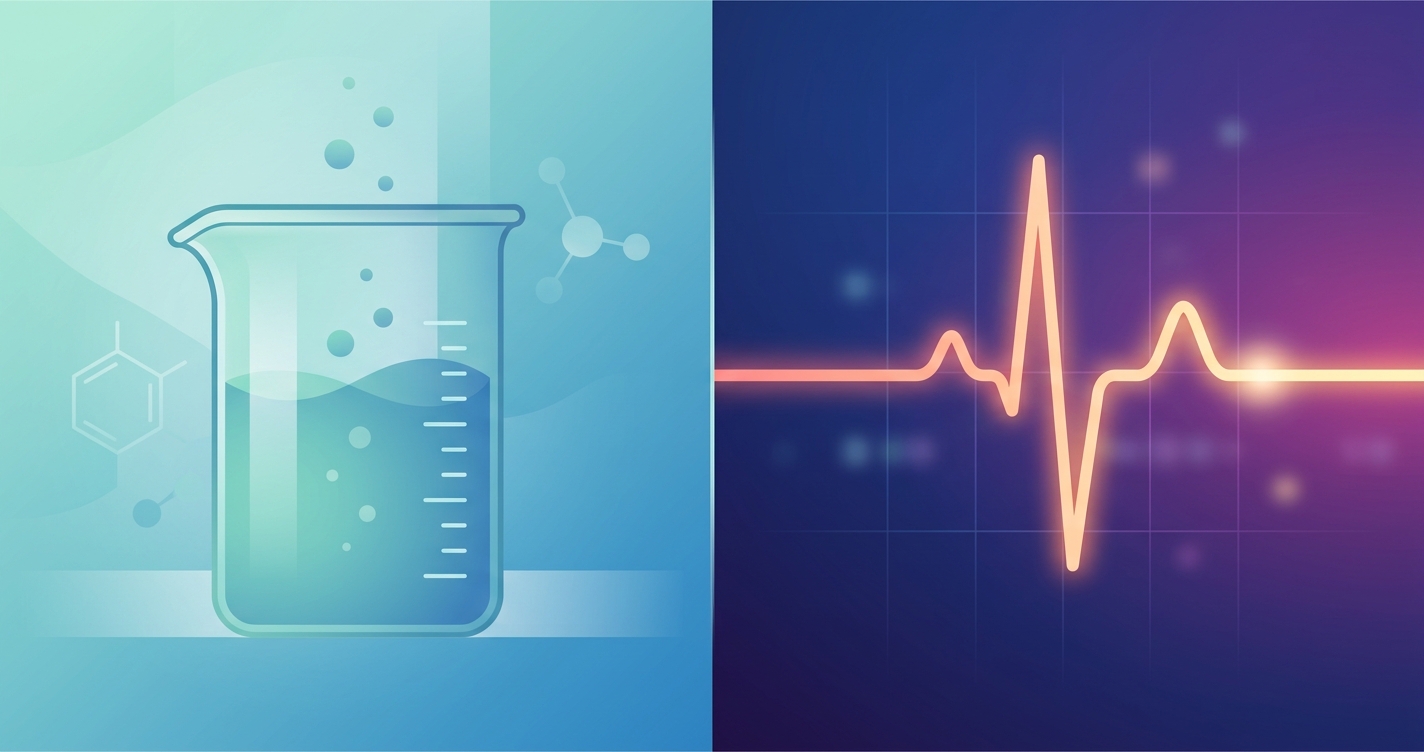
For an Environmental, Health, and Safety (EHS) director, the start of a shift is a moment of calculated risk. When evaluating drug testing vs health screening at work, safety managers must ask a critical question: what actually determines a worker's immediate physical readiness to perform a dangerous task? Historically, occupational health programs relied on traditional methods to filter out danger, primarily by checking for illicit substances. Today, the conversation is shifting rapidly. The distinction between identifying past substance use and measuring current physiological impairment is forcing a total reevaluation of how industrial sites assess fitness for duty.
"Over two-thirds of the U.S. workforce experiences workplace fatigue, a hazard that contributes to 13% of all workplace injuries and costs employers up to $3,100 per employee annually in lost productivity, yet traditional substance screening models are entirely blind to it." , National Safety Council, Impairment Detection Technology Report (2021)
Drug testing vs health screening at work: understanding the distinction
In the occupational safety sector, the debate over drug testing vs health screening at work comes down to a fundamental matter of timing and scope. Drug testing is intrinsically a backward-looking tool. It identifies the presence of a specific substance or its chemical metabolites in a worker's system, confirming that an exposure occurred at some point in the past. It does not measure the worker's current state of impairment or their present physiological ability to operate heavy machinery safely.
Health screening, specifically active fitness-for-duty screening, evaluates the worker's physiological state in the immediate present. By measuring vital signs such as heart rate, respiratory rate, and heart rate variability (HRV), these health screenings provide a direct snapshot of central nervous system readiness. A worker might pass a random drug test perfectly but still be dangerously fatigued, suffering from an undiagnosed viral infection, or experiencing severe cardiovascular stress. Health screening captures these active physiological risk factors that traditional chemical panels completely miss.
The limitations of the traditional drug test
While chemical screening remains a standard compliance requirement across many safety-critical industries, its utility as an active impairment detection method is severely limited. The national workplace drug testing positivity rate reached 4.7% in recent years, largely driven by marijuana detection. However, THC metabolites can remain detectable in the human body for weeks after the psychoactive effects have dissipated. A positive test indicates past exposure, not necessarily active impairment on the plant floor.
Furthermore, traditional drug testing ignores the most common sources of worker impairment entirely. It cannot identify the worker who has been awake for 24 hours dealing with a personal emergency. It cannot flag the crane operator suffering from acute heat stress or severe dehydration. It cannot detect the onset of a viral illness that drastically slows cognitive reaction times. By relying solely on chemical panels for daily access control, safety programs leave massive blind spots in their proactive risk management strategies.
Urine analysis is the most common method, but it introduces a significant time delay between the test and the result. Hair follicle testing provides a 90-day window into a worker's history but offers absolutely no insight into their condition on a Tuesday morning at 6:00 AM. Saliva testing reduces the detection window, but it still focuses purely on chemical presence rather than functional capability.
How health screening catches real-time risk
The mechanism behind active health screening relies on established autonomic nervous system markers. Instead of analyzing bodily fluids, modern screening evaluates the physiological data the body broadcasts continuously. Impairment researchers have extensively studied heart rate variability as an objective metric for fatigue and cognitive load. HRV measures the microscopic time variation between consecutive heartbeats. A high HRV generally indicates a well-rested, adaptable autonomic nervous system. A low HRV indicates stress, systemic fatigue, or impending illness.
When a safety program shifts its focus toward these physiological markers, the approach becomes truly preventative. Instead of waiting for a substance screen to return from a laboratory three days after an incident occurs, the safety manager receives immediate, actionable feedback at the exact start of the shift.
| Feature | Traditional Drug Testing | Active Health Screening (Vitals) |
|---|---|---|
| Primary Metric | Chemical presence or metabolites | Real-time physiological vital signs |
| Timeframe Detected | Past exposure (days to weeks prior) | Immediate current state (real-time) |
| Fatigue Detection | None | High (via HRV and resting heart rate) |
| Illness Detection | None | High (via temperature, respiratory rate) |
| Impairment Correlation | Low to moderate | High (measures current physical deficits) |
| Application Frequency | Random, pre-employment, post-incident | Daily, pre-shift |
Key differences in the data gathered include:
- Drug testing identifies historical exposure to specific chemical compounds.
- Health screening measures the immediate readiness of the central nervous system.
- Impairment detection technologies evaluate active deficits in cognitive or physical performance.
- Heart rate variability serves as a primary, immediate biomarker for systemic fatigue and stress.
The financial and operational cost of unseen impairment
Beyond the immediate physical danger to the crew, the failure to detect active impairment carries a massive financial burden for heavy industry. While drug testing programs are often justified by their ability to lower workers compensation claims over long periods, they do little to stop the daily productivity drain caused by exhausted or physically compromised operators.
When a worker arrives at a construction site or manufacturing facility suffering from extreme fatigue, their cognitive processing speed drops rapidly. Their situational awareness narrows. This degradation in human performance leads to micro-errors. An exhausted forklift driver might misjudge a turn, damaging valuable inventory. A haul truck operator might react a fraction of a second too late, causing a minor collision that grounds the equipment for days.
These incidents rarely trigger a post-accident substance screen if no severe injury occurs, meaning the root cause, physiological impairment, goes entirely unrecorded. Health screening programs that evaluate physical readiness directly address this hidden operational cost. By identifying the exhausted worker at the gate before they clock in, supervisors can proactively reassign tasks, maintaining operational flow without risking expensive equipment or human life.
Industry Applications
Mining and heavy construction
In the extraction and heavy construction sectors, environmental stressors compound physical exhaustion. A haul truck driver might be completely sober but experiencing severe dehydration and cumulative sleep debt from consecutive night shifts. Pre-shift health screening catches the elevated resting heart rate and depressed HRV before the driver gets behind the wheel, preventing a potential catastrophic equipment collision on a busy haul road.
Transportation and logistics
Fleet operators face strict federal guidelines regarding substance use, but fatigue remains a leading cause of commercial driving accidents. While Department of Transportation mandates require random drug screening, proactive logistics companies are adopting daily fitness-for-duty health checks to ensure drivers have the physiological reserves necessary for long-haul routes.
Manufacturing and industrial processing
Factory floors involve high-speed machinery and strict lockout-tagout procedures where split-second reaction times are absolutely required. A worker operating a press machine under the influence of an undiagnosed fever or extreme physical stress is an immediate hazard to themselves and their team. Daily vital sign screening flags the physiological abnormality at the gate, allowing the shift supervisor to reassign the worker to a lower-risk task for the day.
Current research and evidence
The transition toward physiological readiness over chemical testing is supported by robust data. A 2021 report by the National Safety Council on Impairment Detection Technologies found that 82% of employers who implemented active impairment and fatigue screening observed improved safety outcomes. The research indicates that shifting the focus from punitive substance detection to supportive physiological monitoring creates a much stronger internal safety culture.
Medical researchers studying occupational health have established clear correlations between depressed HRV, occupational performance degradation, and increased accident risk in tactical and safety-critical personnel. A 2021 review by the Applied Cognitive Ergonomics Lab confirmed that cardiovascular metrics offer a highly reliable, objective measure of a worker's functional capacity. The researchers concluded that active impairment testing, utilizing physiological data, provides a much stronger correlation to actual job performance than historical chemical analysis. This scientific consensus is driving the rapid adoption of impairment detection technologies across all safety-critical sectors.
The future of pre-shift risk detection
The future of occupational health screening is frictionless, daily, and focused entirely on current capability rather than historical behavior. As industrial sites move away from invasive, manual checks, the adoption of contactless vital sign screening will become the standard for worksite access control. Workers will simply look at an optical sensor, receive an immediate assessment of their physiological readiness, and proceed safely to their shift.
This evolution does not completely eliminate the need for drug testing programs, which still serve an important role in long-term policy enforcement and federal compliance. Instead, it positions health screening as the primary, frontline defense for daily operational safety. By evaluating the actual human condition in real-time, safety directors can stop accidents before the shift even begins.
Frequently asked questions
Does health screening replace traditional drug testing? No. Health screening and impairment detection evaluate immediate physical readiness and fatigue. Traditional substance screening remains necessary for long-term company policy enforcement and regulatory compliance. The two methods serve completely different strategic purposes within a comprehensive safety program.
How does heart rate variability indicate worker fatigue? Heart rate variability measures the tiny time fluctuations between individual heartbeats, which are controlled directly by the autonomic nervous system. When the human body is exhausted, heavily stressed, or fighting off illness, this variability drops significantly. Researchers use this physiological metric as a highly reliable indicator of physical and mental fatigue.
Is pre-shift health screening considered an invasive procedure? Modern health screening technologies are increasingly non-invasive. Unlike the urine or blood draws required for chemical screening, advanced impairment detection relies on optical sensors and software to measure vital signs quickly and contact-free. This approach respects worker privacy while gathering the essential data required to maintain a safe environment.
For safety leaders managing high-risk environments, understanding the distinction between lagging compliance metrics and real-time impairment detection is critical. Circadify provides industrial workforces with contactless pre-shift vitals screening, giving EHS directors immediate visibility into fatigue and physiological readiness before a worker enters a hazardous zone. To learn how modern occupational health screening technology can protect your crew, explore our approach to worker risk detection at circadify.com/solutions/fraud-detection.