How do companies screen workers for fatigue without a blood test?
Explore the evolution of contactless occupational screening for fatigue. Learn how camera-based and computer vision technologies are replacing invasive tests.
For EHS directors and safety managers in safety-critical industries, managing worker fatigue is a persistent operational challenge. The risk is not always visible, and its consequences can be severe. For decades, the tools for assessing fatigue were blunt instruments: self-reported questionnaires, which are subjective and unreliable, or invasive tests like blood draws, which are impractical for daily pre-shift screening. The core problem has been the lack of a scalable, objective, and non-invasive way to measure a worker's physiological state before they begin a potentially hazardous task. This gap is now being filled by a new generation of technology that moves assessment out of the lab and into the operational environment.
"Between 2001 and 2012, fatigue was identified as a probable cause, contributing factor, or finding in nearly 20 percent of 182 major investigations."
- National Transportation Safety Board (NTSB)
The shift to contactless occupational screening
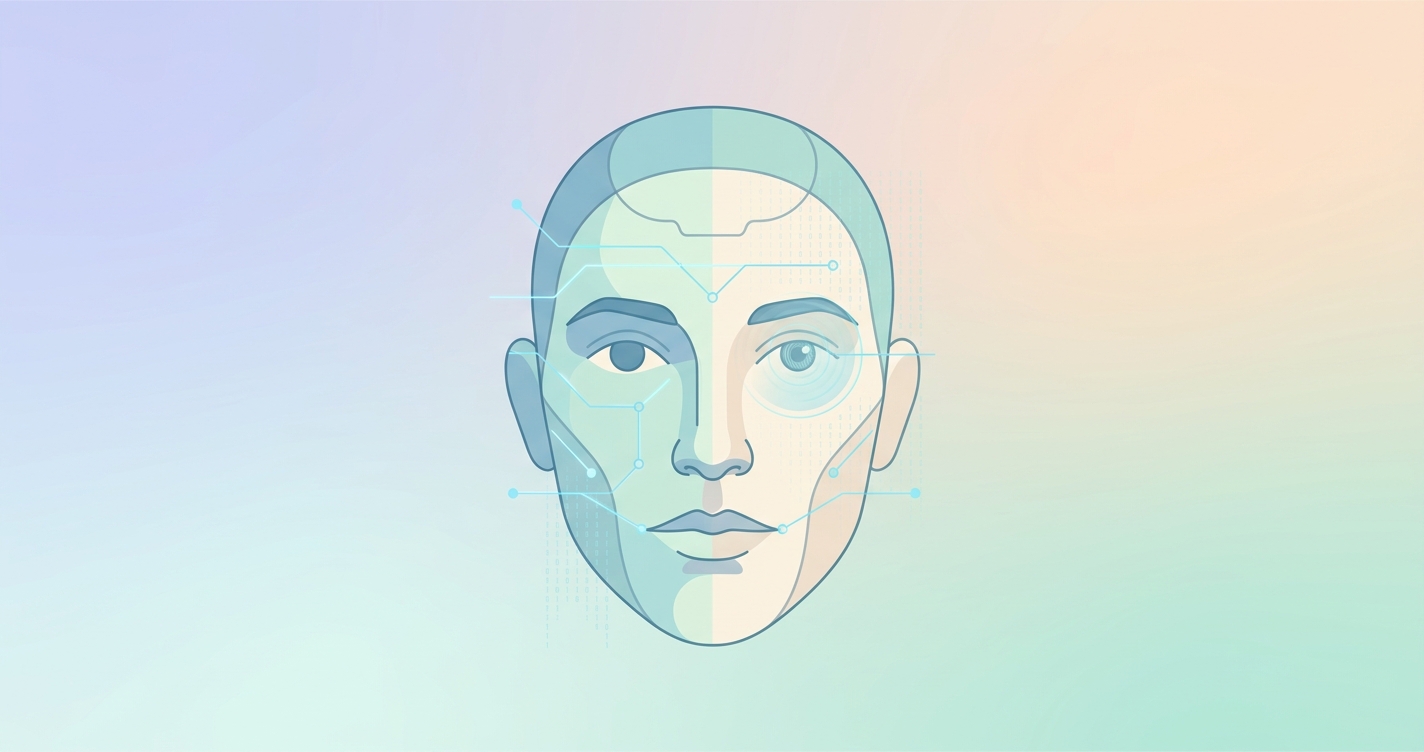
The most significant evolution in fitness-for-duty testing is the move away from methods that require physical contact, wearables, or subjective input. Contactless occupational screening utilizes cameras, sensors, and sophisticated software to analyze physiological indicators from a distance, providing a rapid, objective, and frictionless assessment of a worker's state. This approach primarily relies on two powerful technologies: remote photoplethysmography (rPPG) and computer vision analysis of the eyes and face. By using a simple video feed from a tablet or camera, these systems can measure key vital signs and fatigue indicators in seconds, offering a practical solution for pre-shift screening in high-throughput environments like manufacturing plants, logistics hubs, and construction sites.
These systems analyze subtle changes in the human body that are invisible to the naked eye but correlate strongly with fatigue, stress, and potential impairment. This allows organizations to identify at-risk individuals before a safety incident occurs, shifting from a reactive safety posture to a proactive one.
| Screening Method | Objectivity | Invasiveness | Scalability for Pre-Shift |
|---|---|---|---|
| Subjective Questionnaires | Low | None | High |
| Blood Lactate Tests | High | High (Invasive) | Low |
| Wearable Devices (e.g., Actigraphy) | Medium-High | Medium (Requires hardware) | Medium |
| Contactless Occupational Screening | High | None | High |
The primary advantage of contactless methods is the ability to integrate health screening directly into the daily workflow without adding friction. Workers can be screened as they clock in, removing the logistical and privacy-related barriers associated with wearables or more invasive procedures.
Key physiological indicators measured through contactless screening include:
- Heart Rate and Heart Rate Variability (HRV)
- Respiratory Rate
- Blood Pressure (estimated via pulse transit time)
- Pupillary response (changes in pupil size and reactivity)
- Eye blink duration and frequency (PERCLOS - Percent Eye Closure)
- Head-and-neck pose analysis
Industry Applications
The adoption of contactless occupational screening is accelerating across several safety-critical sectors, driven by the need for more effective fatigue risk management systems.
Transportation and logistics
For trucking companies and rail operators, driver fatigue is a primary safety and compliance concern. Contactless screening stations at dispatch centers or pre-departure checkpoints can assess a driver's fitness for duty in under a minute, providing an objective data point to supplement hours-of-service logs. This helps mitigate the risk of highway accidents and ensures compliance with regulations from bodies like the Federal Motor Carrier Safety Administration (FMCSA).
Manufacturing and warehousing
In a fast-paced manufacturing or warehouse environment, a moment of inattention from a fatigued forklift operator or machine technician can lead to a serious incident. Integrating contactless screening at shift change allows supervisors to identify workers who may be at risk due to poor sleep or physical exhaustion, enabling interventions like re-assignment to a less critical task for the day.
Mining and energy
The demanding nature of work in mining and energy, often involving long shifts in remote locations, makes fatigue a constant hazard. Contactless screening can be deployed at site entrances to ensure every individual entering a hazardous area is physiologically prepared for their duties. It is particularly valuable for monitoring adaptation to high-altitude work or signs of heat stress, which can be exacerbated by fatigue.
Current research and evidence
The technologies underpinning contactless occupational screening are built on decades of scientific research into the physiological markers of fatigue. Early foundational studies have been validated and expanded upon with modern computing power.
One of the cornerstones of camera-based fatigue detection is pupillometry, the measurement of pupil characteristics. As early as 1974, a study by Geacintov and Peavler for the American Psychological Association found that the pupil size of telephone operators measurably decreased over the course of an 8-hour shift, directly correlating with reported feelings of fatigue. This demonstrated that the eye provides a reliable window into a person's cognitive state.
More recent research has focused on using standard video cameras and computer vision to make this analysis scalable. A 2021 study published in the journal Applied Sciences by researchers like Fan and colleagues demonstrated the effectiveness of using remote photoplethysmography (rPPG) to extract heart rate variability (HRV) from facial video. They established that video-derived HRV metrics correlate strongly with fatigue levels, providing a viable, non-contact alternative to traditional ECG or wearable sensors. These findings show that passive, camera-based analysis can capture the subtle autonomic nervous system changes that signal a decline in alertness.
The future of contactless screening
The trajectory for contactless occupational screening is toward more integrated and predictive systems. The next generation of this technology will likely involve multi-modal analysis, where data from rPPG, pupillometry, and even voice analysis are fused by machine learning algorithms to create a highly accurate and comprehensive fatigue risk score. As these systems gather more data, they will be able to move from simple "fit-for-duty" assessments to predictive models that can forecast fatigue risk for a specific crew or worksite based on schedules, environmental conditions, and historical data. The ultimate goal is to create a dynamic feedback loop within a company's Safety Management System (SMS), where fatigue risk is managed with the same analytical rigor as equipment maintenance or process safety.
Frequently asked questions
Q: Is contactless occupational screening legal and does it respect employee privacy? A: Yes, when implemented correctly. These systems analyze physiological data to identify risk, not to diagnose medical conditions. The screening is typically opt-in, and the data is processed to provide a simple risk indicator (e.g., "Ready" or "Check-in Recommended") rather than exposing sensitive health information to supervisors. It is important to consult legal counsel and follow data privacy regulations like GDPR and CCPA.
Q: How does this technology differ from consumer wellness apps? A: Occupational-grade screening technology is designed for high-throughput, objective risk assessment in an industrial environment. Unlike consumer apps, it prioritizes speed, accuracy, and integration with workplace safety protocols. The algorithms are specifically tuned to detect the physiological signatures of workplace fatigue, not for general wellness tracking.
Q: Can workers cheat a contactless screening test? A: It is significantly more difficult to cheat than a subjective questionnaire. The system measures involuntary physiological responses from the autonomic nervous system, such as subtle changes in heart rate variability and pupillary light reflex. These are not under a person's conscious control, making the screening far more objective and reliable.
As industries continue to prioritize proactive safety measures, identifying and managing fatigue is becoming a critical priority. Technologies for contactless occupational screening are providing the tools to address this challenge head-on. Circadify is at the forefront of this space, developing solutions to help EHS leaders build more resilient and effective fatigue risk management programs. To learn more about how this technology can be applied to your safety program, explore our solutions at circadify.com/solutions/fraud-detection.