How do I prove I am fit for duty without an invasive exam?
Explore the shift to non-invasive fitness for duty assessments. Learn how new technologies can verify your readiness for work without intrusive exams.
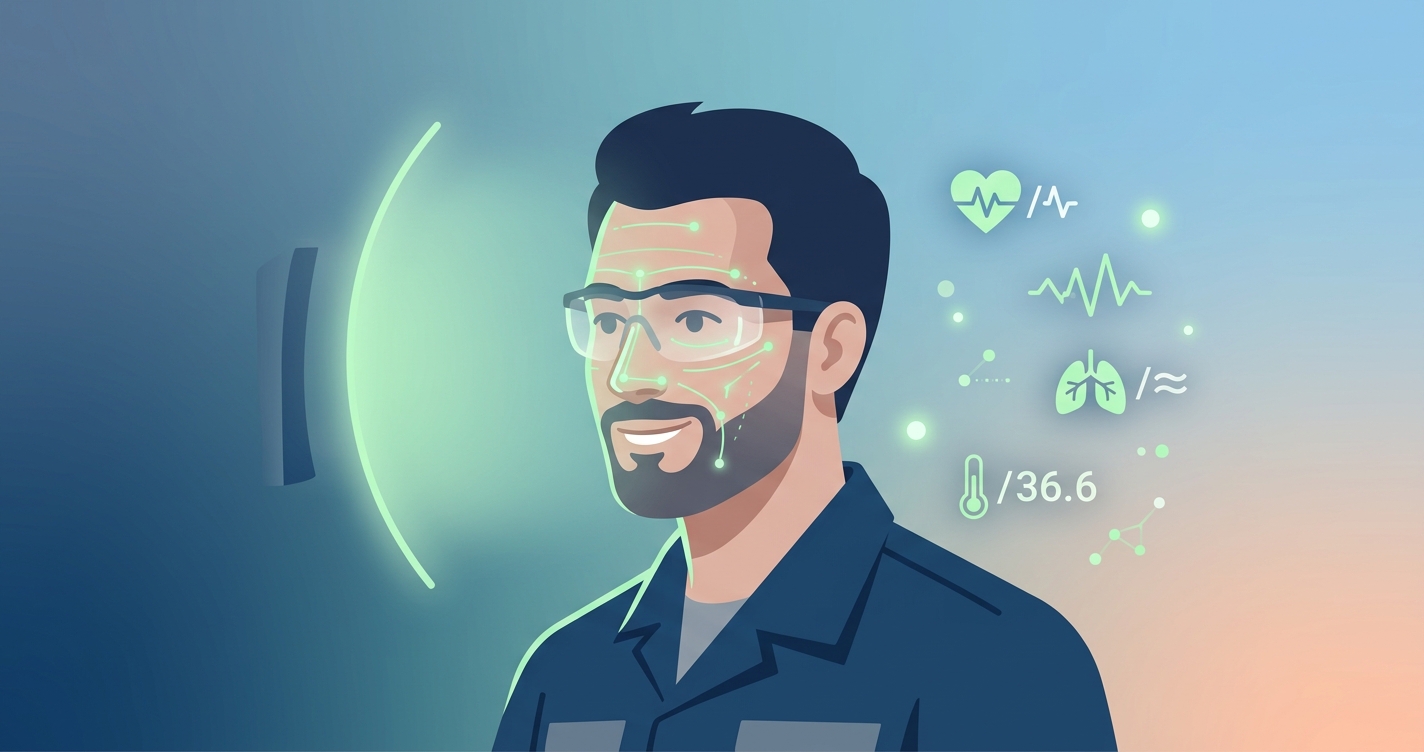
For workers in safety-critical roles, the phrase "fitness-for-duty exam" often brings to mind invasive, time-consuming, and sometimes stressful procedures. These traditional checks, from urine tests to physical questionnaires, are a cornerstone of workplace safety, but they represent a single snapshot in time and can feel like an intrusion. The core question for many workers is how to demonstrate their readiness for a demanding shift without undergoing a burdensome process. The answer is emerging from a new generation of technology focused on non-invasive fitness for duty assessment, a method that respects worker privacy while providing a more immediate and relevant understanding of their current state.
"Fatigue has been cited as a contributing factor in 20-30% of all commercial transportation-related fatalities. The development of objective, non-invasive methods for detecting fatigue is a critical step toward mitigating these risks." - National Institutes of Health (NIH) Analysis, 2019
The shift to non-invasive fitness for duty assessment
Historically, proving you were fit for duty involved lagging indicators. You might take a drug test, answer a questionnaire, or undergo a yearly physical. These methods are important but limited. They don't capture the dynamic nature of human physiology, such as the impact of poor sleep, stress, or the early onset of illness. A non-invasive fitness for duty screening, by contrast, uses technology to measure physiological signs in real-time, providing immediate feedback on a worker's current state of readiness. This approach is not about diagnosing medical conditions but about identifying transient risks. It focuses on leading indicators, subtle changes in vital signs like heart rate, respiratory rate, and heart rate variability (HRV), that can signal potential impairment from fatigue or physiological stress before an incident occurs. This proactive stance is fundamentally changing how safety is managed in industries from transportation to manufacturing.
| Feature | Traditional Fitness-for-Duty | Non-Invasive Fitness-for-Duty |
|---|---|---|
| Method | Questionnaires, physical exams, urine/blood tests | Contactless vitals scan, pupillometry, voice analysis |
| Invasiveness | High (physical contact, biological samples) | None (no contact, no samples) |
| Frequency | Periodic (annual, pre-employment, post-incident) | Pre-shift, continuous, or as needed |
| Data Type | Lagging indicator (historical or static data) | Leading indicator (real-time physiological state) |
| Speed | Minutes to Days | Seconds |
| Worker Experience | Can be stressful, inconvenient, and feel punitive | Fast, seamless, and objective |
Industry Applications
The adoption of non-invasive screening is growing as organizations recognize its value in preventing incidents and supporting worker well-being.
Transportation and logistics
For truck drivers, rail operators, and pilots, fatigue is a persistent operational risk. Non-invasive systems can include camera-based monitoring that tracks eye movement and blink rate (a technique known as PERCLOS) to detect drowsiness. A pre-shift vitals scan can also provide a baseline check to ensure an operator is not starting their shift in a fatigued state.
Mining and construction
Work in these sectors is physically demanding and often occurs in harsh environments. A quick, non-invasive scan can help identify workers who may be showing early signs of heat stress or dehydration by measuring elevated heart and respiratory rates. This allows for early intervention before the condition becomes a medical emergency.
Manufacturing and heavy industry
In complex manufacturing settings, a moment of inattention can lead to a serious accident. Non-invasive fitness for duty checks at the start of a shift can identify subtle physiological signs of impairment that could affect an individual's ability to operate heavy machinery safely. This helps create a more consistent safety standard across the entire workforce.
Current research and evidence
The technology behind non-invasive assessments is grounded in decades of physiological research. The primary method involves remote photoplethysmography (rPPG), a technique that uses a standard digital camera to detect subtle changes in the color of light reflected off the skin. These changes correspond to the pulsing of blood vessels, allowing for the calculation of heart rate, heart rate variability (HRV), and respiratory rate.
Multiple studies have validated the accuracy of camera-based methods. Research published in journals like Nature and those indexed by the National Institutes of Health (NIH) has shown that under controlled conditions, rPPG can measure heart rate with accuracy comparable to traditional pulse oximeters. For example, a 2022 study by researchers at the University of South Australia demonstrated the feasibility of using rPPG for reliable heart rate monitoring. The key is not just measuring a single vital sign but analyzing patterns. A low HRV, for instance, is a well-established marker of both physical and mental fatigue (Journal of Applied Physiology, 2018). By tracking these metrics, non-invasive systems can provide an objective, data-driven assessment of a worker's state.
- Measures minute changes in light reflected from the skin.
- Calculates heart rate, respiratory rate, and heart rate variability.
- Does not require special lighting or hardware beyond a standard camera.
- Data is processed by algorithms to identify patterns associated with fatigue or stress.
The future of workplace readiness
The trajectory for non-invasive fitness for duty technology is toward greater integration and predictive capability. The future isn't just about identifying fatigue as it happens but predicting it before it becomes a critical risk. By combining non-invasive physiological data with work schedules, environmental data (like heat and humidity), and other operational factors, companies are developing sophisticated fatigue risk management systems. Machine learning algorithms can analyze these large datasets to identify patterns and provide supervisors with a forecast of risk for a specific crew or shift, allowing for proactive adjustments like additional breaks or schedule changes. This represents a shift from a reactive safety culture to a truly predictive and preventative one.
Frequently asked questions
Is this type of monitoring legal and private? Yes. These systems are designed to comply with labor laws and privacy regulations like GDPR and CCPA. The technology assesses physiological state without diagnosing medical conditions, and the data is typically anonymized and aggregated. The goal is to manage risk for the workgroup, not single out individual workers.
What exactly does a non-invasive scan measure? It measures vital signs such as heart rate, respiratory rate, and heart rate variability. The system is not looking for specific medical problems but for deviations from your personal baseline that may indicate a temporary state of impairment due to factors like fatigue, stress, or the onset of illness.
How is this different from a consumer smartwatch? While both measure vital signs, the context and application are different. Consumer wearables are for personal health and fitness tracking. A non-invasive fitness for duty system is an occupational safety tool designed for enterprise-level risk management. It provides a standardized, objective, and immediate assessment of readiness for a specific, often hazardous, work environment.
Can I still be declared 'unfit' based on a scan? The scan itself is a data point, not a final decision. Typically, an "out of range" reading would trigger a secondary check or a conversation with a supervisor or occupational health nurse, following the company's established safety protocols. It's a tool to open a conversation about safety, not a pass/fail test administered by a machine.
The move toward non-invasive screening technologies is creating safer work environments by providing an objective way to verify fitness for duty in real-time. For organizations looking to build a more proactive and data-driven safety culture, Circadify is actively developing solutions in this space. To learn more about implementing a modern safety program, explore our solutions for fraud detection.