How Occupational Health Providers Scale Services with Digital Screening
Discover how occupational health providers use contactless digital screening to scale services, monitor industrial fatigue, and overcome clinical shortages.
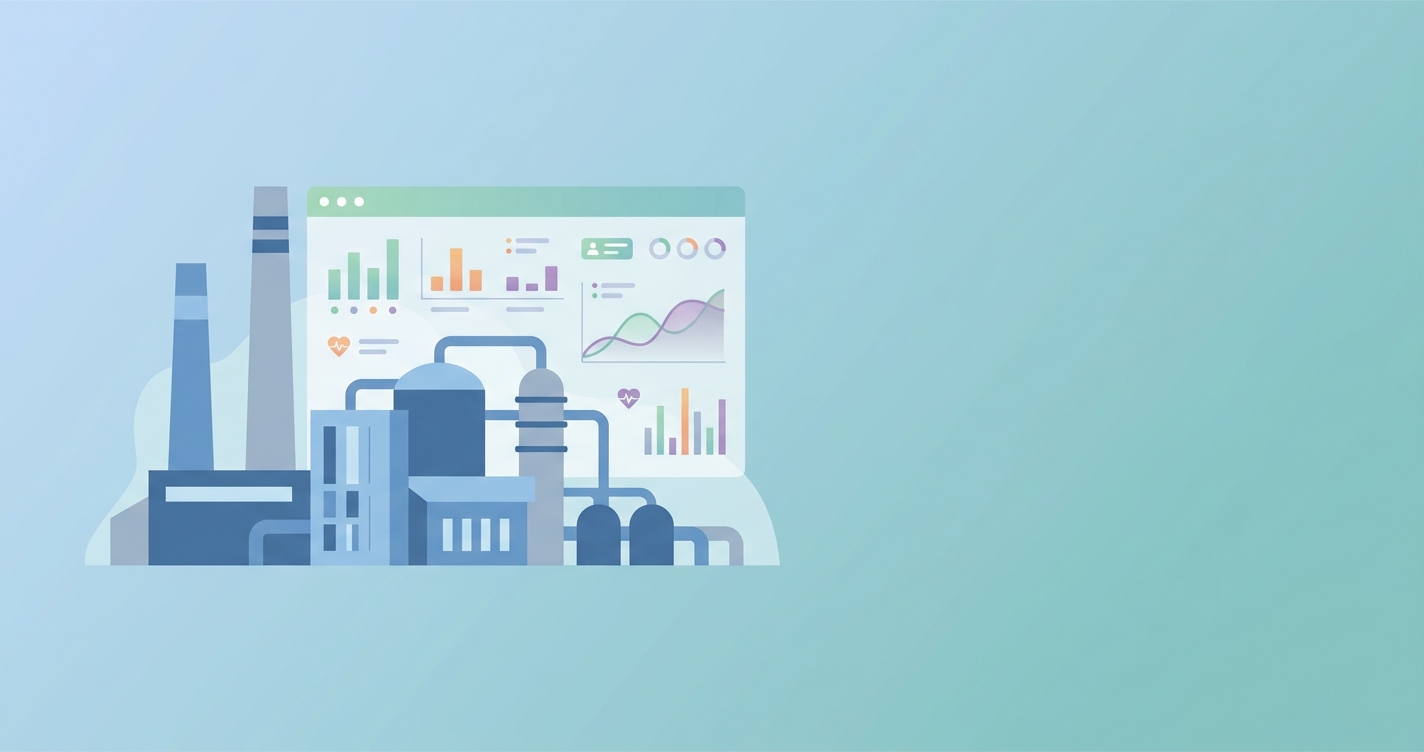
The industrial sector is facing a severe logistical bottleneck. The demand for daily, pre-shift fitness-for-duty evaluations is increasing rapidly, yet the supply of clinical personnel is shrinking. To resolve this imbalance, medical clinics and enterprise safety teams are adopting digital screening for occupational health. By deploying advanced diagnostic endpoints directly at worksites, medical providers can continuously monitor the physiological readiness of heavy machinery operators, miners, and construction crews without requiring a proportional increase in clinical staffing.
"Seventy-eight percent of occupational health professionals surveyed reported that their teams are not large enough to meet current demand, while long-standing recruitment issues prevent services from adequately addressing workforce needs." (Royal College of Occupational Therapists, 2022)
Resolving clinical bottlenecks with digital screening for occupational health
The occupational health services market is projected to expand from $68.4 billion in 2025 to $118.7 billion by 2034, according to a 2024 report by Dataintelo. Concurrently, the U.S. Health Resources and Services Administration projects a severe shortfall of full-time equivalent physicians across dozens of medical specialties by 2037, with Occupational and Environmental Medicine facing acute, long-standing recruitment challenges. This mathematical divergence between market demand and clinical supply requires a fundamental change in how health monitoring is delivered.
Implementing digital screening for occupational health allows clinics and third-party medical providers to serve multiple industrial clients simultaneously. Instead of relying exclusively on periodic, manual clinical evaluations, providers can deploy diagnostic technology directly at the access gates of heavy manufacturing plants, logging sites, or oil rigs. This infrastructure shifts the operational focus from physical presence to remote data analysis.
When abnormal physiological markers are detected at the gate, the system flags the worker, allowing remote occupational medicine professionals to conduct targeted triage rather than broad, unnecessary screening of healthy individuals. This selective attention maximizes the utility of limited clinical staff while providing client organizations with continuous, real-time risk assessment.
Traditional clinical deployment vs. digital screening programs
| Operational Metric | Traditional On-Site Staffing | Digital-Augmented Screening |
|---|---|---|
| Assessment Frequency | Annual exams or post-incident checks | Daily pre-shift physiological monitoring |
| Clinician Dependency | 1:1 ratio required per physical assessment | 1:Many ratio utilizing exception-based triage |
| Geographic Limitations | Constrained by local municipal labor markets | Agnostic to specific industrial site location |
| Data Velocity | Reliance on historical and lagging indicators | Real-time predictive metrics and anomaly detection |
| Cost to Scale | Linear cost increase based on salary and overhead | Fractional cost increase driven by software deployment |
Industry applications and scaling operations
For medical providers looking to expand occupational health services across broader regional territories, digital infrastructure removes the friction of geographical isolation. Industrial operations frequently exist far from municipal healthcare systems. Staffing a clinic at a high-elevation mine or an offshore drilling platform is highly inefficient and cost-prohibitive.
Pre-shift readiness at scale
At a heavy manufacturing or mining site, hundreds of workers may enter the facility within a narrow thirty-minute window. A traditional clinical team cannot manually evaluate each worker for fatigue, cardiovascular anomalies, or central nervous system impairment. Digital endpoints utilizing camera-based algorithms and remote photoplethysmography can process individuals in seconds, allowing a single remote physician to oversee the intake of an entire facility.
Remote health screening for clients
By installing automated kiosks or software applications at the client site, an occupational health provider acts as an invisible, persistent safety net. Clinical teams only intervene when the incoming data dictates a necessity. Providers are increasingly utilizing remote health screening for clients as a premium service tier that operates continuously. This structure covers night shifts and weekend operations that are notoriously difficult to staff with specialized medical personnel.
When occupational health providers deploy remote screening systems, they typically focus on analyzing specific biomarkers that correlate heavily with shift readiness and operational fatigue:
- Heart rate variability as a primary indicator of central nervous system fatigue, stress, and recovery status.
- Resting heart rate deviations to establish baseline cardiovascular anomalies prior to strenuous labor.
- Respiratory rate fluctuations, which can indicate heat stress, dehydration, or incoming illness.
- Facial micro-expressions and ocular metrics associated with acute sleep deprivation and diminished reaction times.
- Thermal metrics to evaluate potential hyperthermia in extreme operational environments like foundries or deep-shaft mines.
Current research and evidence
The transition toward automated health monitoring is supported by both clinical efficacy studies and shifting attitudes within the industrial workforce regarding occupational medicine technology. The National Safety Council published a 2023 report through its Work to Zero initiative indicating that 83 percent of industrial employees are open to trying new safety technologies in the workplace, provided the tools prioritize accident prevention over arbitrary surveillance.
Furthermore, specialized research reflects a growing reliance on artificial intelligence and digital tools among safety practitioners. A 2023 study published in the journal MDPI by researchers evaluating the Polish construction sector found that nearly 46 percent of Occupational Health and Safety specialists believe significant portions of their diagnostic and risk assessment work can be automated or supported by digital tools. The same study noted that 33 percent of respondents were already integrating automated solutions into their daily organizational workflows.
This research validates the transition toward technology-augmented clinical models. Instead of replacing the clinician, these tools act as an advanced filtration mechanism. Predictive models utilizing biometric data can effectively forecast worker fatigue levels, drastically reducing the incidence of attention failures in heavy equipment operation without requiring a doctor to be physically present at the steering wheel.
The future of workplace wellness technology
Looking forward to the next decade, workplace wellness technology will abandon reactive medical interventions in favor of continuous, predictive modeling. The current standard of occupational health relies heavily on scheduled fit-for-duty exams and post-incident drug testing. Both are lagging indicators that fail to capture the dynamic, day-to-day fluctuations of human physiology.
Future clinical models will rely on multimodal sensor data to create dynamic risk profiles for individual workers. If a worker arrives at a logistics hub showing signs of acute dehydration and suppressed heart rate variability, the digital screening system will not just flag the anomaly. The system will cross-reference the data with the worker's upcoming schedule, the ambient temperature of the facility, and the specific risk profile of the heavy machinery they are assigned to operate.
The occupational health provider will receive a consolidated risk alert, allowing them to recommend a shift adjustment or a specific hydration protocol before the worker even crosses the facility threshold. This proactive intervention loop will become the standard of care for safety-critical industries, redefining the financial and operational value proposition of occupational health partnerships.
Frequently asked questions
How does digital screening allow occupational health providers to handle more clients?
By automating the baseline physiological checks required at the start of a shift, clinics can monitor thousands of workers simultaneously. Medical professionals are only alerted to intervene when the system detects an anomaly, shifting the workload from routine data collection to targeted clinical triage.
What physiological data can be captured contactlessly?
Advanced camera-based systems utilize remote photoplethysmography to extract metrics such as heart rate, heart rate variability, and respiratory rate simply by analyzing the light reflecting off a worker's skin during a brief scan.
Does automated health screening replace the need for on-site clinicians?
No. Automated systems act as a diagnostic filter. While they eliminate the need for clinical staff to perform manual, routine vitals checks on healthy workers, they rely on trained occupational health professionals to interpret flagged data and make final fitness-for-duty determinations.
Are industrial workers open to automated health monitoring?
Yes, provided the systems are implemented with strict data privacy parameters. Research from the National Safety Council in 2023 indicates that the vast majority of employees are receptive to safety technologies that actively reduce their risk of workplace injury.
In safety-critical sectors, the ability to monitor workforce health at scale is an operational requirement. EHS directors and clinical providers must integrate advanced screening tools to keep pace with demand without overburdening their medical staff. Circadify is addressing this space by developing secure, contactless solutions that seamlessly embed into industrial workflows. For organizations looking to optimize clinical oversight and expand their capabilities, explore our approach by visiting the Safety program inquiry page.