How Renewable Energy Sites Monitor Technician Health in Remote Locations
A research-based look at how renewable energy operators are using technology to monitor and protect technician health in isolated and hazardous environments.
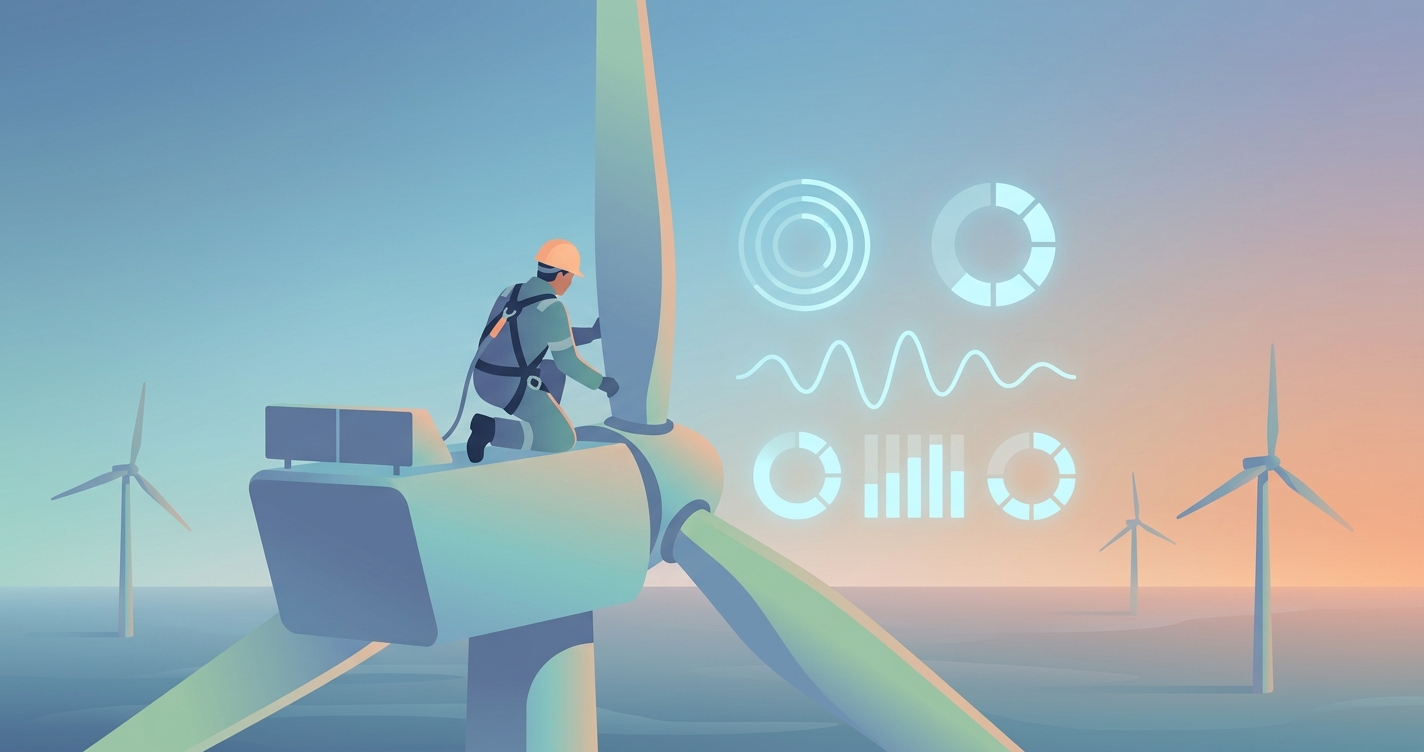
The rapid expansion of the renewable energy sector is a critical component of the global energy transition, but it brings with it a unique set of workforce challenges. As wind farms, solar arrays, and geothermal plants are increasingly developed in remote and often inhospitable locations, ensuring the health and safety of the technicians who build and maintain them has become a critical concern for Environmental, Health, and Safety (EHS) directors. These lone or paired workers face a combination of extreme weather, physically demanding tasks, and significant distance from emergency medical services. Consequently, a proactive approach to renewable energy site technician health monitoring is no longer just a best practice; it is an operational necessity for mitigating risk and ensuring project continuity.
"The fatality rate for power line workers, a similar high-risk trade, was 20.5 per 100,000 workers in 2021, a rate significantly higher than the all-worker average of 3.6. Technicians in the renewable sector face comparable, if not greater, risks due to the added dimension of remote and isolated work environments." - U.S. Bureau of Labor Statistics, 2022.
The challenge of remote health monitoring in renewable energy
The core challenge for EHS leaders in the renewable sector is managing physiological risk at a distance. A technician working atop a 300-foot wind turbine or servicing a solar farm in a desert hundred of miles from the nearest town cannot be managed with traditional, site-based safety protocols. The risks are multifaceted, combining environmental, occupational, and logistical factors. Environmental hazards include extreme heat or cold, high winds, and lightning. Occupational risks involve working at heights, exposure to high-voltage electricity, and handling potentially hazardous materials. Logistically, the remote nature of these sites means that response times for emergency services can be dangerously long.
Effective renewable energy site technician health monitoring programs must therefore be built on a foundation of real-time or near-real-time data. The goal is to move from a reactive posture, where an incident triggers a response, to a proactive one, where physiological data can flag a potential issue before it escalates into a safety event. This involves monitoring for signs of fatigue, heat or cold stress, cardiac distress, and other indicators of a worker's fitness for duty. A worker who is fatigued, dehydrated, or otherwise physiologically compromised is significantly more likely to make a critical error, particularly when performing complex or physically demanding tasks.
Health monitoring technology comparison
EHS directors have several options for implementing a health monitoring program, each with distinct capabilities and limitations. The choice of technology often depends on the specific risks of the site, existing infrastructure, and the operational budget.
| Technology | Type of Data Collected | Common Applications | Limitations |
|---|---|---|---|
| Manual Check-ins | Subjective self-report | Basic lone worker safety protocols | Unreliable, non-verifiable, provides no physiological data, prone to human error. |
| Wearable Biometric Sensors | Heart rate, skin temperature, activity levels, SpO2 | Continuous monitoring of individual workers | Requires worker adherence, potential for data gaps, battery life concerns, can be damaged in harsh environments. |
| Contactless Vitals Screening | Heart rate, respiratory rate, heart rate variability, blood pressure | Pre-shift fitness-for-duty screening at site access points | Provides a point-in-time snapshot, not continuous monitoring during the shift. |
| Vehicle & Equipment Telematics | Driving behavior (speed, braking), operator alerts | Monitoring for drowsy driving or erratic vehicle operation | Indirect measure of worker state, does not capture physiological data directly. |
Industry Applications
The application of health monitoring technology varies significantly based on the specific type of renewable energy site and its associated environmental and occupational hazards.
Offshore wind farms
Technicians on offshore wind farms face some of the most extreme conditions, including long transit times over rough seas, work at significant heights, and exposure to severe weather. A 2023 systematic review by researchers at the University of Portsmouth highlighted that fatigue is a major factor, driven by 12-hour shifts and the physically demanding nature of the work (Tipton et al., 2023). Monitoring programs here focus on:
- Tracking cumulative fatigue over multi-day shift patterns.
- Monitoring for signs of hypothermia or dehydration.
- Using biometric sensors to understand the physiological strain of climbing and performing maintenance tasks.
Remote solar installations
Large-scale solar farms are often located in arid, desert environments where extreme heat is the primary hazard. Technicians are at high risk for heat exhaustion and heat stroke, conditions which can develop rapidly and impair cognitive function. Health monitoring strategies for these sites often include:
- Pre-shift and mid-shift screening for signs of heat stress, such as elevated core body temperature and heart rate.
- Monitoring hydration levels and enforcing work/rest cycles based on environmental conditions and individual physiological responses.
- Using alerts to notify supervisors when a technician's vitals approach a dangerous threshold.
Geothermal and hydropower sites
While often less remote than wind and solar sites, geothermal and hydropower facilities present unique risks. Geothermal technicians may be exposed to toxic gases like hydrogen sulfide in confined spaces, while hydropower work can involve diving or working in and around turbulent water. Monitoring in these contexts is tailored to:
- Detecting physiological responses to gas exposure.
- Monitoring the vital signs of workers in confined spaces.
- Ensuring the fitness-for-duty of technicians performing high-risk tasks.
Current research and evidence
The field of renewable energy site technician health monitoring is evolving, supported by a growing body of research into occupational safety in the sector. The 2023 systematic review published in Safety Science on fatigue in offshore wind technicians is a landmark study. It synthesized existing evidence and concluded that there is a clear need for better objective data on fatigue and performance to inform work-scheduling policies (Tipton, M.J., et al., 2023).
Current research is also heavily focused on the development and validation of new sensor technologies. Innovations in wearable fabrics, non-invasive optical sensors, and radar-based systems promise to make health monitoring less intrusive and more reliable. Researchers are exploring how machine learning algorithms can analyze physiological data streams to create personalized fatigue and risk predictions. For example, a study by Rossi et al. (2021) in the journal Sensors demonstrated the feasibility of using wearable ECG and temperature sensors to classify heat stress risk in real-time. This research is critical for moving beyond simple threshold-based alerts to a more nuanced, predictive model of worker safety.
The future of technician health monitoring
The future of health monitoring in the renewables industry lies in integration and prediction. The next generation of safety management systems will not rely on a single data source but will integrate information from multiple streams: contactless pre-shift screens, wearable sensors, environmental monitors, and even vehicle telematics. This holistic view will allow for the creation of a dynamic, real-time risk profile for each worker.
Artificial intelligence and machine learning will be central to this evolution. AI-powered platforms will be able to identify subtle patterns in a worker's vital signs that may indicate the onset of fatigue or illness long before the worker is consciously aware of it. Instead of an alarm sounding when a worker's heart rate is already dangerously high, a supervisor might receive a predictive alert suggesting a 15-minute rest break for a specific technician based on their physiological trends over the last hour. This shift from reactive to predictive risk management represents a fundamental change in how worker safety is managed, enabling operators to intervene proactively and prevent incidents before they occur.
Frequently asked questions
What are the biggest health risks for remote renewable energy technicians? The primary risks stem from a combination of factors: environmental (extreme temperatures, high winds), occupational (working at heights, high voltage, confined spaces), and logistical (remote locations, lone worker status). This combination makes fatigue, heat stress, cardiac events, and falls the most significant concerns.
How does fatigue impact safety on a renewable energy site? Fatigue significantly impairs cognitive and physical functions. It slows reaction time, reduces situational awareness, and can lead to poor judgment and decision-making. For a technician performing a complex, high-stakes task, these impairments dramatically increase the risk of a critical error that could lead to an injury or major equipment damage.
What is the difference between wearable and contactless health monitoring? Wearable monitoring involves devices like smartwatches or chest straps that are worn by the worker to collect continuous biometric data. They provide a rich, longitudinal dataset but depend on worker compliance and have limitations related to battery life and durability. Contactless monitoring uses sensors (like cameras or radar) to measure vital signs from a distance without requiring the worker to wear anything. It is often used for point-in-time screening, such as a pre-shift fitness-for-duty check, providing a low-friction way to assess a worker's health status at a specific moment.
As the renewable energy landscape matures, the focus on technician health and safety will only intensify. Proactively managing the physiological risks faced by these critical workers is not just an ethical responsibility but also a sound business strategy for ensuring operational uptime and project success. Circadify is actively developing solutions to address these complex challenges in remote industrial environments. To learn more about building a proactive safety program for your workforce, visit our solutions page at circadify.com/solutions/fraud-detection.