How do safety-critical jobs check if workers are fit for duty?
A review of the methods, regulations, and technologies used in fitness for duty screening for safety-critical jobs, from DOT physicals to advanced physiological monitoring.
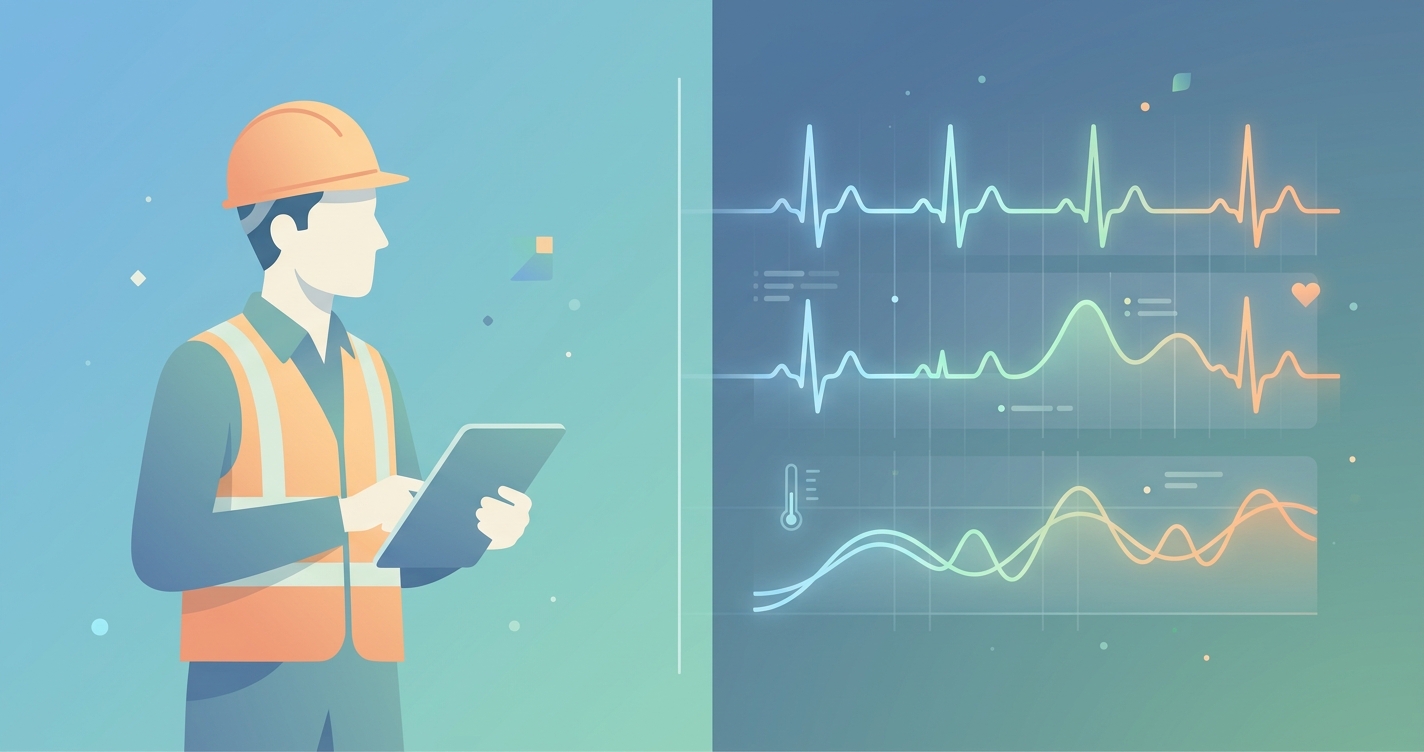
In safety-critical industries like transportation, energy, and manufacturing, the line between operational readiness and a catastrophic incident is often measured in milliseconds of reaction time or a single lapse in judgment. Ensuring that every worker is physically and mentally capable of performing their duties is not just a matter of compliance, but a fundamental pillar of risk management. This is the core purpose of fitness for duty screening-a systematic process designed to verify an individual's capacity to work safely and effectively, preventing impairment from turning into an incident.
The traditional approach to workplace safety has been largely reactive, analyzing events after they occur. However, the immense cost of incidents, both human and financial, has pushed EHS leaders towards proactive frameworks. Fitness for duty screening is a key component of this shift, moving from a post-incident "what happened?" to a pre-shift "are we safe to proceed?".
"Workers experiencing fatigue are 70% more likely to be involved in workplace accidents." - National Safety Council
The framework of fitness for duty screening
At its core, fitness for duty screening is a multi-faceted evaluation. It's not a single test, but a program that can encompass a range of assessments, from simple questionnaires to comprehensive physiological evaluations. Regulatory bodies like the U.S. Department of Transportation (DOT) and the Occupational Safety and Health Administration (OSHA) mandate specific screening protocols for workers in defined safety-sensitive roles. For example, the DOT requires commercial drivers to pass a physical examination every 24 months, covering vision, hearing, and cardiovascular health. Similarly, OSHA requires medical surveillance for workers exposed to certain hazards.
These programs are typically triggered at several points in an employment lifecycle:
- Pre-Placement: Before an employee begins a safety-critical role.
- Periodic: Scheduled, routine checks to ensure ongoing fitness.
- Post-Incident: After a safety event to determine if impairment was a contributing factor.
- For-Cause: When a supervisor observes behavior or performance that suggests potential impairment.
- Return-to-Duty: After a medical leave or a previous failed test, ensuring the employee is fully recovered and safe to resume work.
The challenge for occupational health providers and safety managers is selecting the appropriate screening methods that are both effective and compliant with regulations like the Americans with Disabilities Act (ADA), which requires that all tests be job-related and consistent with business necessity.
| Screening Method | Type of Impairment Detected | Implementation | Objectivity | Proactive Potential |
|---|---|---|---|---|
| Self-Reporting / Questionnaires | Fatigue, illness, psychological distress (self-disclosed) | Quick, low-cost | Low (Subjective) | Moderate |
| Behavioral Observation | Obvious signs of impairment (e.g., slurred speech, unsteady gait) | Relies on supervisor training | Moderate (Subjective) | Low (Reactive) |
| Drug & Alcohol Testing (Biochemical) | Presence of specific substances (e.g., alcohol, opioids, cannabis) | Invasive, lab-based | High (Objective) | Moderate |
| Physiological Monitoring (Vitals) | Fatigue, heat stress, dehydration, potential cardiac events | Non-invasive, real-time | High (Objective) | High |
Industry Applications
The implementation of fitness for duty screening varies significantly based on the specific risks of the industry.
### Transportation and Logistics
For the DOT, fitness for duty is critical. Beyond standard physicals and substance testing, the Federal Railroad Administration (FRA) and Federal Aviation Administration (FAA) have stringent rules regarding work hours and fatigue. The focus is on preventing impairment from conditions like sleep apnea or substance use that could have devastating public consequences.
### Energy and Mining
In the energy and mining sectors, operations often occur in remote, physically demanding environments. As noted by Energy Safety Canada, a leading industry authority, fitness for duty programs in this field must account for extreme conditions, long shifts, and potential exposure to hazardous materials. Pre-shift screening often includes checks for fatigue and dehydration, which are critical risk factors in these settings.
### Manufacturing and Construction
These industries see high rates of musculoskeletal injuries. Accident rates are known to be 18% greater during evening shifts and 30% greater during night shifts compared to day shifts. Consequently, screening programs are increasingly focused on identifying fatigue and physical overexertion before they lead to an incident.
Current research and evidence
The frontier of fitness for duty is moving beyond simple pass/fail tests toward continuous, data-driven monitoring. Modern research focuses on using non-invasive technology to assess a worker's state in real-time. A significant body of work has emerged from institutions studying high-performance, high-risk groups.
Researchers at MIT's Lincoln Laboratory, in a long-standing collaboration with the U.S. Army Research Institute of Environmental Medicine (USARIEM), have been pioneers in developing real-time physiological status monitors (PSMs). This work, involving prominent researchers like Karl E. Friedl (2016), aims to detect signs of heat strain and physical exhaustion in soldiers before they become mission-critical casualties.
Similarly, a 2022 study by a team including Denisse Bustos and Joana C. Guedes at the University of Porto explored the use of physiological monitoring to manage physical fatigue in firefighters. Their research highlights the use of variables like heart rate, breathing rate, and core body temperature to create an objective assessment of a worker's capacity, moving beyond subjective feelings of tiredness. The goal is to provide an early warning system that flags when a worker is approaching a physiological danger zone. This approach represents a significant step forward in proactive fitness for duty screening.
The future of fitness-for-duty screening
The future of workplace safety lies in the integration of objective physiological data with existing safety management systems (SMS). Instead of relying on lagging indicators or subjective observation, EHS directors will use real-time data to build a dynamic, pre-shift risk profile for each worker. Contactless technologies that can measure key vital signs like heart rate, respiratory rate, and heart rate variability in seconds will become the new standard for pre-shift checks. This technology provides a fast, non-invasive, and objective data point to inform the fitness-for-duty decision, helping to identify impairment from fatigue, heat stress, or illness before a worker even enters the job site. This allows for early intervention, such as assigning the worker to a less demanding task or providing a rest period, ultimately preventing incidents before they happen.
Frequently asked questions
Q: What is the difference between a fitness-for-duty test and a standard drug test? A: A standard drug test only detects the presence of specific substances. A comprehensive fitness-for-duty screening is much broader, assessing a worker's overall physical and psychological capacity to perform their job safely. It can include a physical exam, vital signs screening, and evaluation of factors like fatigue, stress, and illness, not just substance use.
Q: Are fitness-for-duty programs compliant with employee privacy laws? A: Yes, when implemented correctly. To comply with laws like the ADA, screening must be job-related and consistently applied. The data collected should be strictly limited to assessing workplace safety risk. Modern systems are designed with privacy in mind, often providing a simple pass/fail result to supervisors without sharing sensitive medical data.
Q: How can a company implement a screening program without creating a negative, "Big Brother" culture? A: The key is communication and framing. The program should be presented as a tool to enhance worker safety and well-being, not as a punitive measure. It's about ensuring everyone goes home safe, not about catching people making mistakes. When workers understand that a quick, non-invasive scan can prevent an injury by flagging hidden risks like dehydration or extreme fatigue, it is often seen as a protective benefit.
As safety-critical industries move toward more proactive and data-driven safety models, the role of advanced screening technology is becoming essential. Circadify is at the forefront of addressing this need, developing contactless solutions to help occupational health providers and EHS leaders make more informed pre-shift decisions. To learn how this technology could fit into your safety program, explore our solutions at circadify.com/solutions/fraud-detection.