How to Build a Fatigue Risk Scorecard for Safety-Critical Crews in 2027
A research-style guide for EHS directors on constructing a data-driven fatigue risk scorecard to enhance safety in industrial and safety-critical operations.
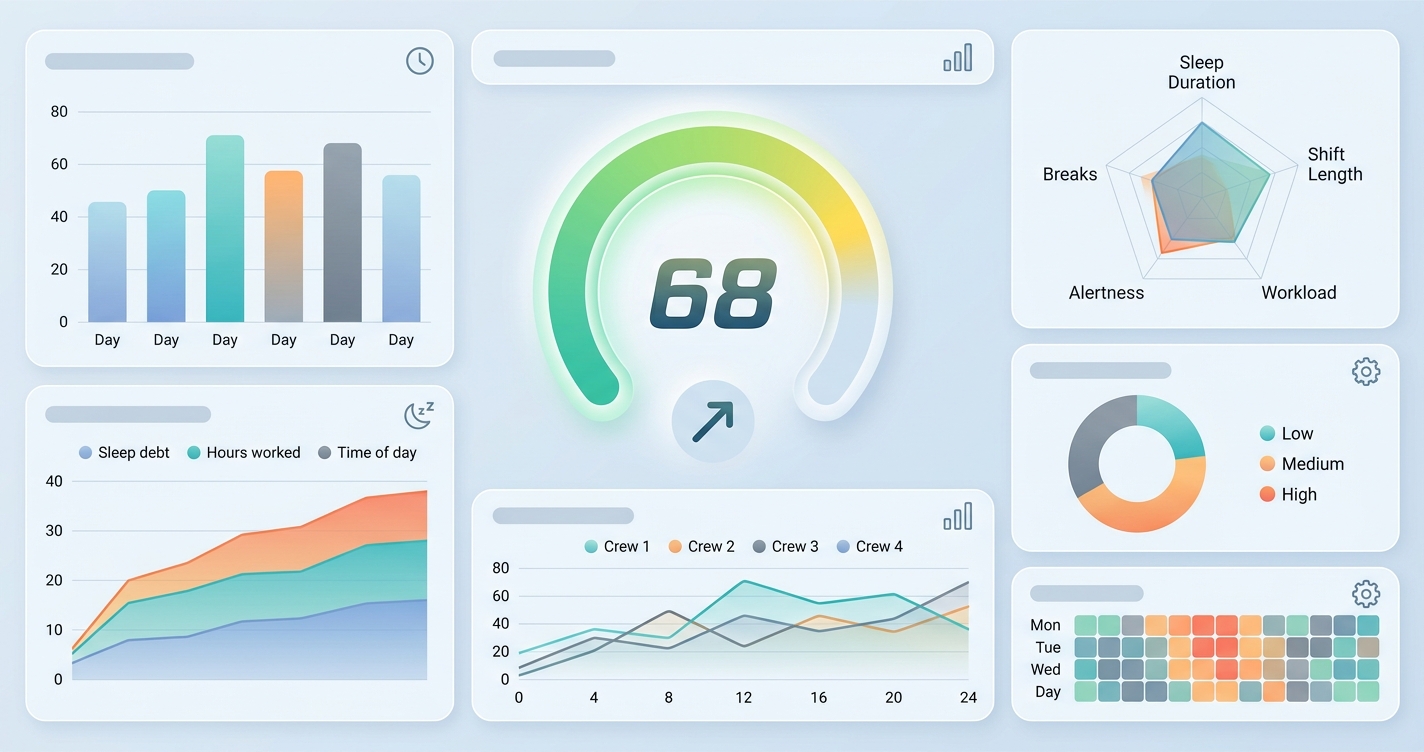
The management of worker fatigue in safety-critical industries has moved beyond simple hours-of-service regulations to a more dynamic, data-driven approach known as Fatigue Risk Management Systems (FRMS). For Environmental, Health, and Safety (EHS) directors, the central challenge is not just acknowledging fatigue as a risk, but quantifying it in a way that enables proactive intervention. By 2027, the methodologies for this quantification will be standardized around a central tool: the fatigue risk scorecard. This scorecard integrates multiple data streams to provide a holistic view of an individual's or a crew's fitness for duty, representing a fundamental shift from reactive incident analysis to predictive risk mitigation.
"Fatigue is estimated to be a contributing factor in 15% to 20% of road crashes, and in heavy industry, government safety research suggests fatigue accounts for nearly 20% of workplace accidents." (European Commission, 2023)
Building the fatigue risk scorecard for safety-critical crews
A fatigue risk scorecard for safety-critical crews is a structured tool used to assess and quantify the level of fatigue-related risk for individuals performing hazardous tasks. It is not a single technology but a composite index derived from multiple data sources. The goal is to create a standardized, objective measure that can inform operational decisions, such as crew scheduling, task allocation, and pre-shift fitness-for-duty assessments. Building a robust scorecard requires a multi-layered approach that combines historical, physiological, and behavioral data.
The foundation of the scorecard is a biomathematical model of fatigue, which uses data on sleep, work schedules, and time of day to predict performance capability. Influential work by researchers like Dr. Steven Hursh at the Johns Hopkins University School of Medicine has been foundational in developing these models, which are now widely used in military and transportation sectors. The scorecard integrates inputs from various sources, including work schedules, sleep data (if available from wearables or self-reports), and real-time physiological measurements. Contactless pre-shift screening technology, which measures vital signs like heart rate, respiratory rate, and heart rate variability, provides a crucial objective input into this model. This data provides an immediate, objective snapshot of a worker's physiological state before they begin a shift.
Comparing fatigue assessment methodologies
| Methodology | Data Inputs | Pros | Cons |
|---|---|---|---|
| Prescriptive Hours of Service (HoS) | Work/rest logs, time tracking | Simple to implement and regulate; provides a clear legal framework. | Inflexible; does not account for individual differences, sleep quality, or off-duty activities. |
| Biomathematical Modeling | Work schedules, sleep patterns, time of day | Predictive capability; can forecast fatigue risk into the future; accounts for circadian rhythms. | Relies on accurate sleep data, which can be difficult to obtain; models require validation. |
| Performance Testing (PVT) | Reaction time tests, cognitive assessments | Direct measurement of performance impairment. | Time-consuming; results can be influenced by motivation and caffeine; provides a lagging indicator of risk. |
| Physiological Monitoring (Contactless) | Vital signs (heart rate, HRV, respiratory rate) | Objective, real-time data; passive data collection; can detect pre-symptomatic changes. | Requires integration with an analytical platform; environmental factors can influence readings. |
| Integrated Fatigue Risk Scorecard | All of the above | Holistic, multi-faceted view of risk; enables predictive and proactive interventions; tailored to individuals. | Complex to implement and validate; requires significant data infrastructure and analytical capability. |
Industry Applications
The application of fatigue risk scorecards varies by industry, reflecting the unique operational demands and risk profiles of each sector.
### Aviation
In commercial aviation, pilot fatigue was a contributing factor in 31 accidents between 2005 and 2022, according to the International Air Transport Association (IATA, 2023). Airlines are increasingly adopting FRMS that use scorecard-like systems to manage crew rosters and rest periods, integrating biomathematical models with crew-reported fatigue levels to create a more dynamic system than traditional flight and duty time limitations.
### mining and heavy industry
The mining industry faces significant challenges with fatigue, with some estimates suggesting 65% of haul truck accidents are fatigue-related. A 2023 study found that fatigued shovel and haul truck operators were over 3% slower in key performance metrics, a small margin that translates to significant productivity and safety implications. Here, scorecards are used for pre-shift screening to identify high-risk individuals before they operate heavy machinery. Contactless vitals screening at the start of a shift provides a key input for this assessment.
### Transportation and Logistics
For road and rail transport, where fatigue is a factor in up to 20% of accidents, scorecards can help optimize driver schedules beyond simple hours-of-service rules. By integrating data from electronic logging devices (ELDs) with physiological monitoring, companies can identify patterns of fatigue risk across their driver pool and implement targeted interventions.
Current research and evidence
The effectiveness of FRMS is a major area of ongoing research. A comprehensive 2021 review by researchers at CQUniversity in Australia, published in the journal Sleep Medicine Reviews, analyzed decades of studies on FRMS. While the authors, including prominent fatigue researcher Dr. Gregory Roach, noted the difficulty in isolating the specific impact of FRMS from other safety initiatives, they found consistent evidence that multi-component systems are more effective than single-pronged approaches.
A 2023 survey of nearly 7,000 European pilots conducted by the European Cockpit Association highlighted that while FRMS are in place, their implementation requires substantial improvement to be truly effective. This points to the importance of not just having the components of a scorecard but also ensuring they are integrated into a strong safety culture. Further research from Memorial University of Newfoundland in 2023 on fatigue in the maritime sector also emphasized the need for a holistic approach, combining technology with training and organizational support. These findings underscore that a technology-based scorecard is a powerful tool, but its success depends on the organizational framework it operates within.
The future of the fatigue risk scorecard
Looking toward 2027, the fatigue risk scorecard will become more sophisticated and predictive. The integration of machine learning algorithms will allow scorecards to identify complex, non-obvious patterns in data that correlate with elevated risk. For instance, an algorithm might learn that a specific combination of heart rate variability, recent shift patterns, and time of day indicates a high probability of a microsleep event for a particular worker. The growth of the fatigue monitoring market, projected to expand significantly by 2033, will drive innovation in sensor technology and analytical software, making these advanced systems more accessible to a wider range of industries. The focus will shift from identifying workers who are already fatigued to predicting who is most likely to become fatigued during a shift and implementing countermeasures before safety is compromised.
Frequently asked questions
-
What is the difference between a fatigue risk scorecard and a simple fitness-for-duty test? A simple fitness-for-duty test, like a breathalyzer or a basic reaction time test, provides a point-in-time assessment of one specific risk factor. A fatigue risk scorecard is a comprehensive, longitudinal tool that integrates multiple data points over time to provide a more holistic and predictive measure of risk.
-
How does a fatigue risk scorecard account for individual differences? By integrating physiological data, the scorecard can move beyond one-size-fits-all schedules. The system learns an individual's baseline vital signs and sleep patterns, allowing it to detect deviations that may indicate fatigue, even if the worker is compliant with hours-of-service rules.
-
Is a fatigue risk scorecard a replacement for a comprehensive Safety Management System (SMS)? No, it is a component of a modern SMS. The scorecard provides crucial data and risk-quantification that feeds into the broader SMS, informing everything from crew scheduling and task rotation to training and incident investigation.
For EHS directors and safety managers in safety-critical fields, developing a proactive stance on worker health is critical. The tools and technologies for quantifying fatigue risk are evolving rapidly, moving from theoretical models to practical, field-deployable systems. As organizations like Circadify continue to advance the capabilities of contactless physiological monitoring, the data inputs for these scorecards will become more seamless and powerful. To learn more about implementing a modern safety program for your workforce, consider a Safety program inquiry.