How Manufacturing Plants Use Pre-Shift Health Checks
How manufacturing plants are adopting pre-shift health checks to reduce injuries, catch fatigue early, and meet OSHA compliance requirements in 2026.
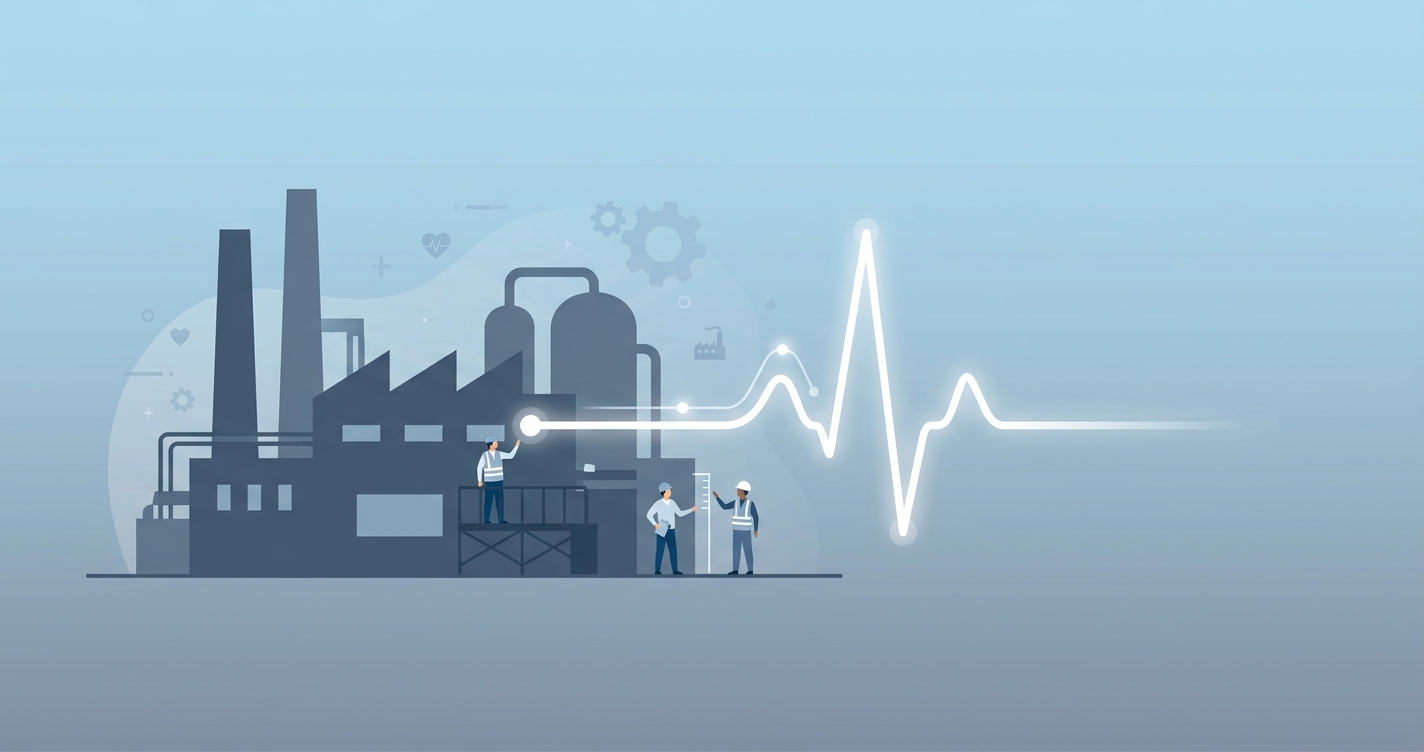
Manufacturing plants in the United States recorded roughly 220,000 workplace injuries in 2024, according to OSHA's annual summary data. The industry's total recordable incident rate sits at about 3.4 per 100 full-time equivalent workers, well above the private-sector average of 2.7. A growing share of those injuries trace back to fatigue, impairment, and other physiological states that traditional safety programs weren't built to catch. That gap is where manufacturing pre-shift health checks are gaining ground.
"Fatigue is a hazard, not a personal failing. Treating it as a systems-level problem is the first step toward managing it." — National Safety Council, Fatigue in Safety-Critical Industries, 2024
What pre-shift health checks actually look like on a factory floor
The concept is straightforward: before a worker begins their shift, they complete a brief physiological assessment. The implementation varies. Some plants use kiosk-based systems near the time clock. Others deploy camera-based screening at entry points. A few have moved to smartphone-based tools that workers use in the parking lot.
What gets measured depends on the system, but the most common signals are heart rate variability (HRV), resting heart rate, blood oxygen saturation (SpO2), and in some cases blood pressure estimation. The assessment typically takes between 30 and 90 seconds. The output is either a readiness score or a simple fit/unfit determination that feeds into the plant's safety management system.
This is different from the annual physical or the post-incident drug test. The point is to catch acute states, the worker who slept three hours, the one coming off a rotating shift change, the one running a fever they haven't noticed yet. These are the people most likely to make the error that leads to a recordable incident.
Comparison of pre-shift health screening approaches in manufacturing
| Approach | What it measures | Time per worker | Equipment needed | Best suited for |
|---|---|---|---|---|
| Kiosk with contact sensors | HR, HRV, SpO2, blood pressure | 60–90 seconds | Dedicated kiosk unit | Fixed entry points, single-gate facilities |
| Camera-based (rPPG) | HR, HRV, SpO2 estimation | 30–60 seconds | Standard camera or tablet | High-throughput shift changes, multi-gate plants |
| Wearable patch or band | HR, HRV, skin temperature, motion | Continuous | Individual wearable device | Extended monitoring, heat stress environments |
| Smartphone app | HR, HRV, SpO2 | 45–60 seconds | Worker's phone | Distributed workforce, multiple facilities |
| Supervisor observation | Visible impairment signs | 1–2 minutes | None | Small crews, supplement to other methods |
| Cognitive task screen | Reaction time, working memory | 2–5 minutes | Touchscreen device | Roles requiring high cognitive load |
Each has tradeoffs. Kiosks work well for single-entry plants but create bottlenecks at shift change when 200 people need to clock in within 15 minutes. Camera-based systems handle throughput better because they can screen passively as workers walk through a checkpoint. Wearables give the richest data but introduce compliance and hygiene issues on production floors. Smartphones are flexible but rely on workers actually using them.
The fatigue problem in manufacturing is worse than most people realize
The Bureau of Labor Statistics consistently ranks manufacturing among the top five industries for nonfatal workplace injuries. But the aggregate numbers obscure something important: the distribution of incidents across shifts is not uniform.
Research published in the Journal of Occupational and Environmental Medicine has shown that injury rates increase measurably during night shifts and during the transition periods when workers rotate between day and night schedules. A 2022 analysis from the National Institute for Occupational Safety and Health (NIOSH) found that fatigue was a contributing factor in approximately 13% of workplace injuries they investigated, with the actual figure likely higher due to underreporting.
The problem compounds in manufacturing because of the physical nature of the work. A fatigued office worker might send a poorly worded email. A fatigued press operator might lose a finger. The stakes are categorically different, and the traditional countermeasure — telling supervisors to "watch for signs of fatigue" — has obvious limitations. Supervisors are busy. They're managing production targets, quality issues, and staffing gaps. Spotting the physiological markers of sleep deprivation in a worker wearing PPE across a noisy floor is not a reliable system.
How rotating shifts compound the risk
Manufacturing runs on shift work, and shift work damages sleep architecture. Dr. Jeanne Duffy at Brigham and Women's Hospital has published extensively on how rotating schedules disrupt circadian rhythms, with measurable effects on reaction time, decision-making, and cardiovascular function that persist for days after a schedule change. Workers on backward-rotating shifts (day to night to evening) show worse adaptation than those on forward rotations.
Pre-shift screening picks up these effects. A worker whose HRV has dropped significantly from their baseline is likely running on degraded autonomic function, regardless of whether they "feel fine." The data doesn't care about self-reporting bias.
What the technology actually measures and why it matters
Heart rate variability is the primary biomarker for most pre-shift screening systems, and there's good reason for that. HRV reflects the balance between sympathetic and parasympathetic nervous system activity. When someone is well-rested and physiologically recovered, their heart rate varies naturally with respiration and other inputs. When they're fatigued, stressed, or impaired, that variability decreases.
A 2022 paper in Sensors (MDPI) by researchers studying occupational physical fatigue found that low parasympathetic activity, measured through HRV metrics like RMSSD and the LF/HF ratio, correlated reliably with fatigue and burnout across multiple worker populations. The advantage of HRV over simpler metrics like resting heart rate is that it catches subtler states. A worker might have a normal resting heart rate of 72 bpm but show suppressed HRV that indicates poor recovery from the previous shift.
Camera-based systems using remote photoplethysmography (rPPG) extract these same cardiovascular signals from facial video. The technology analyzes subtle color changes in skin caused by blood flow pulsing through capillary beds. No contact, no wearable, no hygiene concerns. For manufacturing environments where workers handle food, chemicals, or clean-room materials, the contactless approach solves a real practical problem.
Northwestern University researchers developed a wearable sensor array specifically for factory worker fatigue monitoring, published in PNAS Nexus. Their system used six sensors placed across the torso and arms, coupled with depth cameras, to build a comprehensive physiological profile. While their research setup was more elaborate than what a production facility would deploy, it demonstrated that multi-signal approaches outperform single-metric screening for catching fatigue before it becomes dangerous.
How plants are implementing this in practice
Automotive assembly
Automotive plants were among the early adopters because they combine heavy machinery, precise manual tasks, and long shifts. Several tier-one suppliers in the U.S. Midwest have integrated pre-shift vitals screening into their existing time-and-attendance systems. Workers badge in at a kiosk that captures a 60-second health check before activating their time record. Abnormal readings trigger a secondary review with occupational health staff, not an automatic send-home, which matters for worker acceptance.
Food and beverage processing
Food manufacturing has a different driver: existing health screening requirements. FDA food safety regulations already require employee health checks in certain contexts. Plants processing ready-to-eat foods must verify that workers aren't showing signs of illness. Digital pre-shift screening extends this from a paper form ("Are you feeling ill today? Circle yes or no") to an objective physiological measurement. Some plants report that the transition reduced presenteeism because the screening catches fevers and elevated heart rates that workers might otherwise work through.
Heavy manufacturing and metalwork
Stamping plants, foundries, and steel processing facilities operate some of the most dangerous equipment in any industry. The consequences of a lapse in attention around a 500-ton press or a ladle of molten metal are severe and irreversible. These facilities tend to implement the most comprehensive screening programs, often combining vitals screening with cognitive task assessments for workers assigned to the highest-risk stations.
Chemical and pharmaceutical manufacturing
These environments add exposure risk to the fatigue equation. A fatigued worker who mishandles a chemical transfer or mismixes a pharmaceutical batch creates both a safety incident and a regulatory event. Pre-shift screening serves double duty: verifying worker fitness and creating a documented record that supports compliance with OSHA's Process Safety Management (PSM) standard and EPA's Risk Management Program.
OSHA's position and the compliance angle
OSHA doesn't currently mandate pre-shift health checks in manufacturing. But the General Duty Clause — Section 5(a)(1) of the OSH Act — requires employers to provide a workplace "free from recognized hazards." Fatigue is increasingly recognized as exactly that kind of hazard.
The agency's 2024 annual report of severe injuries and illnesses continued to highlight manufacturing as a high-risk sector. More importantly, OSHA's enforcement approach has shifted toward evaluating whether employers had systems in place to identify and mitigate known risks. A plant that knows fatigue causes incidents but does nothing to screen for it is in a weaker position during an investigation than one that can demonstrate a functioning fitness-for-duty program.
Several insurance carriers have noticed this too. Workers' compensation insurers in manufacturing verticals have begun offering premium adjustments for facilities that implement documented pre-shift screening programs, treating them similarly to how they treat drug-free workplace programs.
The ROI question plant managers actually ask
Every plant manager who hears about pre-shift health checks asks the same question: what does it cost and what do I get back? The math tends to work out, but it depends on the plant.
OSHA estimates the average direct cost of a manufacturing workplace injury at roughly $42,000. When you add indirect costs (lost production, investigation time, temporary staffing, training replacements), the National Safety Council puts the total cost closer to four times the direct figure. A plant running 500 workers across three shifts that prevents even two or three recordable incidents per year through better fatigue screening is looking at a return that dwarfs the technology cost.
The less quantifiable benefit is the shift in safety culture. When workers see that the company takes fatigue seriously as a system-level risk rather than a personal responsibility, it changes the conversation. Workers become more willing to report when they're not at their best, because there's a process for handling it that doesn't start with punishment.
Current research and evidence
The evidence base for physiological pre-shift screening continues to grow. A review published in Frontiers in Physiology examined the state of fatigue monitoring through wearable devices and found that HRV-based systems achieved the most consistent results across different worker populations and fatigue types. The researchers noted that combining HRV with at least one additional metric, such as skin temperature or activity level, improved detection accuracy.
The Manufacturers Alliance for Productivity and Innovation reported in 2025 that 59% of manufacturers surveyed expected technology to improve employee health and safety monitoring, making it the third most popular target for technology investment after quality control and predictive maintenance.
Camera-based systems are the newest entrant. Research from groups working on rPPG (remote photoplethysmography) has demonstrated that contactless measurement of heart rate and HRV from standard RGB cameras can approach the accuracy of contact-based sensors under controlled conditions. For pre-shift screening, where the worker is briefly stationary, these conditions are readily achievable.
Frequently asked questions
Do pre-shift health checks violate worker privacy?
The legal framework depends on state law and whether the screening program is structured as a medical examination under the ADA. Most implementations avoid this by collecting only aggregate physiological metrics (heart rate, HRV) without diagnosing conditions. The Americans with Disabilities Act permits medical examinations that are job-related and consistent with business necessity, and fitness-for-duty screening in safety-critical roles generally meets that standard. That said, plants should involve legal counsel and labor relations when designing these programs.
How do workers respond to being screened before every shift?
Initial resistance is common, particularly in unionized environments. The facilities that report the highest worker acceptance are the ones that frame screening as protective rather than punitive. When an abnormal reading triggers a conversation with occupational health staff rather than automatic discipline, workers are more likely to view the program as looking out for them. Transparency about what data is collected, how it's stored, and who can access it matters.
What happens when a worker fails a pre-shift check?
That's up to the facility's policy, and getting it right is important. Most plants use a tiered approach: a marginal reading leads to a brief rest period and recheck, while a clearly abnormal reading triggers an occupational health evaluation. Very few facilities use pre-shift screening as grounds for immediate discipline, and the ones that do tend to face pushback from both workers and legal counsel.
Can pre-shift checks catch substance impairment?
Physiological screening can detect some effects of impairment, particularly elevated heart rate and abnormal HRV patterns associated with certain substances. But it's not a drug test and shouldn't be positioned as one. Some plants use pre-shift vitals screening alongside their existing drug-testing programs as complementary layers rather than replacements.
Where manufacturing health screening goes from here
The trajectory is clear. As sensor costs drop and camera-based screening eliminates the need for dedicated hardware, the barrier to adoption keeps falling. Plants that started with kiosk-based systems at a single gate are expanding to camera-based screening at multiple entry points. The data these systems generate feeds back into broader safety analytics, helping EHS teams identify patterns: which shifts have the most flagged workers, which schedule rotations produce the worst recovery scores, which departments show chronic fatigue trends.
Companies like Circadify are developing contactless screening technology that captures vital signs through a standard camera, making it possible to run pre-shift health checks without specialized equipment or physical contact. For manufacturing plants dealing with hundreds of workers per shift change, that kind of throughput matters.
The plants that move first on this will have better injury data, lower incident rates, and a documented safety system that holds up under OSHA scrutiny. The ones that wait will eventually get there too. Workplace fatigue is too well-documented and too costly to ignore indefinitely.