Occupational Health Screening Technology by Industry Type
A sector-by-sector comparison of occupational health screening technology for EHS decision-makers managing mining, trucking, construction, and energy crews.
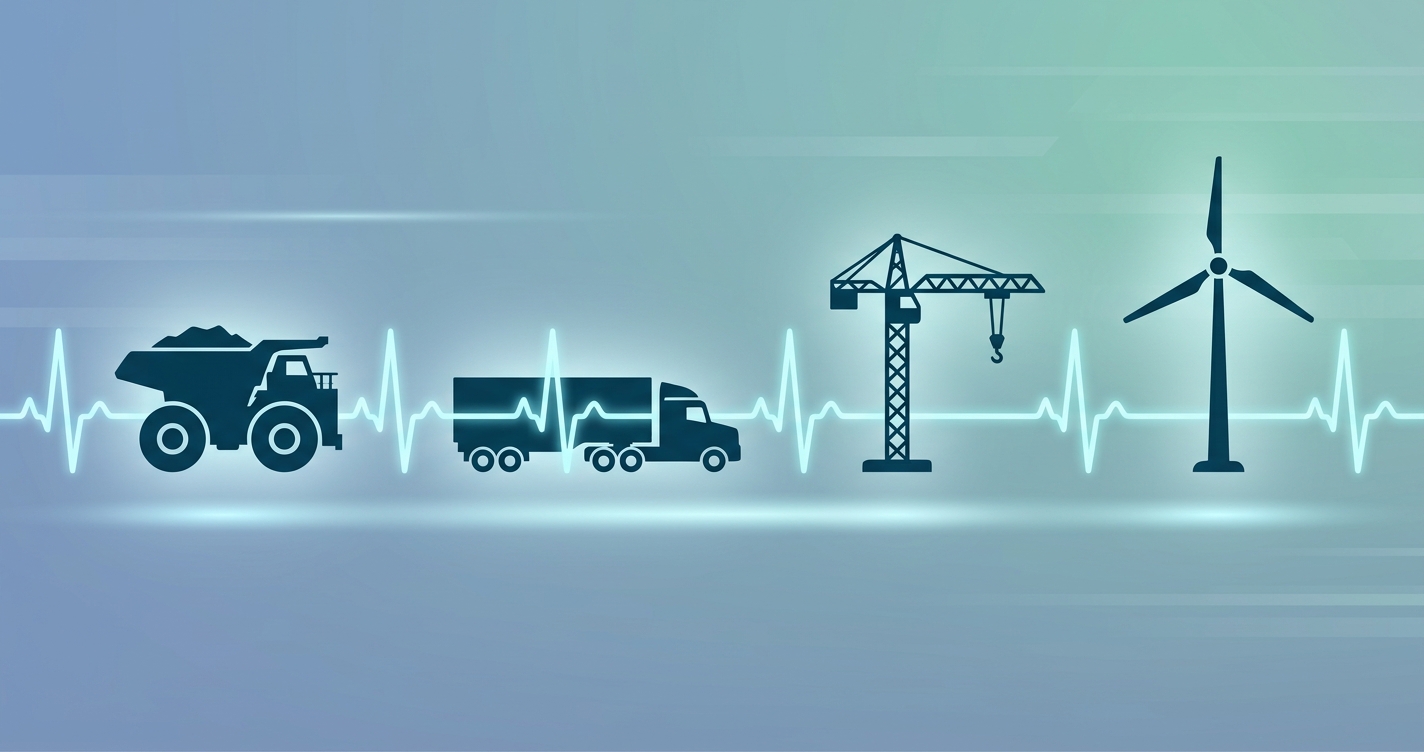
No two high-risk sectors carry the same physiological risk profile, yet many safety programs still buy a single screening tool and stretch it across every operation they run. A haul truck operator on a 12-hour roster, a long-haul driver subject to federal hours-of-service rules, and a scaffolder working at height under heat load all fail safely in different ways. Choosing occupational health screening technology that matches the hazard pattern of each sector is now a core procurement decision for EHS directors, not an afterthought. This analysis breaks down which screening approaches fit which high-risk industries, and why the sector you operate in should drive the technology you deploy.
In 2024 the United States recorded 5,070 fatal work injuries, with transportation and material moving occupations accounting for 1,391 deaths and mining, quarrying, and oil and gas extraction posting the highest fatality rate of any sector at 13.8 per 100,000 workers, according to the Bureau of Labor Statistics Census of Fatal Occupational Injuries (2024).
Why occupational health screening technology must be matched to the sector
The case for industry-specific health screening rests on a simple observation: the dominant fatigue and fitness-for-duty risk differs by sector. In mining, the threat is the slow micro-sleep of an operator alone in a haul truck cab on a repetitive circuit. In long-haul trucking, it is cumulative sleep debt across a multi-day schedule governed by federal rules. In construction, it is acute physiological strain from heat, exertion, and height, often across a transient workforce that changes from week to week.
The Federal Motor Carrier Safety Administration estimates that driver fatigue contributes to roughly 13 percent of all commercial motor vehicle crashes, and a National Institute for Occupational Safety and Health (NIOSH) survey of long-haul drivers found that 73 percent considered their delivery schedules unrealistically tight. Mining operators face a different curve. Trials of EEG-based head-worn monitoring in Australian coal mines reported a 68 percent reduction in fatigue alarm rates over a single year, according to coverage of SmartCap deployments, while predictive scheduling tools from Fatigue Science have been credited with cutting fatigue camera alarms by 50 percent at a Central American copper mine.
The mining vs trucking screening contrast is the clearest example. A camera watching a driver's eyes works inside an enclosed cab but tells you nothing until impairment is already visible. A pre-shift vitals screen catches the worker before the keys are handed over. Neither is universally correct. The right answer depends on where in the shift the risk concentrates.
Comparing screening approaches across high-risk sectors
The table below maps the most common screening modalities against the sectors where they tend to fit best, the moment they capture risk, and their main operational friction.
| Screening approach | Best-fit sectors | When it captures risk | Main limitation |
|---|---|---|---|
| Pre-shift contactless vitals scan | Mining, construction, energy, manufacturing | Before the shift begins, at the gate or muster | Point-in-time snapshot, not continuous |
| In-cab driver-facing cameras | Long-haul trucking, haul truck mining | Mid-shift, once impairment is visible | Reactive, alarm fatigue, privacy concerns |
| Wearable physiological monitors | Mining, remote energy, lone workers | Continuous across the shift | Charging, compliance, body burden |
| Predictive fatigue scheduling software | Trucking, rail, aviation, mining rosters | Days ahead, at the planning stage | Models the roster, not the individual on the day |
| Breathalyzer and substance testing | Trucking, construction, oil and gas | Pre-shift, narrow scope | Detects intoxication only, misses fatigue |
| Manual supervisor checklists | All sectors, low-tech sites | Pre-shift, subjective | Inconsistent, hard to audit, easily gamed |
A few patterns stand out for EHS decision-makers:
- No single tool covers the full risk window. Predictive scheduling addresses the days before a shift, pre-shift screening addresses the gate, and in-cab or wearable monitoring addresses the hours on task.
- Reactive technologies such as cameras only act once impairment is observable, which in a moving haul truck may already be too late.
- Substance testing answers a narrow legal question and says nothing about sleep debt, illness, or cardiovascular strain.
- Lower-tech checklist methods are the easiest to deploy but the hardest to defend in an incident investigation.
Industry Applications
Mining and heavy extraction
Mining carries the highest fatality rate of any major sector and combines lone operation, monotonous routes, night rosters, and elevation or heat exposure. Layered programs work best here: predictive scheduling to flag high-risk rosters in advance, a pre-shift physiological screen at muster, and in-cab or wearable monitoring for the operators most exposed to micro-sleep. The documented alarm reductions from EEG and predictive tools show the value of catching fatigue before it reaches the camera.
Trucking and long-haul transport
Transportation occupations record the largest absolute number of work fatalities each year. The regulatory frame is hours-of-service compliance, but logged hours do not measure actual rest. With NIOSH reporting that the majority of long-haul drivers admit to driving while drowsy, screening here benefits from combining schedule modeling with a pre-departure readiness check that captures the individual driver's state on the day, not just the legality of the roster.
Construction and civil works
Construction worker health checks contend with a transient, multi-employer workforce and acute physiological stressors: heat, exertion, and work at height. The 2024 BLS data put construction and extraction fatalities at 1,032 with a rate of 9.2 per 100,000. Fast, contactless, gate-level screening suits the churn of a construction crew because it does not depend on issuing and recovering wearable hardware from workers who may be on site for only a few days.
Energy, rail, and remote operations
Renewable energy technicians, rail crews, and oil and gas workers often operate far from medical support. Sector safety monitoring in these settings favors approaches that function without constant supervision, combining pre-shift screening with continuous monitoring for genuinely isolated roles.
Current research and evidence
The evidence base is strongest where deployments have been measured over time. The SmartCap EEG trials reporting a 68 percent drop in fatigue alarms, and the Fatigue Science predictive deployments cutting camera alarms by 50 percent, both point to the same conclusion: catching fatigue earlier in the risk window outperforms reacting to it mid-task. In 2023, Caterpillar integrated a Fatigue Risk Management Solution combining active alerts and wearables into its mine management package, signaling that major equipment makers now treat layered fatigue management as standard rather than optional.
On the transport side, the Governors Highway Safety Association has argued that drowsy-driving deaths are heavily underreported, suggesting the true 2023 toll could exceed 6,300 against the 633 officially recorded by NHTSA. That gap matters for EHS directors because it means fatigue risk is systematically undercounted in the very data many programs rely on to justify spending. Screening technology that produces an objective, auditable pre-shift record helps close that visibility gap.
The future of occupational health screening technology
Three shifts are reshaping the field. First, modalities are converging. Rather than choosing between predictive, pre-shift, and continuous monitoring, programs are layering them so each covers a different part of the risk timeline. Second, contactless methods are gaining ground because they reduce the body burden and hardware logistics that limit wearable compliance, which matters most in high-churn sectors like construction. Third, regulators are moving from prescriptive hours-of-service limits toward outcome-based fatigue risk management, which rewards programs that can demonstrate objective readiness data rather than logged compliance alone.
For the EHS decision-maker, the practical implication is to stop asking which single technology is best and start asking which combination fits the risk profile of each operation. The sector defines the hazard pattern; the hazard pattern should define the screening stack.
Frequently asked questions
What is the difference between mining and trucking screening needs?
Mining risk concentrates in lone, repetitive operation where micro-sleep is the main threat, favoring layered pre-shift plus continuous monitoring. Trucking risk is governed by hours-of-service rules and cumulative sleep debt across multi-day schedules, so it benefits most from combining predictive scheduling with a pre-departure readiness check.
Are contactless pre-shift screens better than wearables?
Neither is universally better. Contactless gate screening suits high-churn workforces like construction where issuing and recovering hardware is impractical, while wearables suit continuous monitoring of lone or remote workers. Many mature programs use both at different points in the shift.
Does substance testing cover fitness for duty?
No. Breathalyzer and substance testing detect intoxication within a narrow scope and reveal nothing about fatigue, sleep debt, illness, or cardiovascular strain, which are leading contributors to safety-critical incidents.
Why does the screening method depend on the industry?
Because the dominant risk window differs by sector. Construction faces acute heat and exertion at the gate, trucking faces cumulative fatigue across days, and mining faces mid-shift micro-sleep. Matching the technology to where risk concentrates produces a more defensible program than a one-size-fits-all tool.
Circadify is building toward this sector-aware model, with pre-shift vitals screening and fatigue detection designed for the distinct risk profiles of safety-critical industries. EHS directors evaluating a fit for their workforce can request a tailored overview at circadify.com/solutions/fraud-detection.