Pre-Shift Fitness for Duty Software: A 2026 Buyer's Guide
Evaluate top pre-shift fitness for duty software for 2026. Learn how objective physiological screening replaces subjective safety surveys in heavy industry.
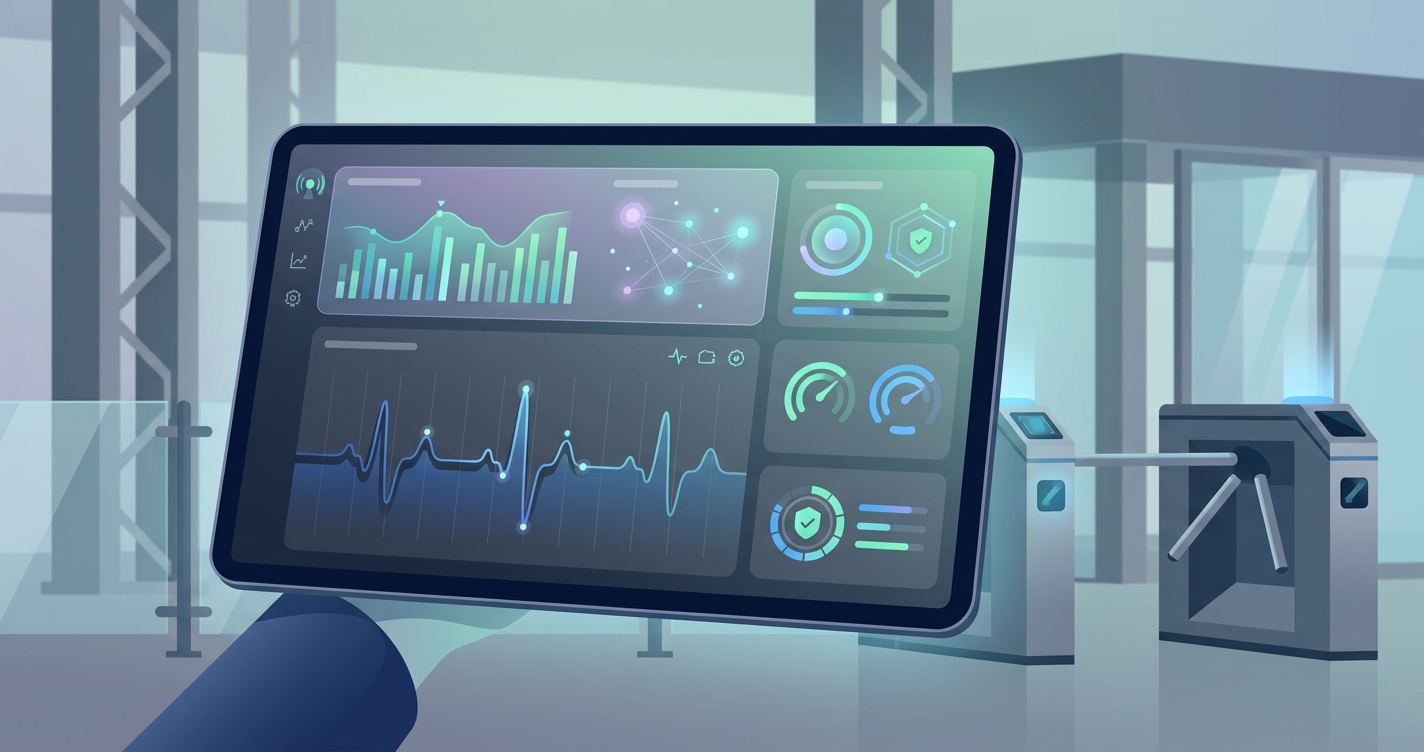
For environmental, health, and safety directors approaching the 2026 procurement cycle, the standard for worker readiness has officially changed. Relying on visual checks and paper surveys to determine if a worker is fatigued or impaired is no longer sufficient for high-risk industrial environments. Today, deploying robust pre-shift fitness for duty software is a baseline expectation for mitigating risk before a shift even begins. Modern platforms offer objective physiological data without requiring invasive medical procedures, allowing safety managers to catch hidden hazards at the gate before they reach the active site.
"Fatigue is a primary contributing factor in 13 percent of all workplace injuries, costing employers with 1,000 workers approximately $1.4 million annually in lost productivity and incidents." - National Safety Council, 2023
Core capabilities of pre-shift fitness for duty software
When EHS directors evaluate pre-shift fitness for duty software, the primary goal is removing subjective bias from the safety equation. Historically, shift supervisors relied on brief visual assessments or paper based questionnaires to determine if an operator was ready to handle heavy machinery. These legacy methods fail because workers are often financially motivated to hide their exhaustion or impairment. By implementing software that analyzes objective physiological markers, safety teams can identify risks that are invisible to the naked eye.
The best platforms operate on a fundamentally different premise than legacy surveys. They utilize advanced optical sensors or peripheral hardware to capture raw biometric data in seconds. This data is then processed against established physiological baselines to detect anomalies associated with extreme fatigue, illness, or chemical impairment. Crucially, the software does not diagnose medical conditions; it simply flags when a worker deviates from normal readiness parameters, prompting a secondary review by occupational health staff.
Historically, fitness for duty was synonymous with random drug testing. While chemical testing remains a critical component of occupational health, it is inherently reactive and fails to address the most common form of impairment: severe fatigue. An operator who has been awake for 24 hours exhibits the same cognitive degradation as someone with a blood alcohol content of 0.10 percent. Pre-shift fitness for duty software bridges this gap by identifying impairment regardless of its root cause. If a worker's central nervous system is depressed, the software detects the physiological signs, whether the cause is a lack of sleep, early onset illness, or a hidden substance.
Comparing deployment models
The 2026 procurement cycle offers several distinct architectures for occupational screening. Safety managers must match the deployment model to their specific operational constraints.
| Software Deployment Model | Data Objectivity | Integration Speed | Best Application |
|---|---|---|---|
| Contactless Vitals Platforms | High | Fast | Heavy industry, mining, static gates |
| Cognitive Testing Apps | Medium | Moderate | Logistics fleets, remote workers |
| Wearable Integration Software | High | Slow | Continuous operational monitoring |
| Digital Self Reporting Portals | Low | Fast | General administration, low risk |
Contactless vitals platforms represent the most efficient option for static locations like manufacturing plants and mine sites. These systems require no physical hardware distribution and assess workers in under a minute using standard camera technology. Conversely, wearable integration software provides continuous data but requires immense logistical effort to charge, sanitize, and assign hardware to every worker. Cognitive testing apps require workers to play brief reaction games on mobile devices, which works well for decentralized logistics fleets but introduces learning curve biases over time. Digital self reporting remains the cheapest option, but it offers zero objective physiological data.
Essential features for 2026 procurement
As safety standards evolve, any software considered for enterprise deployment must meet strict technical requirements:
- Objective screening metrics: The platform must capture autonomous physiological signs, such as heart rate variability and respiration rate, instead of relying on self reported surveys. This ensures that the data cannot be manipulated by an operator who wants to hide their exhaustion.
- Rapid throughput speeds: Assessments must conclude in under 60 seconds to prevent operational delays during mass shift changes. A system that takes five minutes per person will immediately cause union grievances and gate bottlenecks.
- Edge computing capabilities: The software must process data locally on the device to maintain functionality in remote areas with poor connectivity. Cloud dependent systems often fail at mining sites or offshore rigs where bandwidth is restricted.
- Data privacy compliance: Solutions must anonymize biometric data and automatically purge session records to align with regional privacy laws. EHS directors must ensure the software does not store permanent facial recognition templates.
- Automated API integrations: The screening data must flow directly into existing access control systems, automatically deactivating badges if an assessment flags a high risk individual. This creates a hard physical barrier between an impaired worker and the active site.
Industry Applications
Heavy manufacturing and mining
In heavy manufacturing and mining, the margin for error is non-existent. Operating a haul truck or a steel press requires absolute cognitive clarity. Pre-shift fitness for duty software is deployed at the turnstiles of these facilities, acting as a final physiological checkpoint. By screening workers before they step onto the active floor, site managers prevent fatigued operators from taking control of dangerous equipment. When a worker interacts with an automated robotic assembly line, a fractional delay in reaction time can lead to a severe pinch point injury. Software solutions at the gate act as a predictive firewall.
Construction and contracting
Construction sites face unique challenges due to their transient workforce. Contractors and subcontractors rotate daily, making it impossible for a single supervisor to know every individual's normal baseline behavior. Software solutions deployed on portable tablets allow site safety officers to establish an immediate, objective readiness baseline for every person entering the site. This ensures that temporary laborers meet the same strict physiological safety standards as full time employees. Furthermore, construction workers are heavily exposed to environmental elements. Starting a shift with a compromised physiological baseline makes a worker far more susceptible to heat stress and dehydration as the day progresses.
Transportation and logistics
For commercial fleets and rail operators, fatigue is the leading cause of catastrophic incidents. Drivers spend long hours in isolation, where microsleeps can result in fatal highway accidents or derailments. While continuous monitoring cameras are common inside cabs, they only alert the driver after fatigue has already set in. Implementing pre-shift software at the dispatch terminal ensures that a driver is physically ready before they are handed the keys, preventing the risk from ever entering the vehicle. Regulatory bodies are increasingly holding operators accountable for fatigue management. By generating a timestamped, objective record of a driver's readiness prior to dispatch, companies protect themselves against massive liability claims in the event of an accident.
Current research and evidence
Academic and federal research heavily supports the transition toward objective physiological screening. Dr. Imelda Wong and Dr. Naomi Swanson at the National Institute for Occupational Safety and Health (NIOSH) published comprehensive findings in 2023 regarding occupational fatigue. Their research highlights that nonstandard work schedules, commonly found in heavy industry, disrupt circadian rhythms and dramatically increase physiological exhaustion. They concluded that traditional observational methods are vastly inadequate for identifying this level of internal fatigue. Workers frequently develop compensatory behaviors to mask their exhaustion from supervisors, making visual checks dangerously ineffective.
Furthermore, a 2024 analysis authored by Bernadette Dalton in The BMJ emphasized that occupational fatigue must be managed systematically as a highly quantifiable safety risk, rather than a subjective human resources issue. The research points out that healthcare and industrial sectors have historically failed to apply the same rigorous engineering controls to fatigue as they do to chemical hazards. Organizations relying solely on supervisor observations are failing to meet basic risk mitigation standards. Pre-shift fitness for duty software provides the exact quantitative framework that these researchers recommend, replacing guesswork with measurable, repeatable data.
The future of pre-shift fitness for duty software
Looking toward 2026 and beyond, the occupational health technology market is expanding rapidly. Industry reports indicate that the global operator fatigue monitoring software sector is projected to reach $3.47 billion over the next decade. This growth is driven by the integration of advanced computer vision and machine learning algorithms into everyday safety equipment.
Future iterations of pre-shift fitness for duty software will likely become completely frictionless. Instead of requiring a worker to stop at a dedicated kiosk, environmental sensors in the locker room or entrance hallway will passively analyze their gait, pulse rate, and respiration as they walk. This continuous, ambient screening will feed real time readiness scores directly to the EHS dashboard. As these technologies mature, physical impairment and exhaustion will be treated with the same zero tolerance policies currently applied to alcohol and narcotics.
Beyond immediate gate screening, the next evolution involves predictive analytics. By aggregating anonymized readiness data over several months, EHS directors can identify systemic scheduling flaws. For example, the software might reveal that crews starting the Tuesday night shift consistently exhibit 30 percent higher fatigue markers than the Monday day shift. This localized intelligence allows management to adjust shift rotations, optimize break schedules, and address the root causes of exhaustion before they manifest as site incidents.
Frequently asked questions
What is pre-shift fitness for duty software?
Pre-shift fitness for duty software is a digital platform used by industrial safety teams to objectively assess a worker's physical and cognitive readiness before they begin a dangerous shift, removing the reliance on subjective observation.
How does contactless screening capture data?
Contactless screening platforms use advanced optical sensors and standard camera technology to measure micro color changes in the skin and subtle movements. This allows the software to calculate pulse rate, respiration, and heart rate variability without touching the user.
Why are subjective surveys being replaced in heavy industry?
Subjective surveys rely entirely on the worker truthfully reporting their own exhaustion or impairment. Because workers are often financially motivated to complete their shifts, they frequently underreport their fatigue. Objective software eliminates this blind spot.
Does this software diagnose medical conditions?
No. Occupational screening software is designed strictly for risk management, not medical diagnosis. It simply identifies when a worker's physiological state deviates from standard safety baselines, prompting a review by a safety manager or occupational health professional.
As industrial operations move away from subjective observation, Circadify is actively addressing this space with advanced physiological analysis tools. Organizations looking to modernize their risk management architecture can explore how these contactless technologies integrate into existing safety workflows by visiting https://circadify.com/solutions/fraud-detection to learn more about the next generation of worker screening.