Pre-Shift Fitness for Duty Software: A 2026 Buyer's Guide
Compare top software solutions for pre-shift impairment screening, exploring key features, deployment models, and the 2026 outlook for worker readiness technology.
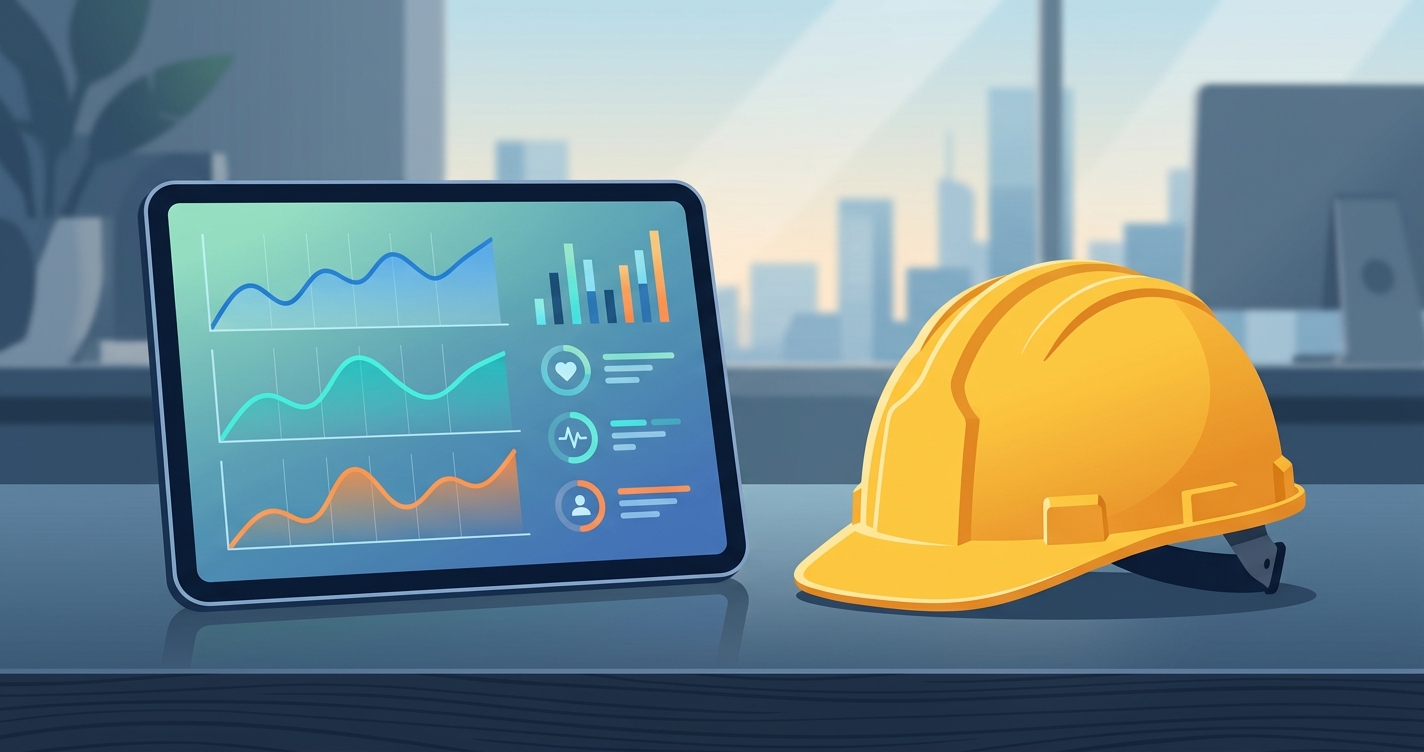
For Environmental, Health, and Safety (EHS) directors entering the 2026 procurement cycle, the standard for assessing worker readiness has fundamentally changed. The historical reliance on subjective supervisor observations or post-incident drug testing is being rapidly replaced by objective, real-time physiological and cognitive data. When evaluating pre-shift fitness for duty software, safety managers must navigate a complex market of solutions designed to quantify impairment before a worker ever steps onto a dangerous site. This transition intercepts human factors, such as severe fatigue, hidden illness, or substance impairment, at the absolute earliest point in the shift lifecycle. Organizations are recognizing that asking a worker "how do you feel?" is a liability, and technology must step in to provide unbiased, quantifiable data at the gate.
"Research conducted by the National Safety Council and the Brigham Health Sleep Matters Initiative demonstrated that an employer with 1,000 workers loses approximately $1.4 million annually due to fatigued employees, highlighting the severe financial and operational costs of unmonitored impairment."
- National Safety Council (2017)
Evaluating pre-shift fitness for duty software in 2026
The definition of workplace impairment is expanding. Historically, industrial safety programs focused almost exclusively on detecting illicit substances or alcohol. However, modern fitness for duty technology categorizes impairment not by its specific chemical cause, but by the resulting deficit in a worker's physical or cognitive capacity. Top ffd solutions operate on the principle that if a worker's reaction time, balance, or autonomic nervous system indicates high physiological distress, they present an active hazard regardless of the root cause. A machinist operating under severe sleep deprivation is just as dangerous as one under the influence of alcohol.
When drafting an RFP for a worker readiness platform, safety directors must evaluate several core capabilities that dictate whether a solution will survive real-world industrial deployment:
- Integration architecture: APIs must seamlessly connect screening results with existing workforce management and access control systems. For example, the software should automatically disable a worker's RFID badge for high-risk zones if they fail a readiness screen.
- Speed of assessment: The system must process individuals in under 60 seconds. Industrial facilities cannot tolerate bottlenecks at access control points during shift changes involving hundreds of employees.
- Objective measurement parameters: The software must rely on measurable biometrics (like heart rate variability) or psychomotor tasks rather than self-reported health surveys, which are notoriously inaccurate and subject to gamification.
- Privacy and labor compliance: Data processing must occur locally on the edge or within secure, heavily anonymized cloud environments to satisfy labor union negotiations and strict biometric privacy regulations.
- Environmental resilience: Solutions deployed in mining camps or unconditioned steel mills must function reliably in extreme lighting, temperature, and dust conditions.
The most effective impairment screening software moves the safety model from a lagging indicator framework (analyzing an accident after the damage is done) to a leading indicator framework, neutralizing the hazard before the shift begins.
Modality comparison: top FFD solutions
Organizations must choose the correct data collection modality for their specific workforce. The market currently offers several distinct approaches to measuring human readiness. The table below outlines the primary methodologies deployed in industrial environments.
| Screening Modality | Primary Metric Analyzed | Hardware Required | Assessment Time | Primary Use Case |
|---|---|---|---|---|
| Cognitive Testing | Reaction time, psychomotor vigilance | Tablets, smartphones | 60-90 seconds | Fatigue and cognitive impairment detection |
| Contactless Vitals | Heart rate, HRV, respiratory rate | Standard camera/kiosk | 30-45 seconds | Physiological distress, illness, extreme fatigue |
| Wearable Actigraphy | Sleep duration, sleep quality | Wristbands, smartwatches | Continuous | Historical sleep-wake tracking for scheduling |
| Biomathematical Modeling | Roster hours, schedule design | None (software only) | Static/Predictive | High-level schedule optimization and macro-risk |
Cognitive and psychomotor testing
Cognitive testing software requires the worker to interact with a screen, usually completing a shape-matching game or a reaction-time task. These tasks are based on the Psychomotor Vigilance Task (PVT), a well-established neurological assessment. While highly effective at measuring current alertness, these systems require the worker to physically engage with a shared device, which can introduce hygiene concerns and slightly longer processing times at the gate.
Contactless vitals screening
Contactless software utilizes the camera on a standard tablet or kiosk to measure the worker's autonomic nervous system. By analyzing micro-fluctuations in skin color (remote photoplethysmography) and head movement, the software extracts heart rate, heart rate variability (HRV), and respiratory rate. This modality requires zero physical contact, operates in seconds, and provides a direct look into the worker's physiological stress levels.
Wearable Actigraphy
Wearable devices track continuous data, primarily focusing on wrist movement and heart rate during off-duty hours to map sleep architecture. While incredibly data-rich, wearables require high capital investment, logistics for charging and distribution, and often face strict resistance from labor unions concerned about off-the-clock surveillance.
Biomathematical Modeling
These software solutions do not measure the worker directly. Instead, they analyze shift schedules, roster designs, and time-and-attendance data to predict fatigue risk across a workforce. They are excellent administrative tools but cannot detect if an individual worker stayed up all night caring for a sick family member.
Industry applications for worker readiness platforms
Heavy manufacturing and steel production
In continuous manufacturing environments, human error near automated machinery, heavy presses, or molten materials carries catastrophic potential. EHS directors in these sectors deploy pre-shift screening at turnstiles and locker rooms. If an operator's physiological baseline deviates significantly from their historical norm, indicating high stress, illness, or severe fatigue, the system alerts a floor supervisor. The supervisor can then initiate a secondary, manual assessment or reassign the operator to a lower-risk task before they take control of heavy equipment.
Transportation and logistics
Commercial transport faces strict federal regulations regarding hours of service. However, legal compliance with hours of service does not guarantee actual sleep quality or physical recovery. Logistics hubs use rapid cognitive and physiological checks at dispatch centers to ensure drivers are genuinely prepared for long hauls. This catches impairment that standard scheduling software misses, preventing highly fatigued drivers from operating vehicles on public highways.
Mining and resource extraction
Resource extraction sites operate in extreme environments where non-standard shift work, high altitudes, and long commutes exacerbate exhaustion. Fatigue management is an operational imperative, not a luxury. Mining operators utilize a combination of biomathematical scheduling and active pre-shift screening to verify that haul truck drivers and drill operators have the necessary focus to navigate hazardous terrain.
Construction and heavy contracting
Construction sites are highly dynamic, with variable hazards that change daily. General contractors utilize impairment screening software on mobile tablets at the site trailer. Because construction often relies on transient subcontracted labor, the software must quickly establish baselines and accurately flag individuals who arrive at the site unfit for duty, reducing liability for the prime contractor.
Current research and evidence
The scientific basis for modern impairment screening software stems from decades of rigorous research into human performance deficits. In 1997, Dr. Drew Dawson and Kathryn Reid published a heavily cited study in the journal Nature, demonstrating that moderate sleep loss impairs cognitive and motor performance to a degree equivalent to legal alcohol intoxication. Their research showed that 17 hours of sustained wakefulness resulted in performance deficits equivalent to a blood alcohol concentration (BAC) of 0.05%, while 24 hours of wakefulness equated to a BAC of 0.10%. This established the foundational argument that fatigue must be treated with the same regulatory severity as alcohol consumption.
Subsequent technological developments by the Walter Reed Army Institute of Research (WRAIR) produced the SAFTE (Sleep, Activity, Fatigue, and Task Effectiveness) algorithm. Initially designed for military and aviation applications, this biomathematical model is now a core component of many predictive fatigue tools, estimating cognitive performance based on complex sleep and wake schedules.
However, predictive models require validation at the individual physiological level, driving the adoption of real-time screening. The National Safety Council (NSC) released a comprehensive series of reports in 2018 detailing the tangible impacts of workplace fatigue. The NSC concluded that 13% of all workplace injuries are directly attributable to fatigue. Furthermore, their research indicated that 97% of workers have at least one workplace fatigue risk factor, emphasizing that historical scheduling practices are completely inadequate without point-of-entry verification.
The future of impairment screening software
The trajectory of fitness for duty technology points entirely toward frictionless, passive data collection. Early iterations of these systems required active worker participation, introducing operational friction at the start of a shift.
By 2026 and beyond, the standard will shift toward advanced computer vision and edge-based AI processing. Using standard optical sensors, software can calculate precise autonomic nervous system metrics without requiring workers to touch a screen, wear a tracking device, or break their standard entry routine. As algorithms become more sophisticated, these platforms will integrate directly with predictive workforce scheduling tools, automatically adjusting rosters based on the real-time physiological readiness of the available crew. This creates a closed-loop safety environment where risk is continuously assessed and mitigated before an incident can occur.
Frequently asked questions
What is the difference between fitness for duty technology and traditional drug testing?
Traditional drug testing is a retroactive tool that screens for the presence of specific chemical metabolites, often days after the actual intoxicating effect has worn off. Fitness for duty technology measures current, real-time impairment. It assesses whether a worker's central nervous system and cognitive functions are presently capable of safe operation, regardless of whether the cause is a substance, extreme fatigue, or an oncoming illness.
How fast do worker readiness platforms process employees?
Modern software solutions are designed specifically for high-throughput industrial environments. Depending on the modality, a single assessment can take anywhere from 30 seconds for contactless optical screening to 90 seconds for cognitive game-based testing. This speed ensures workers move through access control points efficiently, preventing delays to production.
Do impairment screening software solutions require specialized hardware?
Most contemporary solutions are engineered to be hardware-agnostic. They operate on standard consumer off-the-shelf (COTS) tablets, smartphones, or industrial touchscreens equipped with standard cameras. This drastic reduction in specialized hardware requirements lowers the capital expenditure required to launch and scale a screening program.
How is data privacy managed in these platforms?
Enterprise-grade platforms prioritize data minimization and strict privacy protocols. Physiological and cognitive data is typically anonymized, encrypted at rest and in transit, and evaluated solely against the worker's own historical baseline. Rather than displaying raw medical data, the system outputs a simple pass, flag, or reassess status to the supervisor, ensuring medical privacy is maintained while operational risk is managed.
Circadify is actively building the next generation of pre-shift screening infrastructure. For safety teams looking to implement objective, contactless impairment detection without operational friction, our technology secures the frontline by verifying worker readiness in seconds. Discover how we support proactive risk management at circadify.com/solutions/fraud-detection.