How to Reduce Heavy Machinery Accidents by 40 Percent
A practical guide for EHS leaders on how pre-shift fitness checks and operator alertness screening can reduce heavy machinery accidents and prevent incidents.
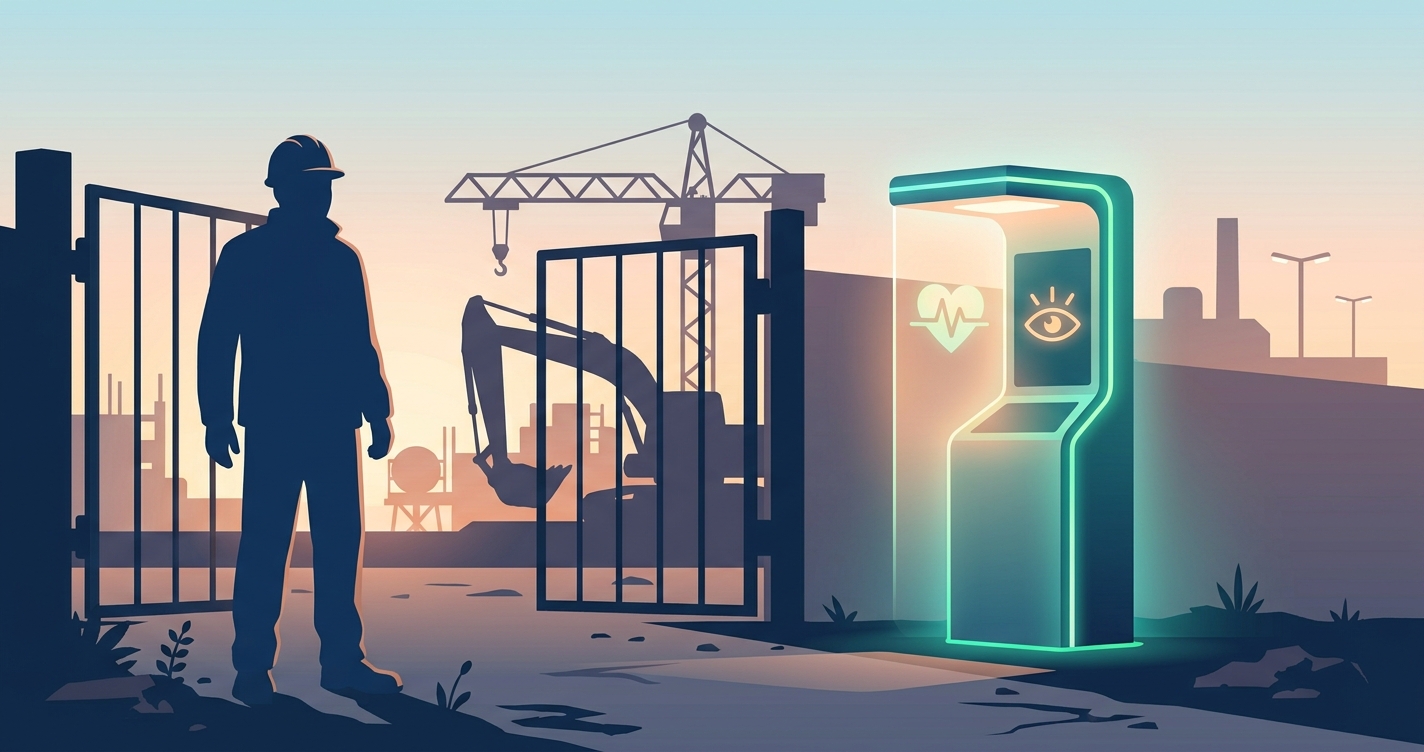
Every shift that begins with a worker climbing into the cab of a haul truck, a crane, or a forklift carries a hidden variable that no equipment inspection captures: the physiological state of the person at the controls. Mechanical pre-checks have been standard for decades, yet the operator is rarely screened with the same rigor. For operations and EHS leaders trying to reduce heavy machinery accidents, this gap is where many preventable incidents originate. A worker who slept four hours, started a shift dehydrated, or is carrying an undetected acute condition presents a risk that no amount of guarding or proximity sensing fully neutralizes. The most direct lever available is also the least used: a structured check of operator readiness before the machine moves.
A 2011 study by Caterpillar Global Mining found that up to 65 percent of surface mining haul truck accidents were fatigue-related, and one large operation that deployed predictive fatigue detection reported a 98 percent reduction in fatigue risk and a 76 percent reduction in fatigue events.
Why pre-shift checks reduce heavy machinery accidents
The link between operator physiology and equipment incidents is not speculative. Fatigue impairs reaction time, judgment, and sustained attention in ways that mirror alcohol impairment, and these are exactly the faculties heavy machinery operation depends on. The National Safety Council has repeatedly identified workplace fatigue as a multibillion-dollar annual cost to U.S. employers through lost productivity, higher healthcare spending, and incident frequency. Research summarized across occupational health literature shows that workers sleeping fewer than five hours per night are roughly 3.5 times more likely to be injured than those getting seven or more.
The reason a pre-shift fitness check moves the accident curve is structural. Most safety programs rely on lagging indicators, investigating an incident after it occurs and adjusting controls afterward. A fitness-for-duty screen is a leading indicator. It intercepts the impaired operator at the gate, before the energy of a moving machine is introduced. When a 40 percent reduction in incidents is cited for organizations that adopt structured readiness programs, it reflects this shift from reaction to interception. Broader well-being and fatigue management programs have been associated with accident reductions near 50 percent, so a 40 percent target is realistic rather than aspirational for sites starting from an informal baseline.
Machinery operator fitness for duty is not one measurement. It is a small cluster of physiological and cognitive signals that, read together, flag the operators who should not be at the controls that morning.
| Screening Approach | What It Detects | Time Per Worker | Operator Friction | Best Fit |
|---|---|---|---|---|
| Supervisor visual check | Obvious impairment, gross fatigue signs | 5-15 seconds | Low | Small crews, informal sites |
| Breathalyzer / substance test | Alcohol, specific substances | 1-3 minutes | High | Regulated substance programs |
| Wearable fatigue sensors | Movement-based fatigue, sleep debt | Continuous | Medium | In-cab and full-shift monitoring |
| Cognitive reaction test | Alertness, psychomotor vigilance | 1-5 minutes | Medium | Alertness-critical roles |
| Contactless vitals screening | Heart rate, breathing, stress, fatigue markers | 30-60 seconds | Low | High-throughput gate screening |
The practical advantage of fast, low-friction screening is throughput. A control that takes five seconds and embarrasses no one gets used every shift. A control that takes five minutes and feels punitive gets skipped, gamed, or quietly abandoned within a quarter.
Building a pre-shift screening program that works
Equipment accident prevention through readiness screening succeeds or fails on operational design, not technology alone. The sites that reach meaningful reductions tend to share a common implementation sequence.
- Define the safety-critical roles first. Not every job needs the same screen. Crane, haul truck, press, and confined-space roles warrant tighter thresholds than ground-level tasks.
- Set objective thresholds before launch. Decide in advance what reading triggers a conversation, a reassignment, or a stand-down, so decisions are consistent rather than personality-driven.
- Make the check fast and private. Operator alertness checks that respect dignity see far higher sustained compliance than ones that single people out.
- Pair screening with a clear pathway. A flagged worker needs somewhere to go: a short rest, a different task, a health follow-up. Screening without a response plan generates resentment, not safety.
- Track leading indicators alongside lagging ones. Near-misses, flag rates, and stand-downs tell you whether the program is working long before the annual incident count does.
Industry Applications
Mining and heavy haul
Mining has the most mature evidence base. With fatigue implicated in a majority of haul truck incidents, operations have layered gate screening with in-cab monitoring and rest scheduling. The combination is what produces results, predictive screening at shift start plus continuous detection through the long monotonous hauls where alertness degrades.
Construction and equipment operation
Construction sites face rotating crews, variable schedules, and high equipment density. Pre-shift fitness for duty here functions as a gate check that absorbs the variability of who shows up, in what condition, on any given morning.
Logistics and warehousing
Forklift and powered industrial truck incidents remain a leading source of warehouse injury. Quick alertness checks at the start of a shift, particularly for overnight and early-morning slots, target the window when circadian dips and sleep debt converge.
Current research and evidence
The research on fatigue and safety-critical workforce health has matured from correlation to intervention. A three-year study led by Dr. Lora Cavuoto at the University at Buffalo and Dr. Fadel Megahed at Miami University used non-obtrusive sensors to translate worker movement into personal fatigue levels, building a framework for targeted intervention rather than blanket policy. Related work by Dr. Zahra Sedighi Maman applied data analytics to predict physical fatigue in manufacturing settings, finding that subtle changes in wrist and hip motion can flag fatigue before a worker reports feeling tired.
On the outcomes side, the strongest signals come from field deployments. The Caterpillar Global Mining figure that up to 65 percent of surface haul truck accidents were fatigue-related establishes the size of the addressable problem. Documented programs pairing predictive detection with management response have reported reductions in fatigue events of 76 percent and, in at least one operation, a 5 percent production increase alongside the safety gains, which counters the assumption that screening slows operations down.
The throughline across this evidence is that physiological state is measurable before an incident, and that measurement plus a response plan reduces incidents. The unsettled questions are about which signals predict best, how often to screen, and how to integrate readings into shift decisions without creating privacy or labor friction.
The future of pre-shift fitness screening
The trajectory points toward screening that is faster, contactless, and integrated into the normal flow of arriving at work. Camera-based methods that read heart rate, breathing rate, and stress markers from a brief facial scan are moving the check from a separate procedure to a gate-pass moment. As these methods mature, the friction that historically killed screening programs falls away, which matters more than marginal accuracy gains because a control only prevents accidents when it is actually used.
Three developments are likely to shape the next several years. First, multi-signal screening that combines fatigue, cardiovascular, and stress indicators rather than relying on a single metric. Second, tighter integration with scheduling and fatigue risk management systems so a flagged reading informs the next shift assignment automatically. Third, growing regulatory and insurer interest in leading-indicator data, which will push fitness-for-duty screening from a voluntary best practice toward an expected control in the highest-risk sectors.
For EHS leaders, the strategic question is shifting from whether to screen operator readiness to how to do it at scale without slowing the gate or alienating the workforce.
Frequently asked questions
How much can pre-shift screening actually reduce heavy machinery accidents?
Field data and well-being program research suggest reductions of 40 to 50 percent are achievable for sites moving from informal checks to structured readiness screening, with fatigue-specific programs in mining reporting fatigue event reductions as high as 76 percent. Results depend on consistent use and a clear response plan for flagged workers.
Is checking operator fitness for duty legal and respectful of privacy?
Fitness-for-duty programs are widely used in safety-critical industries and are generally permissible when applied consistently to defined roles, tied to legitimate safety needs, and handled with appropriate data privacy safeguards. Low-friction, private screening methods tend to raise both compliance and worker acceptance.
What is the difference between a fatigue check and a substance test?
A substance test detects specific impairing substances such as alcohol. A fatigue or alertness check measures the operator's current physiological and cognitive state regardless of cause, capturing sleep debt, acute stress, and illness that substance testing misses entirely.
How long should a pre-shift fitness check take?
To survive in daily operations, a gate-level check should take under a minute. Contactless vitals screening in the 30 to 60 second range keeps throughput high enough that the control is used every shift rather than skipped under production pressure.
Circadify is building toward this exact problem, contactless pre-shift vitals and fatigue screening designed to flag the operators who should not be at the controls before a machine ever moves. EHS directors evaluating a structured readiness program can start a pre-shift screening pilot through our safety program inquiry.