How to Reduce Shift Worker Burnout With a 30-Second Scan
Discover how EHS directors can reduce shift worker burnout by tracking daily vital sign trends to detect chronic stress before it impacts site safety.
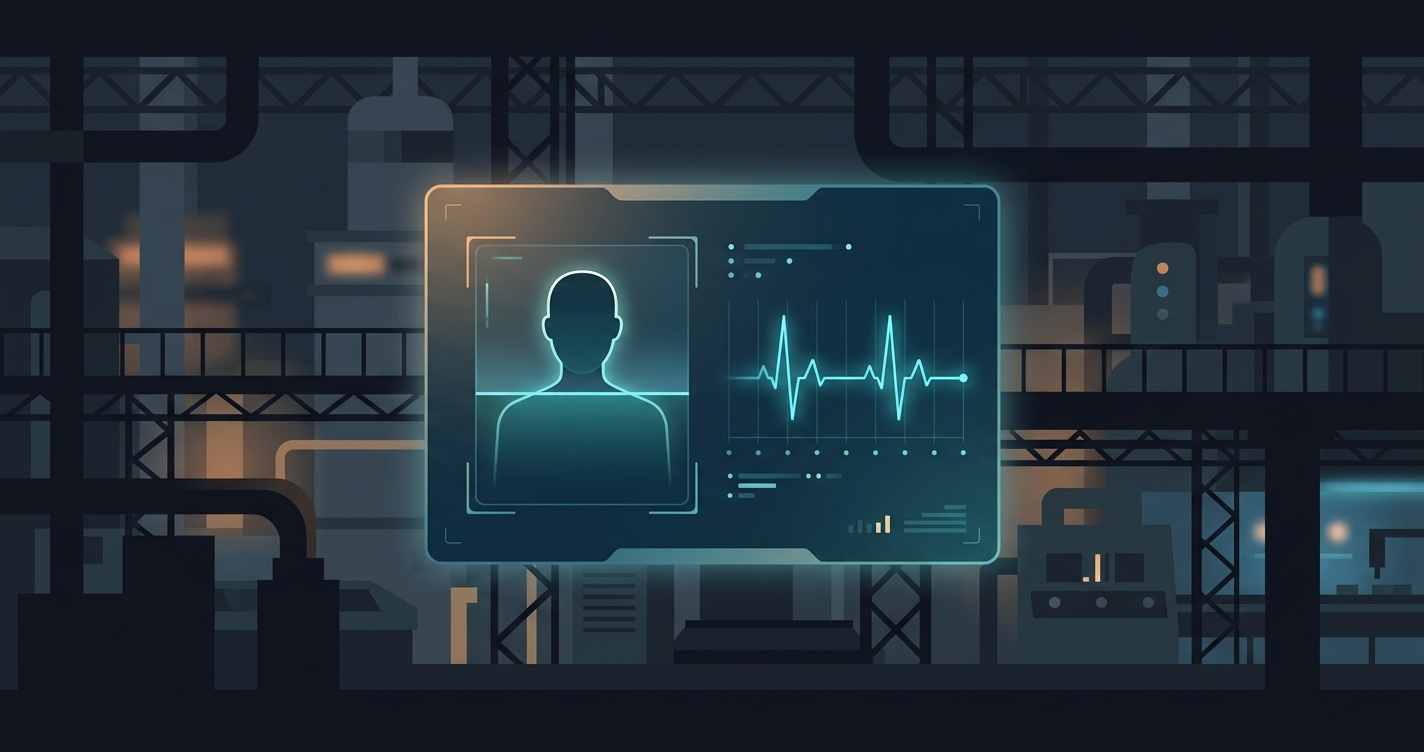
For an Environmental, Health, and Safety (EHS) director, reading an annual employee wellness survey is often an exercise in reviewing lagging indicators. By the time a worker reports feeling exhausted, disconnected, or cynical about their job, the window for early intervention has already closed. The operational reality of heavy industry, mining, manufacturing, and logistics is that shift work fundamentally contradicts human circadian biology. The rotating schedules, night shifts, and long hours create a baseline of physiological strain. When this acute fatigue is not properly managed, it compounds into chronic stress. To effectively reduce shift worker burnout, safety leaders must stop relying exclusively on subjective annual questionnaires and start looking at objective, daily leading indicators. A 30-second physiological check at the start of a shift provides exactly that: a real-time window into the autonomic nervous system.
"Burnout is an occupational phenomenon resulting from chronic workplace stress that has not been successfully managed. It is characterized by feelings of energy depletion, increased mental distance from one's job, and reduced professional efficacy." , World Health Organization, 2023 Classification of Diseases
The physiological mechanics to reduce shift worker burnout
The transition from being tired after a hard shift to experiencing full clinical burnout does not happen overnight. It is a slow, cumulative process of autonomic dysregulation. Every time a worker alternates from a day shift to a night shift, their circadian rhythm is disrupted. This disruption forces the body into a state of physiological stress, triggering the sympathetic nervous system, the biological "fight or flight" response. Over time, if the worker does not get adequate recovery, this sympathetic dominance becomes chronic.
The traditional approach to managing this risk has been primarily psychological and reactive. EHS departments offer Employee Assistance Programs (EAPs) or run training sessions on sleep hygiene. While well-intentioned, these programs require the worker to recognize their own decline and voluntarily seek help. In environments characterized by a strict operational culture, self-reporting is historically low. To genuinely reduce shift worker burnout, the focus must shift from the psychological symptoms to the physiological precursors.
Before a worker feels burned out, their body shows the signs. Their resting heart rate elevates slightly. Their breathing pattern changes. Most importantly, their heart rate variability (HRV) drops. By capturing these vital signs daily through a non-invasive, 30-second scan, EHS teams can map the trajectory of chronic stress. This data allows safety managers to identify which crews or individuals are trending toward exhaustion, enabling proactive interventions, such as schedule adjustments or targeted wellness checks, weeks before a safety incident or a resignation occurs.
Comparing traditional wellness vs. daily physiological screening
| Feature | Traditional Wellness Programs | Daily Physiological Screening |
|---|---|---|
| Data Frequency | Annual or bi-annual surveys | Daily at the start of every shift |
| Measurement Type | Subjective (self-reported questionnaires) | Objective (HR, HRV, Respiratory Rate) |
| Intervention Timing | Reactive (after burnout occurs) | Proactive (adjustments before crisis) |
| Participation Rate | Low to moderate (survey fatigue) | High (seamless 30-second gate check) |
| Primary Beneficiary | Corporate HR reporting | EHS directors and site supervisors |
Decoding the biomarkers of chronic stress
When a worker steps up to a contactless screening station for 30 seconds, the system is not diagnosing a medical condition. It is measuring the body's physical readiness to perform safely. The specific vital signs captured during this brief window tell a comprehensive story about recovery and chronic stress accumulation.
- Heart Rate Variability (HRV): HRV measures the variation in time between consecutive heartbeats. It is widely considered the gold standard metric for autonomic nervous system balance. High HRV indicates a resilient system capable of adapting to stress. Consistently low HRV indicates that the body is locked in a state of sympathetic stress, a primary precursor to occupational burnout.
- Resting Heart Rate (RHR): A worker's baseline heart rate should remain relatively stable. A slow, steady upward trend in RHR over several weeks is a classic physiological sign of chronic burnout in industrial workers.
- Respiratory Rate: The number of breaths per minute is tightly linked to stress and fatigue. Workers suffering from chronic sleep deprivation and elevated stress often exhibit shallow, more rapid breathing patterns even when standing still.
- Micro-Trends Over Time: The true value of a 30-second scan is not the absolute number on any single day, but the trend line. A sudden drop in physiological metrics can indicate acute fatigue, while a gradual decline over a three-month rotation points directly to systemic burnout risk.
Industry applications for proactive burnout reduction
Manufacturing and heavy machinery
In high-speed manufacturing environments, the cognitive load is intense. Operators must maintain absolute focus on moving parts, automated robotics, and heavy materials. When chronic stress degrades cognitive function, reaction times slow down, and standard operating procedures are bypassed. By implementing pre-shift vital sign scanning, plant managers can identify operators whose physiological data indicates high stress levels, reassigning them to lower-risk tasks for the day to prevent machinery-related incidents.
Mining and energy extraction
Remote mining sites and offshore rigs present unique challenges because workers live on-site in camps, often working 14-day or 21-day continuous rotations. The isolation compounds the physical strain of the shifts. EHS directors in these sectors use daily physiological screening to monitor the entire camp's accumulated stress. If an entire crew shows declining HRV metrics by day 10 of a 14-day swing, site leadership can adjust work pacing or increase mandatory rest periods to prevent the end-of-rotation accident spikes that plague the industry.
Transportation and logistics
Commercial drivers and heavy equipment operators face immense regulatory scrutiny regarding hours of service, yet these regulations only measure time on the clock, not the quality of recovery. Chronic stress and burnout are massive drivers of turnover in logistics. A quick, non-invasive health scan at the dispatch gate ensures that drivers are not just compliant with hours, but biologically capable of maintaining attention on the road, protecting both the driver and the public.
Current research and evidence
The link between measurable vital signs and occupational burnout is heavily supported by recent clinical and occupational health research. As the medical community has recognized burnout as a physiological condition, researchers have focused on objective biomarkers to track it.
A 2024 study led by researchers Cao, Hu, and Jing analyzing the impact of work stress on employees demonstrated that high effort-reward imbalance directly predicted lower heart rate variability over time. The study established that chronic work stress physically alters the heart's autonomic regulation.
Similarly, late 2024 research by A. Rubio-López and colleagues focused on healthcare workers, a population notorious for extreme shift work and high burnout rates. Their team successfully utilized HRV parameters to assess burnout risk, building a predictive model that integrated psychosocial and occupational factors. They concluded that continuous or regular HRV monitoring offers a highly viable method for tracking the exact stress and recovery patterns that lead to clinical burnout.
These studies validate what industrial physiology experts have argued for years: subjective surveys are insufficient. Real-time physiological data is required to catch the physical decline that precedes the mental break.
The future of shift worker wellness
The next phase of occupational health and safety will be defined by predictive analytics. EHS directors will no longer wait for a worker to fall asleep at the controls or hand in their resignation due to exhaustion. Instead, safety management platforms will aggregate daily, anonymized physiological data from 30-second gate scans to build a real-time risk profile of the entire operation.
This data-driven approach removes the stigma from occupational stress. When a machine alerts a supervisor that a worker's physiological metrics indicate severe fatigue, it transforms a potentially punitive conversation into a data-backed safety intervention. The responsibility for identifying burnout shifts from the individual worker to the organizational safety system.
Frequently asked questions
How does a 30-second scan detect burnout? The scan does not diagnose clinical burnout directly. Instead, it measures specific physiological biomarkers, such as heart rate variability (HRV) and respiratory rate, which are heavily regulated by the autonomic nervous system. Chronic stress and impending burnout cause predictable disruptions in these vital signs. By tracking them daily, EHS teams can spot the physiological trends that lead to burnout.
Is tracking daily vital signs an invasion of worker privacy? When implemented correctly, contactless health screening is completely objective and privacy-focused. Modern systems do not store personal medical imagery or require workers to disclose private medical histories. The data is processed instantly to provide a localized readiness score, and aggregate trends are used for safety management without compromising individual health privacy regulations.
Can this technology replace traditional Employee Assistance Programs (EAPs)? No. Daily physiological screening is a complementary tool, functioning as an early warning system. While the scan can identify that a worker is experiencing chronic stress, the EAP provides the actual psychological support, counseling, and resources required to help the worker recover. The scan simply tells you who needs the EAP before a crisis occurs.
Why is Heart Rate Variability (HRV) so important for shift workers? HRV is the most accurate non-invasive measure of the nervous system's balance between rest and stress. Shift workers inherently disrupt their biological rhythms, pushing their bodies into stress states. Monitoring HRV allows safety managers to see if a worker is adequately recovering between shifts or if they are accumulating a physiological debt that will eventually result in burnout or a safety incident.
Addressing the root causes of industrial exhaustion requires more than annual surveys; it requires immediate, actionable data at the start of every shift. By implementing rapid, contactless health checks, organizations can effectively reduce shift worker burnout and build a safer, more resilient workforce. Circadify is directly addressing this space with advanced physiological monitoring tools designed for high-risk environments. To learn how integrated screening can protect your crews and optimize your safety programs, explore our solutions at https://circadify.com/solutions/fraud-detection.