Safety-Critical Workforce Health: What to Track
A research-driven breakdown of the health signals that matter most for safety-critical workforce health, and why each one belongs in a pre-shift screening program.
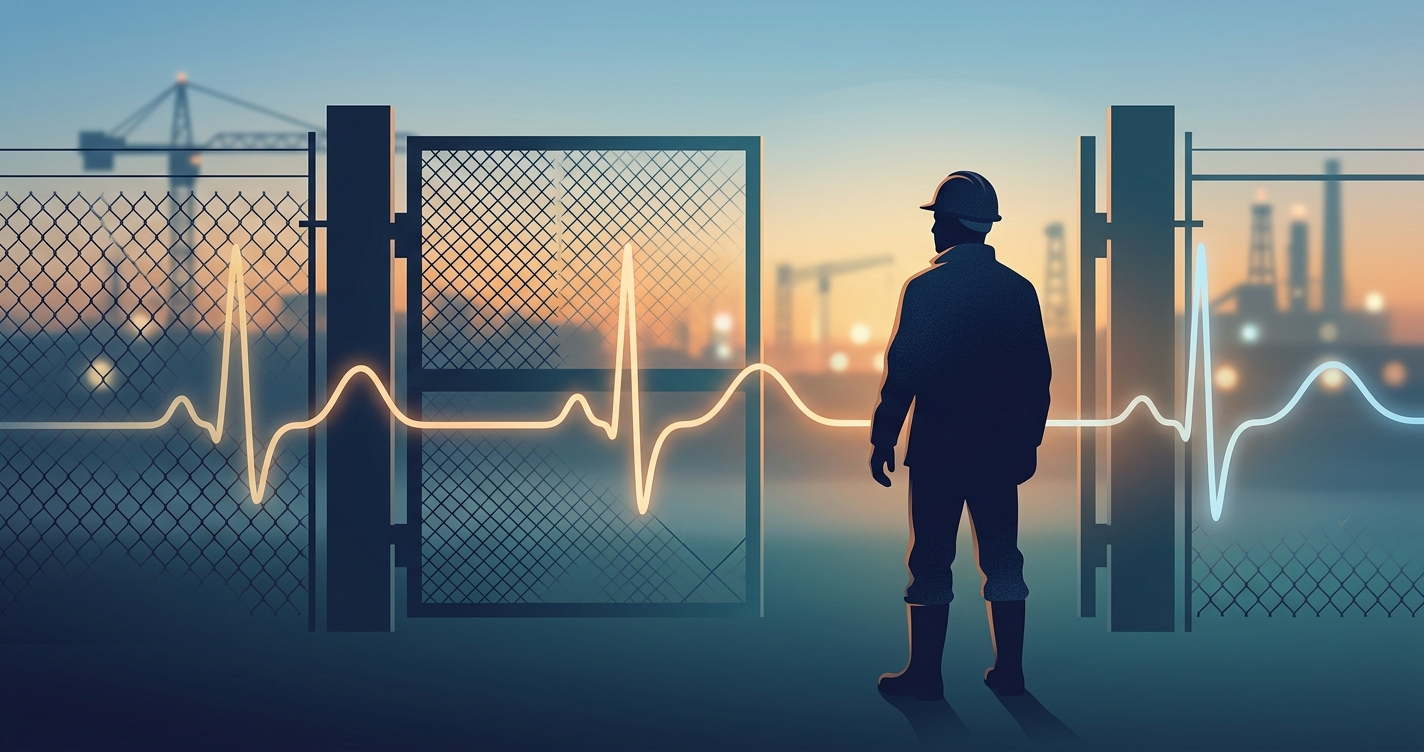
Safety performance in heavy industry has long been measured backward. Incident rates, lost-time injuries, and near-miss logs all describe what already happened. The harder question for an EHS director is what to measure before a worker grabs the controls of a haul truck or steps onto a turbine deck. Safety-critical workforce health is the discipline of identifying which physiological signals actually predict impaired performance and then capturing them consistently at the moment risk is highest: the start of a shift. Not every health metric earns a place in that window. The signals that matter are the ones with a documented link to reaction time, hazard recognition, and acute cardiovascular events.
Sleep deprivation can degrade a worker's performance to a level comparable with alcohol intoxication, and the National Safety Council estimates fatigue-related losses run into the billions of dollars annually through reduced productivity, medical costs, and property damage.
Defining safety-critical workforce health and what it should measure
A safety-critical role is one where a lapse in judgment or physical capacity can injure the worker or those around them within seconds. Equipment operators, riggers, electrical crews, rail engineers, and process plant controllers all fall into this group. For these roles, health monitoring is not a wellness benefit. It is a control measure that sits alongside lockout-tagout and fall protection.
The goal of safety-critical workforce health monitoring is narrow and specific: detect a state of acute impairment before exposure to the hazard. That rules out most chronic-disease screening, which belongs in annual occupational health exams, and focuses attention on signals that change shift to shift. The most defensible programs track a small set of vital signs to monitor at work that respond quickly to fatigue, stress, dehydration, and cardiovascular strain.
Research on high-risk worker health metrics keeps returning to the autonomic nervous system as the clearest readout. A systematic review of heart rate variability (HRV) in occupational health found consistent associations between lowered parasympathetic activity and shift work, psychosocial workload, and physically demanding environments. When the body is fatigued or stressed, sympathetic tone rises and HRV falls, and that shift tracks with the same period when hazard perception declines.
The core signals worth capturing pre-shift
- Resting heart rate: elevated baseline can flag dehydration, illness, stress, or stimulant use.
- Heart rate variability: a sensitive early marker of fatigue and accumulated stress load.
- Respiratory rate: shifts with acute stress, illness, and certain cardiovascular events.
- Blood pressure indicators: relevant for collapse risk in hot or high-exertion environments.
- Signs of acute fatigue: micro-expression and ocular cues correlated with sleep debt.
Comparing the health signals that matter for high-risk roles
Not all metrics carry equal predictive weight, and not all are practical to collect at a busy gate. The table below compares the most discussed signals against the criteria that matter for safety-critical roles health monitoring: how fast they change, how strongly they link to incident risk, and how realistic they are to capture during a short pre-shift check.
| Health Signal | Responds Shift-to-Shift | Evidence Link to Impairment | Pre-Shift Practicality | Best Use Case |
|---|---|---|---|---|
| Heart rate variability | High | Strong (fatigue, stress) | Moderate to high | Cumulative fatigue detection |
| Resting heart rate | High | Moderate (stress, illness) | High | General readiness baseline |
| Respiratory rate | High | Moderate (stress, acute illness) | High | Acute distress screening |
| Blood pressure | Moderate | Moderate (collapse, heat) | Moderate | Heat and exertion roles |
| Fatigue and ocular cues | High | Emerging but promising | High | Drowsiness at the gate |
| Chronic disease panels | Low | Strong long-term | Low | Annual fitness-for-duty exams |
The pattern is clear. Signals that change daily and can be read quickly belong in pre-shift screening. Slow-moving chronic markers belong in periodic medical evaluations and should not clog the daily workflow.
Industry applications of workforce health and safety data
The right signal set varies by hazard profile. A program built for a refinery is not the same as one built for a rail yard, even though both rely on the same underlying physiology.
Mining and heavy equipment
Long shifts, night rotations, and remote camps make cumulative fatigue the dominant risk. Research by Q. Liu and colleagues on construction workers found that physically fatigued workers showed measurably reduced situational awareness and were less likely to identify hazards. For these crews, HRV trends and fatigue cues offer the earliest warning, often before a worker self-reports tiredness.
Transportation and rail
Reaction time is the currency of safety in moving operations. Resting heart rate and fatigue indicators help flag the worker who slept four hours before a 6 AM start. Pre-shift checks here function as an objective layer on top of hours-of-service rules, which govern scheduling but cannot see how well an individual actually recovered.
Energy, utilities, and high-heat environments
Where heat and exertion combine, cardiovascular signals move to the front. Elevated resting heart rate and blood pressure indicators can precede heat illness and collapse. Capturing a baseline at the gate gives safety teams a reference point to detect dangerous drift across a shift.
Current research and evidence
The scientific case for tracking autonomic signals continues to strengthen. A systematic review published in PMC documented that decreased heart rate variability is consistently associated with increased fatigue across multiple populations, supporting HRV as a cross-domain fatigue marker rather than a niche metric. Separate work on health care workers tracking HRV across four consecutive extended shifts, conducted through Norway's STAMI institute, showed measurable autonomic strain that accumulated across the work block and only partly recovered during rest.
On the cost side, the National Safety Council frames fatigue as a quantifiable financial hazard and publishes a Fatigue Cost Calculator so employers can estimate losses tied to impaired alertness, slower reaction times, and degraded decision-making. The CDC's NIOSH program reinforces the operational stakes, noting that work-related fatigue disproportionately affects at-risk worker populations and raises accident likelihood.
A few themes run through this body of evidence:
- Single readings are weak; trends across shifts carry the signal.
- Fatigue impairs hazard recognition before workers notice the deficit themselves.
- Autonomic markers respond to the same stressors that drive incident risk.
- Practicality at the point of entry determines whether a program survives contact with daily operations.
The future of safety-critical workforce health
Three shifts are reshaping how high-risk worker health metrics get collected. First, contactless capture is replacing wearables and cuffs in settings where gloves, hygiene, and throughput make body-worn devices impractical. Reading vital signs from a brief facial scan removes friction at the gate. Second, programs are moving from spot checks toward individualized baselines, where each worker is compared against their own normal range rather than a population average. That reduces false flags and respects physiological variation. Third, workforce health and safety data is being integrated directly into safety management systems, so a screening result becomes a documented control rather than an isolated reading.
The destination is a pre-shift check that is fast, dignified, and objective. It does not diagnose disease. It answers one operational question: is this worker in a physiological state that makes the task safe right now. As capture methods improve, the bottleneck moves from technology to program design, which is where safety leaders should focus.
Frequently asked questions
Which health signals matter most for safety-critical roles?
The signals with the strongest evidence and the best fit for a short pre-shift window are heart rate variability, resting heart rate, respiratory rate, and acute fatigue indicators. These respond shift to shift and link to reaction time and hazard recognition. Chronic disease markers matter for long-term fitness but belong in periodic exams, not daily checks.
Why not just rely on hours-of-service or scheduling rules?
Scheduling rules govern how long someone can work, but they cannot see how well an individual recovered. Two workers on identical schedules can arrive in very different physiological states. Tracking vital signs adds an objective layer that catches the worker who is impaired despite a compliant schedule.
Is daily vital-sign screening invasive for workers?
It does not have to be. Contactless methods can read core signals from a brief facial scan without blood draws, cuffs, or wearables. The most accepted programs frame screening as a shared safety control, compare workers against their own baseline, and keep the check fast and private.
How is fatigue detected without a blood test?
Fatigue leaves measurable fingerprints in the autonomic nervous system. Lowered heart rate variability, changes in heart rate, and ocular or facial cues all correlate with sleep debt and accumulated stress. Tracking these signals over time gives safety teams an early warning that does not require any laboratory work.
Circadify is building toward this model of safety-critical workforce health, pairing contactless pre-shift vitals capture with fatigue detection designed for the realities of industrial gates. Safety leaders evaluating which signals to track can start with a screening-metric assessment through a safety program inquiry.