What Vital Signs Actually Predict Workplace Risk?
Discover which vital signs, including heart rate variability and resting heart rate, act as the strongest predictors of workplace risk and fatigue.
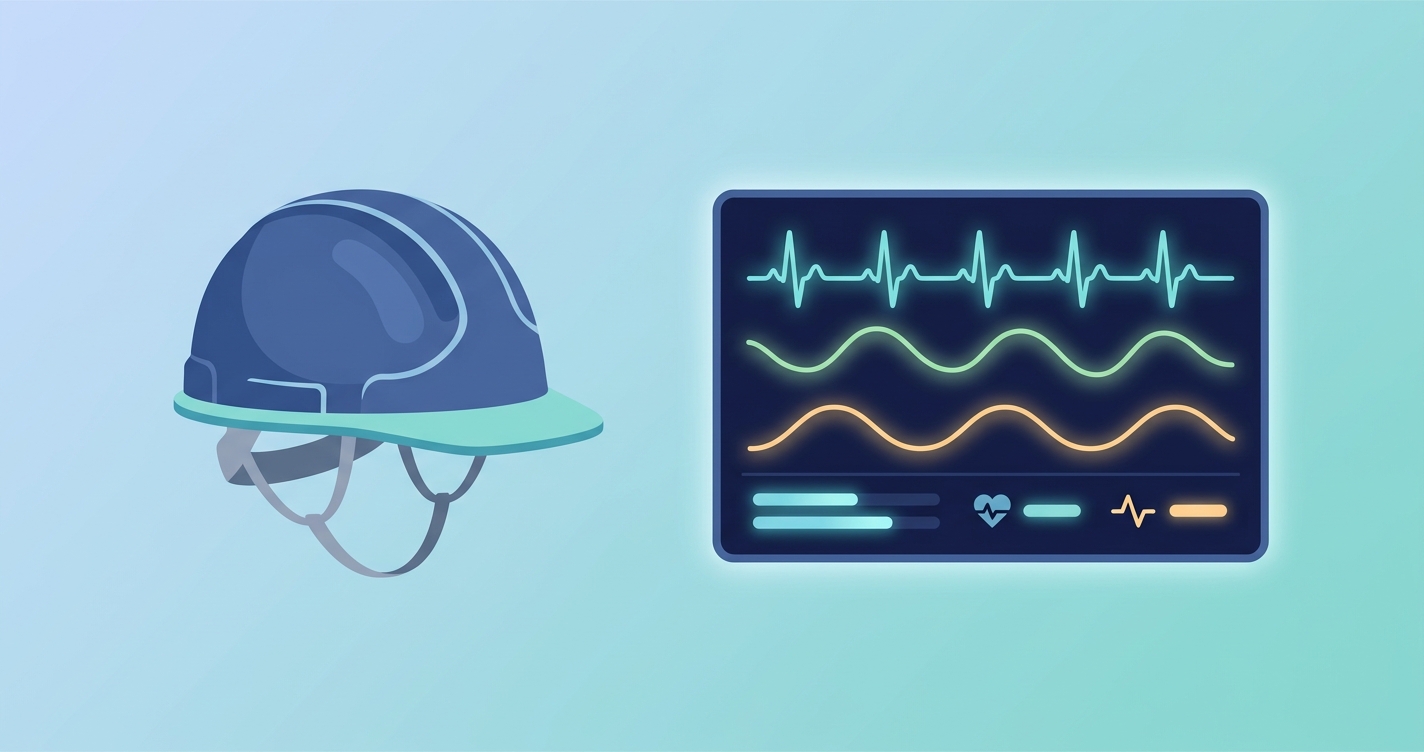
For Environmental, Health, and Safety (EHS) directors, the beginning of a shift represents a daily calculation of exposure. In safety-critical environments, from heavy manufacturing floors to remote mining operations, the traditional methods of evaluating worker readiness have relied heavily on subjective self-reporting and lagging indicators. When an incident occurs, root cause analysis often points to human error, impairment, or exhaustion. Proactive risk mitigation requires data that precedes the incident, moving away from subjective observation and toward physiological facts. This is why understanding which vital signs workplace risk profiles are most sensitive to has become a primary focus in occupational health technology. Identifying the biological markers that warn of impending cognitive failure allows safety managers to intervene before a near-miss becomes a measurable loss.
"Fatigued workers are three times more likely to be involved in a workplace accident than their well-rested colleagues, while cognitive errors can increase by up to 400% during overnight shift work periods.", Occupational Fatigue and Safety Assessment, 2024
Beyond the clipboard: analyzing vital signs workplace risk
For decades, safety management operated primarily on lagging indicators. If a forklift tipped over or a pressure valve was left open, the subsequent investigation would attempt to piece together the worker's state of mind at the time. The transition toward leading indicators introduced questionnaires and observational checklists into the pre-shift routine. However, subjective questioning, asking a worker if they slept well or feel ready for a demanding shift, fails to capture the physiological reality of impairment. Workers often misjudge their own fatigue levels or intentionally mask their exhaustion to avoid losing a shift's pay.
Evaluating vital signs workplace risk means moving past the clipboard and focusing on autonomic output. The body cannot easily hide systemic stress, incubating illness, or severe sleep deprivation. When a worker is fatigued, their sympathetic and parasympathetic nervous systems fall out of balance. This imbalance manifests directly in their vital signs. While a basic heart rate check provides a baseline, a deeper, high-fidelity analysis of the cardiovascular system reveals the specific, hidden markers of cognitive load and physical exhaustion.
Comparing shift readiness indicators
| Assessment Method | Data Type | Predicts Fatigue? | Predicts Impairment? | Implementation Delay |
|---|---|---|---|---|
| Self-Reporting | Subjective | Poor | Poor | None |
| Supervisor Observation | Subjective | Moderate | Moderate | None |
| Standard Drug Test | Chemical/Objective | No | Yes (Substance) | High (Lab times) |
| Basic Heart Rate | Objective | Low | Low | Low |
| Heart Rate Variability (HRV) | Objective | High | High | Low |
The core predictors: which vitals matter most
The medical and industrial safety communities have isolated specific cardiovascular and respiratory markers that directly correlate to an increased likelihood of human error.
Heart rate variability (hrv)
Heart Rate Variability (HRV) measures the exact time variation between consecutive heartbeats. Unlike a flat pulse rate, HRV is the most precise non-invasive indicator of autonomic nervous system function. High variability indicates a well-rested, highly adaptable system capable of managing sudden stress. Low variability indicates existing stress, exhaustion, or illness. When a heavy equipment operator experiences cognitive decline, their HRV drops predictably, signaling an increased risk of delayed reaction times and poor judgment.
Resting heart rate (rhr)
While an individual's resting heart rate fluctuates daily, an abnormal deviation from a worker's personal baseline is a clear warning sign. Elevated resting heart rates often point to insufficient recovery, acute physical stress, or dehydration. For crews operating in high-heat environments or at extreme altitudes, a spiked baseline heart rate before the shift even begins is a primary indicator that the individual lacks the cardiovascular reserve needed for the physical demands of the job.
Blood pressure and respiratory rate
Blood pressure variability and rapid, shallow respiratory rates are strong secondary indicators of physiological stress. While blood pressure is traditionally used for long-term health monitoring in primary care, acute hypertension prior to a shift can indicate severe immediate stress, pain, or the influence of external substances. Rapid respiratory rates often accompany the autonomic dysregulation seen in severe fatigue.
- Decreased reaction time when operating heavy machinery or vehicles.
- Impaired spatial awareness in complex, hazardous environments.
- Reduced ability to manage complex, multi-step problem-solving tasks.
- Higher likelihood of micro-sleeps during repetitive, monotonous duties.
- Lowered physical endurance, increasing the likelihood of musculoskeletal injuries.
Industry applications: high-stakes environments
Mining and heavy equipment operation
In the mining sector, haul truck operators and heavy machinery controllers work long, repetitive shifts in challenging environments. The isolation and monotony of the task make micro-sleeps a constant threat. Monitoring vital signs, specifically HRV and pulse rate deviations, allows safety supervisors to flag individuals who are physiologically incapable of maintaining focus for a 12-hour shift, removing them from the cab before an incident occurs.
Transportation and freight rail
The freight rail industry operates on complex scheduling that frequently disrupts natural circadian rhythms. Being awake for over 20 hours produces cognitive impairment comparable to a blood alcohol concentration (BAC) of 0.08 percent. Identifying pre-shift vital sign anomalies gives yardmasters a data-driven justification to reassign a dangerously fatigued engineer before they take control of a locomotive, protecting both the crew and the surrounding communities.
Manufacturing and plant operations
Manufacturing floors are unforgiving environments involving high-speed automated machinery, heavy materials, and complex logistical movements. A slight lapse in concentration can result in severe injury or production line disruption. By tracking physiological readiness at the start of a shift, plant managers can ensure that the workers stationed at the most dangerous points in the assembly line have the cognitive clarity required for the task.
Current research and evidence
The academic consensus on the relationship between biometric data and workplace safety is solidifying rapidly, with peer-reviewed research providing the foundation for new EHS protocols. Researchers are moving beyond theoretical models and applying empirical data directly to industrial settings.
A recent analysis published by MDPI, titled "Human Error Prediction Using Heart Rate Variability and Electroencephalography," demonstrated that specific changes in cardiovascular patterns reliably precede measurable increases in human error. The study confirms that as cognitive workload exceeds a worker's capacity, the autonomic nervous system struggles to compensate, resulting in a measurable drop in HRV.
Furthermore, a 2026 study focused on "Heart Rate Variability in the Detection of Cognitive Fatigue Through Transfer Learning" highlighted the efficacy of photoplethysmography (PPG) data. By applying machine learning models to optical blood flow measurements, researchers can identify the exact moment a worker transitions from alert to cognitively impaired. Systematic reviews featured in PubMed Central (PMC) have consistently validated these findings, establishing HRV as a highly reliable measure of cognitive workload in aviation, medicine, and other high-reliability organizations. The Centers for Disease Control and Prevention (CDC) has also noted the critical need for objective fatigue management tools in the transportation and utilities industries, emphasizing that biological markers are far more reliable than hours-of-service compliance logs.
The future of biometric risk prediction
The next phase of occupational health and safety will rely heavily on frictionless, non-invasive screening technologies. The operational bottleneck of traditional fitness-for-duty testing, which often requires physical equipment like blood pressure cuffs, specialized occupational health personnel, or slow laboratory analysis, is being eliminated by computer vision and advanced sensor technology.
Crucially, the industry is moving past the limitations of wearable devices. While smartwatches and chest straps can collect valuable data, they introduce significant compliance, hygiene, and hardware management challenges in heavy industrial environments. Future safety protocols will integrate rapid, contactless biometric screening directly into the daily access control workflow. Before a worker passes through the turnstile, boards a transport vehicle, or receives the keys to a fleet truck, their physiological readiness will be confirmed in seconds via a simple optical scan. This shift from lagging incident reports to leading biometric indicators will fundamentally change how organizations manage liability, optimize workforce allocation, and protect their crews.
Frequently asked questions
Why is Heart Rate Variability (HRV) a better predictor of fatigue than a simple heart rate?
Simple heart rate only measures the number of beats per minute, which can remain surprisingly stable even when a person is deeply exhausted. HRV measures the micro-fluctuations in time between those individual beats, offering a direct view into the autonomic nervous system. A drop in HRV is a highly sensitive, early warning sign of cognitive and physical exhaustion that a basic pulse check will miss entirely.
Can analyzing vital signs indicate impairment without a chemical drug test?
Yes, but in a different capacity. Vital sign screening measures the physiological effects of impairment, such as extreme heart rate deviations, elevated blood pressure, or autonomic nervous system depression, regardless of the root cause. While it does not identify specific chemical substances, it accurately flags the functional impairment that makes a worker unsafe, whether that impairment is caused by severe fatigue, illness, or substance use.
How do EHS directors implement biometric screening practically?
Modern implementation relies on frictionless, contactless technology that does not slow down shift changes or create operational bottlenecks. Workers undergo a brief, non-invasive scan at a kiosk or tablet before entering the site. The system flags physiological anomalies based on established baselines, allowing supervisors to perform a secondary, in-person assessment before the worker engages in safety-critical tasks.
Addressing fatigue and physiological impairment before a shift begins is the most effective way to eliminate preventable accidents. Circadify is actively building the infrastructure for frictionless health screening, giving safety teams the objective data they need to manage shift readiness without disrupting operations. Learn more about our approach to securing high-risk environments at Circadify Safety Program Inquiry.