Why are employers adding 30-second health checks before shifts?
A growing number of safety-critical industries are adopting pre-shift health checks to proactively manage worker fatigue and fitness for duty, driven by advances in occupational health screening technology.
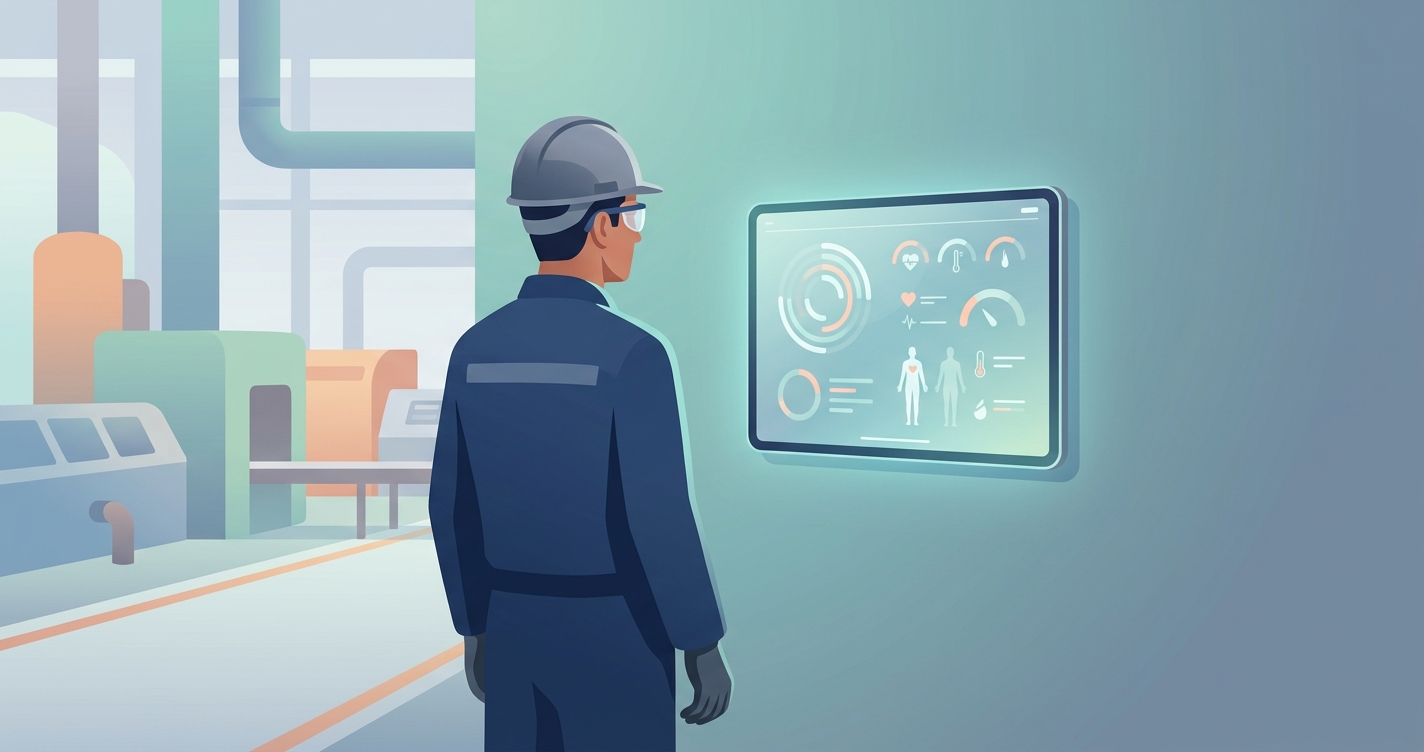
For decades, the standard for workplace safety in industrial environments has been reactive. Safety programs have been built around lagging indicators-investigating incidents after they occur to prevent future mistakes. While essential, this approach inherently waits for a failure to happen. The new frontier in occupational safety is the shift to leading indicators, using real-time data to mitigate risks before they lead to an accident. It is in this context that rapid, 30-second health checks before a shift begins are gaining traction, representing a fundamental change in how employers manage the fitness and well-being of their workforce in safety-critical roles.
"Fatigue is estimated to cost U.S. employers about $136 billion a year in health-related lost productivity, with more than 40% of workers reporting they are sleep-deprived." - National Safety Council (2021)
The move to proactive fitness-for-duty assessment
The core driver behind the adoption of pre-shift health checks is the evolution of occupational health screening technology. Traditionally, fitness-for-duty programs relied on periodic, often annual, medical exams and pre-employment drug screening. These methods, while valuable, provide only a single snapshot in time. They cannot account for transient risk factors like acute fatigue, dehydration, illness, or heat stress that can significantly impair a worker's cognitive function and physical capabilities on any given day.
Modern contactless screening solutions address this gap. By measuring key physiological indicators in a brief, non-invasive scan at the start of a shift, companies can get an objective, immediate assessment of a worker's readiness. This is not about diagnosing medical conditions but about managing immediate operational risk. It allows supervisors to identify when a worker's physiological state is outside of their personal baseline, suggesting a potential impairment. This data point enables a supportive conversation-perhaps the worker needs a different assignment for the day, a hydration break, or should be sent home to rest without penalty-long before their condition could contribute to a safety incident.
| Feature | Traditional Health Screening | Modern Pre-Shift Screening |
|---|---|---|
| Frequency | Periodic (e.g., annual, pre-employment) | Daily, at the start of each shift |
| Scope | Broad medical history, substance use | Immediate fitness-for-duty indicators |
| Data Type | Lagging, historical data | Real-time, leading indicator data |
| Primary Goal | Compliance, long-term health assessment | Proactive risk mitigation, immediate safety |
| Method | In-person clinical visit, lab tests | Contactless scan, vitals measurement |
Industry Applications
The application of rapid pre-shift screening is most prevalent in industries where the consequence of human error is high.
Transportation and logistics
For commercial drivers, rail operators, and pilots, fatigue is a well-documented risk. Federal regulations often mandate strict hours-of-service, but this does not guarantee a worker is well-rested.
- Fatigue Detection: A 30-second scan can measure indicators of fatigue, such as changes in heart rate variability, providing an objective measure to supplement self-reporting.
- Regulatory Compliance: As regulators focus more on fatigue risk management systems, this technology provides a clear, documented way to demonstrate proactive efforts.
Manufacturing and heavy industry
In complex manufacturing environments, the interaction of workers with heavy machinery requires constant alertness.
- Heat Stress Mitigation: Plants can be hot environments. Monitoring vital signs can help identify workers who are becoming dangerously overheated before symptoms become severe.
- Presenteeism Reduction: A worker who is physically present but impaired by illness or exhaustion is a risk. Screening helps ensure that individuals are truly fit for their tasks.
Energy and utilities
Workers in the energy sector, from nuclear facilities to remote renewable energy sites, often work long shifts in demanding conditions.
- Remote Monitoring: For technicians in isolated locations, a daily check provides a crucial health and safety touchpoint.
- Baseline Trending: Over time, the data can reveal trends in crew health, informing broader workforce wellness and fatigue management strategies.
Current research and evidence
The push for more dynamic worker screening is supported by a growing body of research. The National Institute for Occupational Safety and Health (NIOSH) has pioneered the "Total Worker Health" concept, a framework that integrates worker protection with health promotion. Research under this initiative explores how physiological monitoring can serve as a key component of a holistic safety program.
A 2020 webinar by NIOSH researchers highlighted the potential of sensor technology to detect harmful exposures and prevent injuries. They emphasized that the goal is not surveillance, but empowerment-giving workers and employers the information they need to maintain a safe work environment. Studies on fatigue, for instance, show a clear correlation between sleep deprivation and the risk of accidents. Research by the National Safety Council (NSC) found that 13% of all workplace injuries can be attributed to fatigue. By providing an objective indicator of a worker's state, occupational health screening technology can help bridge the gap between feeling tired and understanding when that fatigue becomes a safety risk.
The future of occupational health screening
The trajectory for pre-shift health screening is toward greater integration and predictive capability. The future is not just about a single-point-in-time check, but about building a longitudinal health profile for each worker to enable smarter, more personalized safety interventions. We can expect to see these systems become more deeply integrated with broader Safety Management Systems (SMS).
This integration will allow EHS leaders to move from reacting to individual alerts to analyzing aggregate, anonymized data. Imagine identifying that a specific crew on a particular shift rotation consistently shows higher signs of fatigue. This insight allows for a targeted intervention-perhaps adjusting the shift schedule or improving break facilities-that addresses the root cause of the risk. The goal is to create a predictive system that can flag potential issues at a cohort level before they become individual safety events.
Frequently asked questions
Q: Are pre-shift health checks legal and private? A: Yes, when implemented correctly. These systems are designed to be compliant with labor laws and privacy regulations like the ADA and GINA. The focus is on objective physiological data, not diagnosis. Data is typically aggregated and anonymized for trend analysis, and individual results are handled with strict confidentiality to support a worker's immediate fitness for duty.
Q: What do these 30-second checks actually measure? A: They typically measure key vital signs through contactless methods. This can include heart rate, heart rate variability (HRV), respiratory rate, and sometimes temperature. The system analyzes these metrics against a worker's own personal baseline to detect significant deviations that may indicate fatigue, stress, or the onset of illness.
Q: How is this different from a breathalyzer or drug test? A: While all are forms of fitness-for-duty screening, the purpose and scope are very different. Substance tests look for a specific prohibited cause of impairment. A 30-second health check is a much broader, non-specific screen for general physiological well-being. It detects potential impairment from a wide range of factors, including fatigue, illness, and dehydration, which are far more common daily risks.
The move toward proactive, data-driven safety protocols represents a significant opportunity for EHS leaders to reduce incidents and improve worker well-being. Circadify is at the forefront of developing solutions in this space, helping industrial partners build stronger, more resilient safety programs. To learn more about implementing a modern fitness-for-duty program, begin your safety program inquiry at circadify.com/solutions/fraud-detection.