Why does my employer want me to scan my face before a shift?
Explaining the role of pre-shift health screenings and fitness-for-duty technology in modern workplace safety for safety-critical industries.
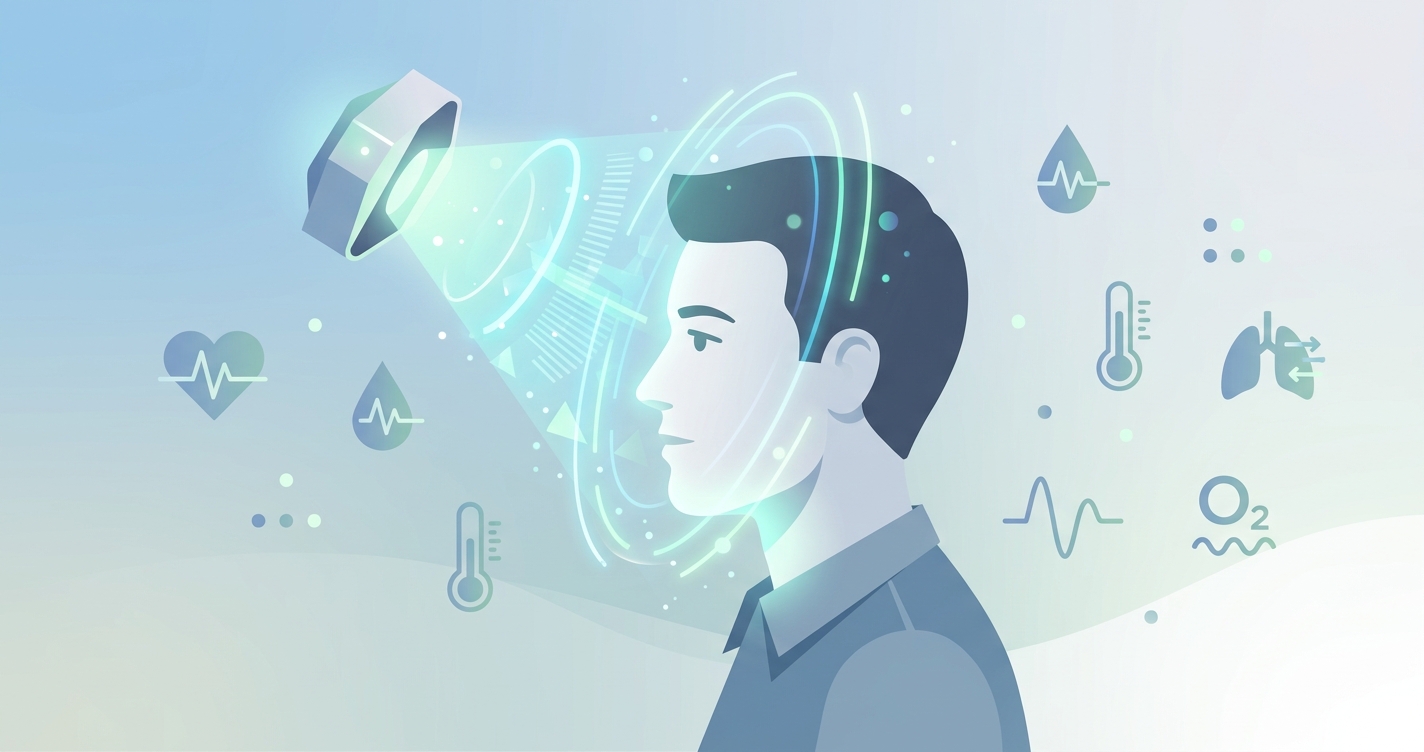
If you work in a safety-sensitive job, like transportation, manufacturing, or energy, you may have recently encountered a new procedure at the start of your day: a quick, contactless face scan. It's a normal question to ask why this is happening. The short answer is that it represents a new approach to a very old concept in workplace safety: ensuring every worker is fit for duty. This process, known as a pre-shift health screening, isn't about surveillance; it's a modern tool designed to protect you and your colleagues by proactively identifying hidden risks like fatigue or illness before they can lead to an incident.
"According to a report from the National Safety Council, an estimated 13% of workplace injuries are attributable to fatigue, and 69% of employees report being tired at work, which increases the risk of incidents significantly."
The shift from reactive to proactive safety
For decades, the core idea of "fitness for duty" was primarily associated with drug and alcohol testing. While important, this represents a narrow view of the factors that can affect a worker's ability to perform their job safely. Regulatory bodies like the Occupational Safety and Health Administration (OSHA) have long held that employers are responsible for providing a safe working environment. This has led to the development of comprehensive fitness-for-duty programs that are, as defined by the Americans with Disabilities Act (ADA), "job-related and consistent with business necessity." The goal is to prevent incidents, not to penalize employees.
A modern pre-shift health screening expands the definition of fitness for duty to include physiological realities like profound fatigue, the onset of an illness, or extreme stress. Research by the National Safety Council (NSC) has shown that impairment is not just about substances. They found that losing just two hours of sleep can impair a person's performance to a degree equivalent to consuming several beers. In safety-critical roles, where focus and reaction time are critical, such impairment presents a direct threat. Contactless screening technology provides an objective, data-driven way to identify these risk factors before a shift begins.
| Feature | Traditional Safety Checks (c. 1990-2020) | Modern Contactless Screening |
|---|---|---|
| Method | Supervisor observation, self-reporting, random testing. | Camera-based physiological analysis. |
| Objectivity | Highly subjective, relies on human perception and honesty. | Objective, based on measured physiological data. |
| Key Indicators | Obvious signs of intoxication, visible illness, or self-reported fatigue. | Heart rate, respiratory rate, heart rate variability (HRV), eye-tracking. |
| Data Granularity | Binary (pass/fail). No trend data. | Rich data set allows for trend analysis and risk forecasting. |
| Privacy | Can be intrusive and confrontational (e.g., observed testing). | Non-invasive, requires no physical contact or fluid samples. |
| Speed & Scalability | Slow, manual, and difficult to apply to every worker every day. | Extremely fast (20-30 seconds), scalable to entire workforce. |
| Focus | Primarily reactive, focused on substance abuse. | Proactive, focused on a holistic view of health including fatigue and illness. |
How a pre-shift health screening works
The technology behind a contactless face scan might seem complex, but the underlying science is straightforward. When you look into a specialized camera or tablet for a short period, sophisticated software analyzes the video feed to detect minute changes in your physiology.
- Heart Rate and HRV: The camera can detect tiny, imperceptible changes in the color of the skin on your face as blood is pumped through your vessels. By analyzing these signals-a technique called remote photoplethysmography (rPPG)-the system calculates your heart rate and, more importantly, your heart rate variability (HRV). Low HRV is a scientifically recognized indicator of stress, fatigue, and illness.
- Respiratory Rate: The system also observes the subtle movements of your chest and shoulders to determine your breathing rate. An elevated respiratory rate can be a sign of physiological stress or the onset of a respiratory illness.
- Eye Tracking: The camera can also track eye movement, blink rate, and pupil response. These metrics are used to calculate things like PERCLOS (Percentage of Eye Closure), a measure strongly correlated with drowsiness and fatigue.
This data is then compiled to provide an immediate, private, and objective assessment of a worker's readiness for a safety-critical shift. It's a health check, not an identity check.
Industry Applications
### Transportation and Logistics
The Department of Transportation (DOT) has some of the most stringent fitness-for-duty regulations for commercial drivers, pilots, and rail operators. Fatigue is a known killer in this sector. A pre-shift health screening provides a way for transportation companies to go beyond mandated hours-of-service logs and proactively identify drivers who are too fatigued to operate their vehicles safely.
### manufacturing and heavy industry
In a manufacturing plant or on a construction site, a single lapse in judgment from a fatigued heavy machinery operator can be catastrophic. These industries rely on creating high-reliability environments where risk is systematically eliminated. Contactless screening provides a scalable tool to ensure that every individual entering this environment is alert and prepared, reinforcing the overall culture of safety.
### energy and remote sites
For oil & gas platforms or remote renewable energy sites, workers often face long shifts and unique physiological challenges. A pre-shift screening tool provides a self-contained method for health monitoring, ensuring that help can be directed to individuals who may be showing signs of distress or illness far from conventional medical support.
Current research and evidence
The use of physiological markers to assess fitness for duty is supported by a growing body of scientific research. The National Institute for Occupational Safety and Health (NIOSH) has published extensively on the dangers of worker fatigue, identifying it as a critical area for technological intervention. Studies on Heart Rate Variability (HRV) have demonstrated its effectiveness as a non-invasive biomarker for the autonomic nervous system. A 2018 study by researchers at the University of Zaragoza confirmed that HRV analysis is a reliable tool for detecting mental and physical fatigue.
Similarly, the development of PERCLOS as a fatigue metric was a direct result of research sponsored by transportation safety bodies to find a reliable, real-time indicator of drowsiness. This research, originally conducted by leading sleep scientists like Dr. David F. Dinges at the University of Pennsylvania School of Medicine, provides the foundational evidence for using eye-tracking in fitness-for-duty contexts. These technologies are not new inventions but are the application of decades of laboratory and field research into the physiological signs of impairment.
The future of pre-shift health screening
The trajectory for this technology is moving toward greater integration and prediction. Currently, most systems provide a snapshot in time, a "go/no-go" signal for the upcoming shift. The next evolution involves integrating this daily screening data with a site's overarching Safety Management System (SMS). By analyzing an individual's physiological trends over weeks and months, safety managers can move from detection to prediction. The system could, for example, flag a worker whose baseline HRV is trending downward over several shifts, indicating a potential cumulative fatigue issue long before it becomes an acute risk. This proactive, data-driven approach to workforce health and safety is the ultimate goal.
Frequently asked questions
-
Is my boss watching me or storing my face? No. These systems are designed for physiological analysis, not surveillance or facial recognition. The video feed is analyzed in real-time to extract data like heart rate and breathing rate, and the core video data is typically not stored. The system is measuring how you are, not who you are.
-
What happens if a screening suggests I'm not fit for duty? This is a key point. The goal is safety, not punishment. A "failed" screening does not typically lead to disciplinary action. Instead, it initiates a standard safety protocol. This could involve a conversation with a supervisor, a secondary check (like a simple questionnaire), or being assigned to a less safety-critical task for the day. It's about finding the right fit for your condition on that given day.
-
Is this legal and does it violate my privacy? Yes, it is legal when implemented correctly. Under ADA guidelines, employers can mandate medical examinations that are "job-related and consistent with business necessity." In safety-critical roles, ensuring a worker is not dangerously fatigued or ill meets this standard. Furthermore, because these screenings are non-invasive and the data is treated as private health information, they are designed to be far less intrusive than traditional methods.
-
Can this technology tell if I've been drinking or using drugs? Generally, no. A contactless screening is not a replacement for a formal drug and alcohol test. While extreme intoxication might cause physiological signs that the system would flag as a general impairment, the technology is not designed to detect the presence of specific substances. Its primary function is to measure physiological indicators of fatigue, stress, and illness.
The adoption of pre-shift health screening is a proactive step toward building a safer work environment for everyone. By using objective data to identify hidden risks, companies can protect their most valuable asset: their people. Circadify is at the forefront of developing technology to address this space. To learn more about implementing a data-driven safety program, explore our solutions at circadify.com/solutions/fraud-detection.