Worker Fatigue Monitoring: 5 Ways It Prevents Costly Errors
Discover how worker fatigue monitoring prevents costly errors, reduces workplace accidents, and transforms reactive safety into proactive risk mitigation.
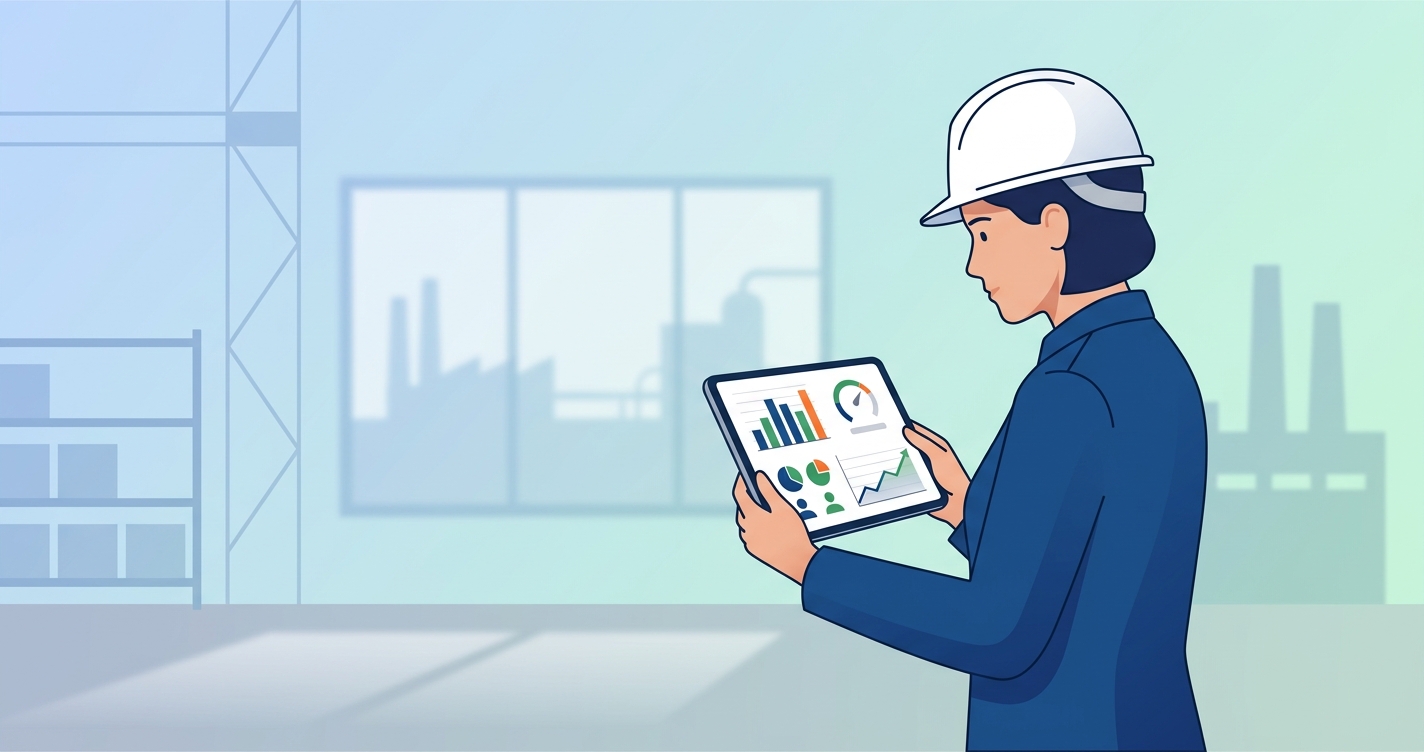
For Environmental, Health, and Safety (EHS) directors, managing operational risk is a continuous challenge. While hazard protocols and heavy safety gear protect against physical dangers, one of the most significant threats to industrial safety remains entirely invisible: cognitive exhaustion. Traditional methods of gauging shift readiness rely on subjective self-reporting or lagging indicators like incident reports. However, waiting for an error to occur before addressing exhaustion is a costly strategy. Implementing worker fatigue monitoring at the start of a shift changes this dynamic, allowing safety managers to identify high-risk physiological states before a worker ever steps onto a site. By shifting from reactive analysis to proactive health screening, organizations can drastically reduce human error, prevent workplace accidents, and protect their operational budgets.
"Work-related fatigue costs U.S. employers an estimated $218 billion annually in lost productivity, with fatigued workers 70 percent more likely to be involved in industrial accidents." (National Safety Council, 2023)
How worker fatigue monitoring changes the equation
In safety-critical sectors, the margin for error is effectively zero. A delayed reaction time of just a few milliseconds can result in a dropped load, a vehicle collision, or a critical machinery failure. Historically, heavy industry has treated fatigue as an unavoidable byproduct of shift work, attempting to mitigate it through scheduling adjustments and mandatory break periods. Yet, fatigue is highly individualized. Two workers on the exact same schedule may experience entirely different levels of cognitive impairment based on sleep quality, underlying health conditions, or external stress.
This is where modern worker fatigue monitoring provides a structural advantage. By evaluating physiological indicators of exhaustion before a shift begins, occupational health teams can intervene early. This proactive approach does not just prevent acute accidents. It also limits the compounding costs of small, repetitive errors that degrade operational efficiency over time. Equipment damage, rework, and slow task execution are often the direct results of a tired workforce operating below baseline capacity.
The phenomenon of presenteeism further complicates safety management. When workers show up physically but are cognitively exhausted, their ability to recognize hazards drops significantly. Their physical presence provides a false sense of security to shift supervisors, while their impaired state quietly introduces massive risk into the environment. Transitioning to objective screening mechanisms eliminates this blind spot.
| Feature | Traditional Fatigue Management | Modern Worker Fatigue Monitoring |
|---|---|---|
| Detection Method | Subjective self-reporting, supervisor observation | Objective physiological screening |
| Timing of Intervention | Reactive, post-incident or mid-shift | Proactive, pre-shift fitness for duty |
| Data Accuracy | Low, prone to reporting bias | High, based on vital signs |
| Operational Impact | High disruption during incident investigations | Low disruption, fast screening times |
| Cost Mitigation | Pays out for damages and workers compensation | Prevents incidents, preserving revenue |
5 ways worker fatigue monitoring prevents costly errors
When EHS directors integrate worker fatigue monitoring into their daily protocols, the benefits extend far beyond basic compliance. Here are five specific ways this technology prevents expensive mistakes on the job site.
1. identifying pre-shift vulnerabilities
The pre-shift window is the most effective intervention point in industrial safety. Once a compromised worker begins operating heavy machinery, the risk profile of the entire site escalates. Objective screening catches exhaustion before the worker ever enters the hazard zone.
- Fatigue screening identifies impairment before a worker assumes control of heavy assets.
- Supervisors can reassign tired individuals to low-risk administrative or maintenance tasks.
- Pre-shift data provides an objective baseline, removing the friction of subjective arguments between workers and management.
2. reducing decision-making latency
Decision-making latency is the time it takes for a worker to recognize a hazard and execute the correct mechanical response. Cognitive fatigue severely degrades this mental processing speed, which is a major driver of human error.
- Monitoring programs ensure only alert personnel handle complex, time-sensitive tasks.
- Alert workers can respond immediately to warning alarms, preventing minor mechanical issues from becoming catastrophic failures.
- Faster decision-making directly correlates with higher daily throughput and fewer procedural errors.
3. mitigating micro-sleep incidents
Micro-sleeps are brief, involuntary episodes of unconsciousness that last for just a fraction of a second. In transportation and logistics, these moments are deadly and incredibly expensive.
- Identifying severe fatigue risks eliminates the conditions that lead to micro-sleeps behind the wheel.
- Active monitoring creates a culture of awareness where workers understand their physical limits.
- Preventing a single heavy vehicle collision saves companies hundreds of thousands of dollars in equipment replacement and liability.
4. Lowering the Frequency of Equipment Damage
Not all fatigue-related errors result in bodily injury. A vast majority result in scraped vehicles, dropped materials, and broken tools, which quietly drain capital from the maintenance budget.
- Well-rested operators maintain better spatial awareness, reducing accidental collisions with infrastructure.
- Precise control of heavy equipment prevents unnecessary wear and tear on expensive industrial assets.
- Routine screening programs historically correlate with a sharp drop in unexplained equipment damage reports.
5. preventing downstream operational bottlenecks
A single error on an assembly line or construction site can force the entire operation to halt for investigation and cleanup. These safety stand-downs destroy productivity and delay project timelines.
- Worker fatigue monitoring ensures that initial tasks are performed correctly, preventing the need for costly rework.
- Consistent performance from alert crews keeps production schedules predictable and on time.
- Avoiding safety stand-downs maximizes overall site profitability and protects client contracts.
Industry applications for fatigue detection benefits
The implementation of worker fatigue monitoring looks different depending on the operational environment, but the core objective remains identical: protecting the workforce and preventing financial loss.
Heavy machinery and mining
In the mining sector, operators handle massive haul trucks and excavators in confined, high-traffic spaces. A momentary lapse in concentration can lead to millions of dollars in vehicle damage and severe risk to human life. Mining companies utilize pre-shift fatigue checks to ensure that operators are physiologically prepared for the intense focus required by twelve-hour shifts.
Construction and high-elevation sites
Construction workers face constant hazards from moving equipment, uneven terrain, and high elevations. Cognitive exhaustion affects balance, grip strength, and hazard recognition. By screening crews at the gate before they enter the site, construction managers can prevent falls and rigging failures. Industry data continually links fatigue to severe construction site incidents.
Overnight logistics and transportation
Night shift crews and long-haul transport operators naturally fight against their circadian rhythms. Between 2:00 AM and 6:00 AM, the human body experiences its deepest biological drive to sleep. Logistics hubs are adopting worker fatigue monitoring to objectively assess night crew readiness, ensuring forklift operators and freight loaders have the necessary cognitive sharpness to work safely through the night.
Current research and evidence
The link between exhaustion and industrial accidents is heavily documented in modern safety literature. A 2024 study published in the Journal of Construction Engineering and Management by Hongzhe Yue, Gui Ye, and colleagues examined the impact of cognitive fatigue on attention. Utilizing a neuroscientific approach that included EEG tracking and behavioral tests, the researchers demonstrated that as fatigue intensifies, a worker's attention span exhibits a dangerous decline. The study concluded that tired workers prioritize expediency over accuracy, directly escalating the risk of severe site accidents.
Furthermore, economic data reinforces the financial necessity of fatigue management. According to 2023 reports from the National Safety Council, employers face costs ranging from $1,200 to $3,100 per employee annually due to lost productivity and fatigue-related absenteeism. The Bureau of Labor Statistics reported approximately 1.5 million work-related injury and illness cases in 2024. A significant percentage of these incidents are rooted in human error driven by cognitive impairment. By adopting objective screening tools, organizations can directly attack these statistics, preserving capital that would otherwise be lost to workers compensation claims and facility downtime.
The future of worker fatigue monitoring
As industrial technology evolves, the reliance on invasive or time-consuming medical checks will diminish. The next generation of occupational health screening technology focuses on frictionless, contactless data collection. Environmental, Health, and Safety directors are increasingly prioritizing solutions that integrate seamlessly into existing access control points.
In the coming years, worker fatigue monitoring will become a standard component of site security. Instead of isolating health checks in a dedicated clinic, software will evaluate fitness for duty at the turnstile or the vehicle door. This convergence of biometric screening and operational workflow ensures that safety is treated as a continuous metric rather than an annual compliance checkbox. Companies that adopt these proactive measures today will hold a distinct competitive advantage in workforce reliability and insurance premium reduction tomorrow.
Frequently asked questions
How does worker fatigue monitoring prevent workplace accidents? Monitoring systems evaluate physiological signs of exhaustion before a worker begins their shift. By identifying individuals with severe cognitive fatigue, safety managers can reassign them to lower-risk tasks, removing the primary catalyst for human error in hazardous environments.
Does fatigue detection technology replace traditional safety protocols? No. Fatigue screening is designed to complement existing safety frameworks. While hardhats and harnesses protect against physical hazards, health screening adds an additional layer of defense by ensuring the worker's mind and body are fully prepared to utilize that safety equipment correctly.
What is the ROI of fatigue management programs? The return on investment comes from multiple avenues: avoiding costly equipment damage, reducing workers compensation claims, and preventing productivity bottlenecks caused by safety stand-downs. Organizations often save thousands of dollars per employee annually by preventing errors before they occur.
How does cognitive exhaustion differ from physical tiredness? Physical tiredness affects muscle strength and stamina, while cognitive exhaustion impairs brain function, leading to slower reaction times, poor decision-making, and memory lapses. In safety-critical roles, cognitive impairment is often more dangerous than physical soreness.
At Circadify, we understand that proactive risk management is the foundation of a safe, profitable industrial operation. We are actively addressing the need for frictionless, pre-shift health evaluations to protect safety-critical workforces. If your organization is looking to reduce human error and upgrade its fitness for duty protocols, explore our approach to occupational health screening at Circadify Solutions.